At first glance, it seems like a simple question.
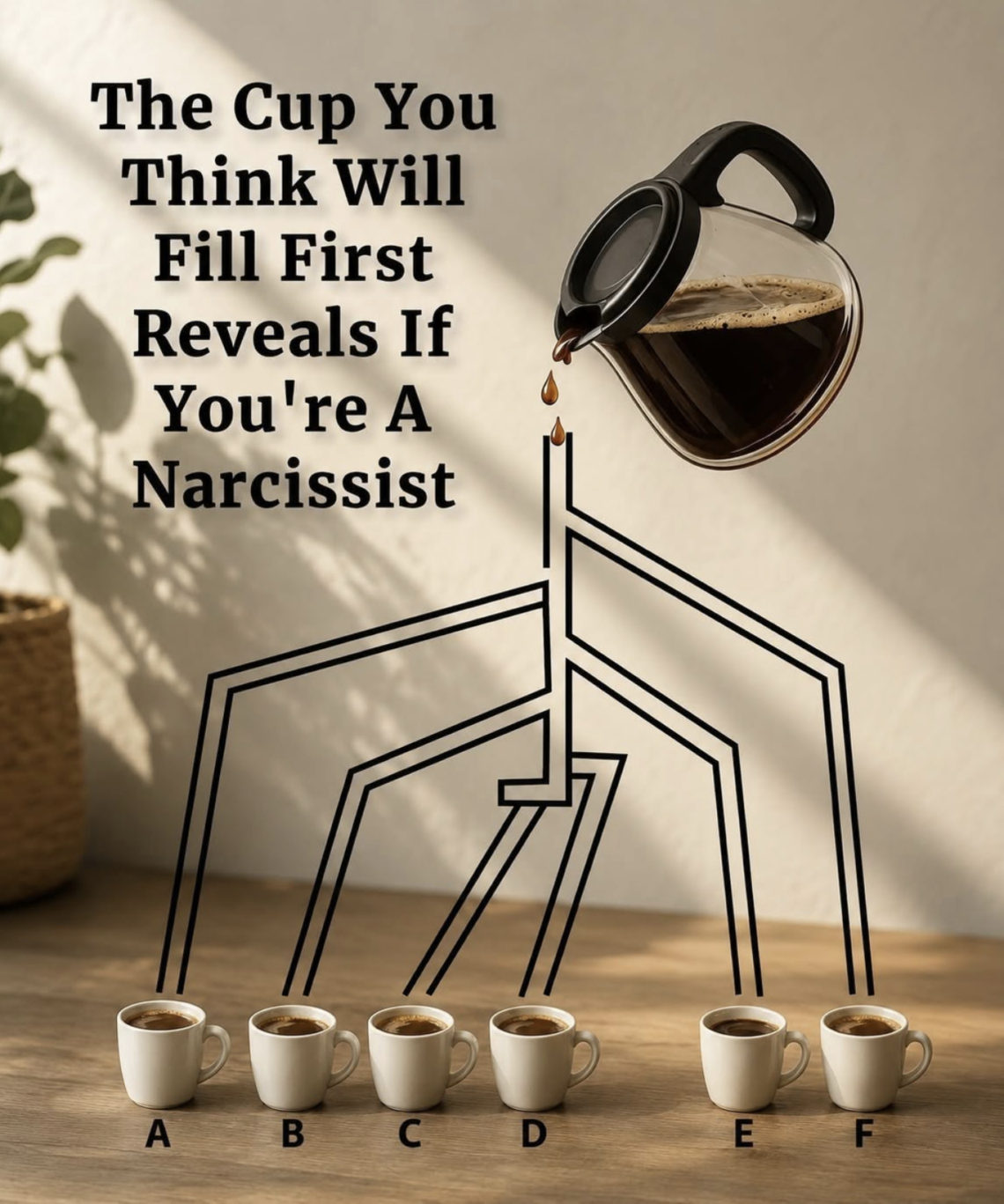
You are sitting at a table. A pitcher filled with your favorite drink is placed in front of you. Nearby are four empty cups. Someone asks a seemingly innocent question:
“Which cup would you fill first?”
Most people answer almost immediately. They point to a cup without much thought, assuming their choice is random or based purely on preference. However, many psychologists and personality enthusiasts argue that our spontaneous choices are often influenced by deeper mental habits, unconscious preferences, and ingrained ways of viewing the world.
While a puzzle like this is not a scientific personality assessment and cannot accurately diagnose character traits, it can be an interesting exercise in self-reflection. The cup that catches your attention first may reveal something about how you approach decisions, process information, and solve problems.
The real value of these visual personality exercises is not whether they are objectively accurate. Instead, they encourage us to pause and think about ourselves. Why did one option immediately feel right? Why did another feel wrong? Sometimes the answers are surprisingly revealing.
Why Simple Choices Can Feel So Meaningful
Human beings make thousands of decisions every day.
Most are so automatic that we barely notice them:
- choosing where to sit
- selecting a route home
- deciding which item to pick from a shelf
- choosing which face in a crowd feels trustworthy
Our brains are constantly searching for patterns and making judgments based on past experiences.
When presented with a choice between several objects, we often rely on intuition rather than conscious analysis. That intuition is influenced by:
- personal experiences
- emotional tendencies
- values
- habits
- preferences
- learned behaviors
This is one reason why visual personality puzzles remain popular. People enjoy discovering possible connections between their choices and their personalities.
The Psychology Behind Projective Exercises
The idea behind these tests comes from a psychological concept known as projection.
Projection occurs when people unconsciously project their thoughts, feelings, attitudes, and beliefs onto external objects or situations.
When a person interprets an ambiguous image or makes a spontaneous choice, some psychologists believe aspects of their personality may influence the decision.
Classic examples include:
- inkblot tests
- story-completion exercises
- image interpretation tasks
Modern internet personality quizzes are a simplified and entertainment-focused version of this idea.
They are not clinical tools, but they can spark useful self-reflection.
Why Your First Choice Matters
One of the most interesting aspects of these exercises is the emphasis on instinct.
The first choice often happens before logic takes over.
Once we begin analyzing, we start considering:
- which answer seems smartest
- what others might choose
- what result we want
But the immediate response is usually more intuitive.
That instinctive reaction is what many personality exercises focus on.
Cup One: The Practical Thinker
If you are drawn to the first cup, you may be someone who values structure, efficiency, and practicality.
People with this thinking style often prefer:
- clear goals
- logical solutions
- organized environments
- predictable outcomes
When faced with a challenge, they usually ask:
“What is the most efficient way to solve this?”
Rather than becoming overwhelmed by emotions or possibilities, they tend to focus on actionable steps.
Strengths of Practical Thinkers
Practical thinkers often excel at:
- planning
- problem solving
- project management
- decision making
They can remain calm under pressure because they naturally focus on solutions instead of obstacles.
Others often rely on them when difficult decisions must be made.
Possible Challenges
Every strength has a downside.
Practical thinkers may sometimes:
- overvalue logic
- dismiss emotional concerns
- become impatient with indecision
- focus too heavily on efficiency
Learning to balance practicality with emotional awareness can make them even more effective.
Cup Two: The Creative Explorer
If the second cup catches your eye first, you may possess a more imaginative and exploratory mindset.
Creative thinkers often enjoy:
- new ideas
- innovation
- experimentation
- unconventional approaches
Instead of asking:
“What is the correct answer?”
they often ask:
“What possibilities exist?”
Strengths of Creative Thinkers
Creative individuals frequently demonstrate:
- originality
- flexibility
- curiosity
- adaptability
They often find solutions that others overlook.
Their ability to connect seemingly unrelated ideas can lead to breakthroughs in art, business, science, and everyday life.
Possible Challenges
Creativity can sometimes create difficulties.
Creative thinkers may:
- become distracted
- struggle with routine
- start many projects without finishing them
- feel restricted by rigid structures
The challenge is often turning ideas into consistent action.
Cup Three: The Relationship-Oriented Thinker
If your attention goes toward the third cup, relationships may play a central role in your decision-making process.
These individuals often evaluate situations through the lens of people rather than systems.
Questions they naturally ask include:
- How will this affect others?
- What are people feeling?
- How can harmony be maintained?
Strengths of Relationship-Oriented Thinkers
These people often excel at:
- communication
- empathy
- teamwork
- conflict resolution
Others may describe them as supportive, compassionate, and understanding.
They often build strong personal and professional networks because people feel heard and valued around them.
Possible Challenges
Relationship-focused individuals sometimes:
- prioritize others too much
- avoid necessary conflict
- struggle with boundaries
- hesitate to make unpopular decisions
Learning to balance empathy with assertiveness is often important for personal growth.
Cup Four: The Analytical Observer
If you immediately choose the fourth cup, you may possess a highly analytical mindset.
These individuals often enjoy:
- understanding systems
- gathering information
- evaluating evidence
- examining details
Rather than acting immediately, they often prefer to observe first.
Strengths of Analytical Thinkers
Analytical people are often skilled at:
- research
- strategic planning
- risk assessment
- critical thinking
They enjoy understanding how things work and identifying hidden patterns.
Because they carefully evaluate information, their decisions are often well-considered.
Possible Challenges
The analytical mindset can occasionally lead to:
- overthinking
- indecision
- perfectionism
- excessive caution
Sometimes action becomes more valuable than additional analysis.
Why People Love These Personality Puzzles
Personality puzzles continue to spread across social media because they combine several things humans naturally enjoy:
Curiosity
People want to understand themselves better.
Self-Discovery
Even if a result is not perfectly accurate, it often encourages reflection.
Conversation
These puzzles spark discussions among friends and family.
People enjoy comparing results and debating interpretations.
Entertainment
Most importantly, they are fun.
The mystery of discovering what a simple choice might reveal creates engagement and excitement.
The Science vs. Entertainment Debate
It is important to remember that visual personality puzzles are primarily entertainment.
Scientific personality assessments typically require:
- validated questionnaires
- extensive testing
- statistical analysis
- professional interpretation
Choosing a cup cannot fully reveal someone’s personality.
Human beings are far too complex for that.
However, these exercises can still be useful because they encourage introspection.
The value lies less in the accuracy of the result and more in the questions it inspires.
What Your Choice Might Really Reveal
Sometimes the most interesting insight is not the description itself.
Instead, it is your reaction to it.
Ask yourself:
- Which description felt accurate?
- Which felt completely wrong?
- Why did I choose that cup?
- What qualities do I value most?
These questions often reveal more than the puzzle itself.
The Bigger Lesson
Life constantly presents us with choices.
Some are small and seemingly insignificant. Others shape the course of our futures.
The cup you choose in a personality puzzle will not determine your destiny.
But it may encourage a moment of self-awareness.
It may remind you that your mind has habits, preferences, strengths, and blind spots.
And sometimes, understanding those patterns is the first step toward personal growth.
Welcome to my kitchen!
I’m a passionate home cook and recipe creator who loves turning simple ingredients into delicious, comforting meals that everyone can enjoy. Through this website, I share carefully prepared recipes, practical cooking tips, and easy-to-understand food education to help you feel more confident in the kitchen.
My goal is to make cooking simple, enjoyable, and accessible. Whether you are looking for a quick family dinner, a delicious dessert, healthy meal ideas, or traditional recipes with a modern touch, you’ll find inspiration here.
More Than Just Recipes
I believe that cooking is also a way to learn. That’s why this website is not only about recipes. I also create educational articles about ingredients, cooking techniques, kitchen tips, food preparation, and the stories behind different dishes.
Each article is designed to give you useful knowledge that you can apply in your own kitchen. From understanding how ingredients work together to learning better cooking methods, my aim is to help you become a more confident and creative cook.
My Philosophy
Good food doesn’t always require complicated ingredients or professional equipment. With a little knowledge, patience, and creativity, simple ingredients can become something truly special.
I believe in sharing recipes that are practical, clearly explained, and enjoyable to make. I also love exploring new flavors while appreciating traditional cooking and the recipes passed down through generations.
Thank you for visiting my kitchen and being part of this food-loving community. I hope my recipes and articles inspire you to cook, learn, experiment, and most importantly, enjoy every bite!
Happy cooking!