The Forgotten Kitchen Tool That Once Represented Survival, Cleanliness, and Everyday Wisdom
Close your eyes for a moment and imagine a kitchen long before modern convenience reshaped domestic life.
No disposable plastic.
No electric dish dryers.
No endless rows of store-bought containers.
No instant replacements when something broke.
Instead, there was:
- steam fogging the windows
- the scent of soap and boiling water
- jars cooling on folded towels
- hands moving with practiced efficiency
- and somewhere near the sink, standing quietly like a piece of functional sculpture, a bottle drying rack.
To modern eyes, it may look strange:
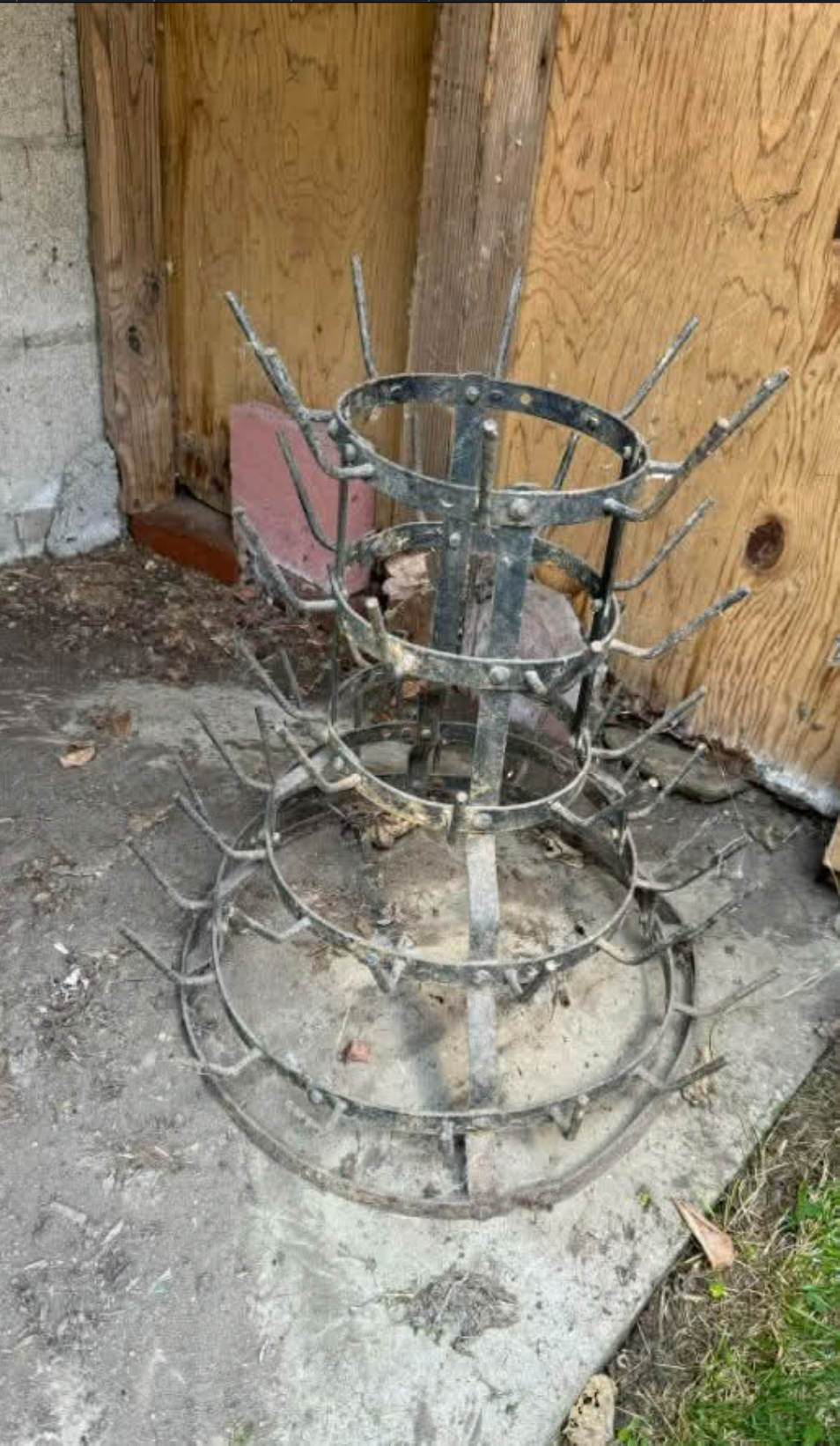
a metal stand covered in spikes or branches, almost skeletal in shape.
But for generations, this humble object was an essential part of daily life.
Known in France as the hérisson (“hedgehog”) because of its prickly silhouette, and often called a bottle tree in North America, the vintage bottle drying rack represented something much larger than kitchen storage.
It represented a world where:
- nothing was wasted
- every object had a purpose
- and practicality itself became a kind of art.
A Tool Born From Necessity
The bottle drying rack emerged during a time when households reused nearly everything.
Glass bottles were not disposable.
Families routinely washed and reused:
- milk bottles
- canning jars
- medicine bottles
- soda bottles
- baby bottles
- beer bottles
- preserving jars.
Without proper drying methods, moisture trapped inside containers could lead to:
- contamination
- unpleasant odors
- mold
- spoiled food.
The drying rack solved this elegantly.
By turning bottles upside down on narrow prongs, gravity allowed water to drain naturally while air circulated inside the container.
Simple.
Efficient.
Ingenious.
The Architecture of Practicality
What makes the vintage bottle drying rack so fascinating is its honesty of design.
There was no unnecessary decoration.
Every part existed for function.
Typically constructed from:
- wrought iron
- galvanized wire
- steel rods
- or heavy-duty metal frameworks,
the rack featured:
- a sturdy base
- vertical supports
- multiple upward-facing spikes or arms.
Each spike held one bottle upside down.
This prevented:
- standing water
- trapped moisture
- accidental tipping.
The design almost resembles:
- a mechanical tree
- industrial sculpture
- or abstract artwork.
Yet every inch served a purpose.
Why the “Hedgehog” Name Fits Perfectly
In France, the term hérisson became popular because the rack’s clustered metal spikes resembled the quills of a hedgehog.
The nickname captures something charming about old household tools:
people often gave practical objects affectionate, visual names rooted in everyday life.
That small act of naming reflects how closely connected people once were to their tools and routines.
Kitchens Once Functioned Like Workshops
Modern kitchens are often centered around convenience and speed.
Older kitchens operated more like:
- production spaces
- preservation centers
- repair workshops
- food-processing rooms.
People:
- canned vegetables
- fermented foods
- reused containers
- sterilized equipment
- preserved seasonal harvests.
The bottle drying rack became part of this larger ecosystem of self-sufficiency.
The Connection to Home Canning
Bottle drying racks became especially important during peak home-canning eras.
Families preserved:
- tomatoes
- jams
- pickles
- peaches
- sauces
- beans.
Sterilized jars had to remain:
- clean
- dry
- uncontaminated.
The drying rack allowed dozens of jars and bottles to air dry safely after boiling and washing.
Why Air Drying Was So Important
Before modern dishwashers and disposable paper towels, air drying offered advantages:
- reduced contamination from cloth towels
- prevented lint inside bottles
- minimized bacterial transfer
- improved sanitation.
In many ways, the drying rack represented an early understanding of hygienic kitchen workflow.
The Quiet Soundscape of Older Kitchens
Part of the nostalgia surrounding these racks comes from the sensory memories attached to them.
People remember:
- the soft clink of glass against metal
- dripping water hitting enamel sinks
- the smell of steam and soap
- sunlight reflecting through drying bottles.
These sounds and textures belonged to slower domestic rhythms that feel increasingly rare today.
Why the Rack Symbolized Resourcefulness
The bottle drying rack reflects a time when households treated objects differently.
Containers were not temporary.
People expected to:
- clean them
- repair them
- reuse them repeatedly.
Throwing away usable glass would have seemed wasteful or impractical to many families.
The rack therefore symbolizes:
- thrift
- resilience
- sustainability
- domestic skill.
Rural Life and the Bottle Tree
In American farmhouses, bottle racks sometimes evolved into larger “bottle trees.”
These structures were used for:
- drying dairy bottles
- storing cleaned containers
- organizing reusable glassware.
On farms where milk handling and food preservation were constant tasks, efficient drying systems mattered enormously.
The Relationship Between Design and Survival
What’s remarkable about many antique tools is how directly they reflect real human needs.
The bottle drying rack existed because families genuinely depended on:
- clean storage
- preserved food
- reusable containers
- efficient sanitation.
This wasn’t decorative minimalism.
It was survival-driven engineering.
And yet, ironically, many of these purely practical tools now look beautiful to modern eyes because their forms were shaped so honestly by function.
Why Vintage Bottle Drying Racks Are Collectible Today
Today, antique bottle drying racks are sought after by:
- collectors
- farmhouse decorators
- antique enthusiasts
- gardeners
- photographers
- interior designers.
People admire them for:
- sculptural appearance
- industrial charm
- historical significance.
Some are repurposed as:
- mug holders
- jewelry displays
- ornament trees
- decorative centerpieces.
The Rise of Sustainability Has Renewed Interest
Modern environmental concerns have made people appreciate old household tools in new ways.
The bottle drying rack represents principles many people now try to rediscover:
- reusability
- low waste
- durable materials
- practical longevity.
Long before “sustainability” became fashionable, families practiced it out of necessity.
Why Objects Like This Feel Emotional
Vintage household tools often trigger powerful feelings because they connect us to:
- grandparents
- family kitchens
- childhood memories
- slower routines
- human labor and care.
Unlike modern disposable products, older tools visibly carried the marks of repeated use and daily life.
They feel personal.
The Poetry of Ordinary Objects
There’s something deeply moving about humble objects designed not for luxury, but for usefulness.
A bottle drying rack never demanded attention.
It simply stood nearby:
- holding glass
- catching drips
- helping families preserve food and health.
And yet within that quiet purpose lies a story about:
- resilience
- domestic intelligence
- invisible labor
- and the creativity hidden inside ordinary life.
Welcome to my kitchen!
I’m a passionate home cook and recipe creator who loves turning simple ingredients into delicious, comforting meals that everyone can enjoy. Through this website, I share carefully prepared recipes, practical cooking tips, and easy-to-understand food education to help you feel more confident in the kitchen.
My goal is to make cooking simple, enjoyable, and accessible. Whether you are looking for a quick family dinner, a delicious dessert, healthy meal ideas, or traditional recipes with a modern touch, you’ll find inspiration here.
More Than Just Recipes
I believe that cooking is also a way to learn. That’s why this website is not only about recipes. I also create educational articles about ingredients, cooking techniques, kitchen tips, food preparation, and the stories behind different dishes.
Each article is designed to give you useful knowledge that you can apply in your own kitchen. From understanding how ingredients work together to learning better cooking methods, my aim is to help you become a more confident and creative cook.
My Philosophy
Good food doesn’t always require complicated ingredients or professional equipment. With a little knowledge, patience, and creativity, simple ingredients can become something truly special.
I believe in sharing recipes that are practical, clearly explained, and enjoyable to make. I also love exploring new flavors while appreciating traditional cooking and the recipes passed down through generations.
Thank you for visiting my kitchen and being part of this food-loving community. I hope my recipes and articles inspire you to cook, learn, experiment, and most importantly, enjoy every bite!
Happy cooking!