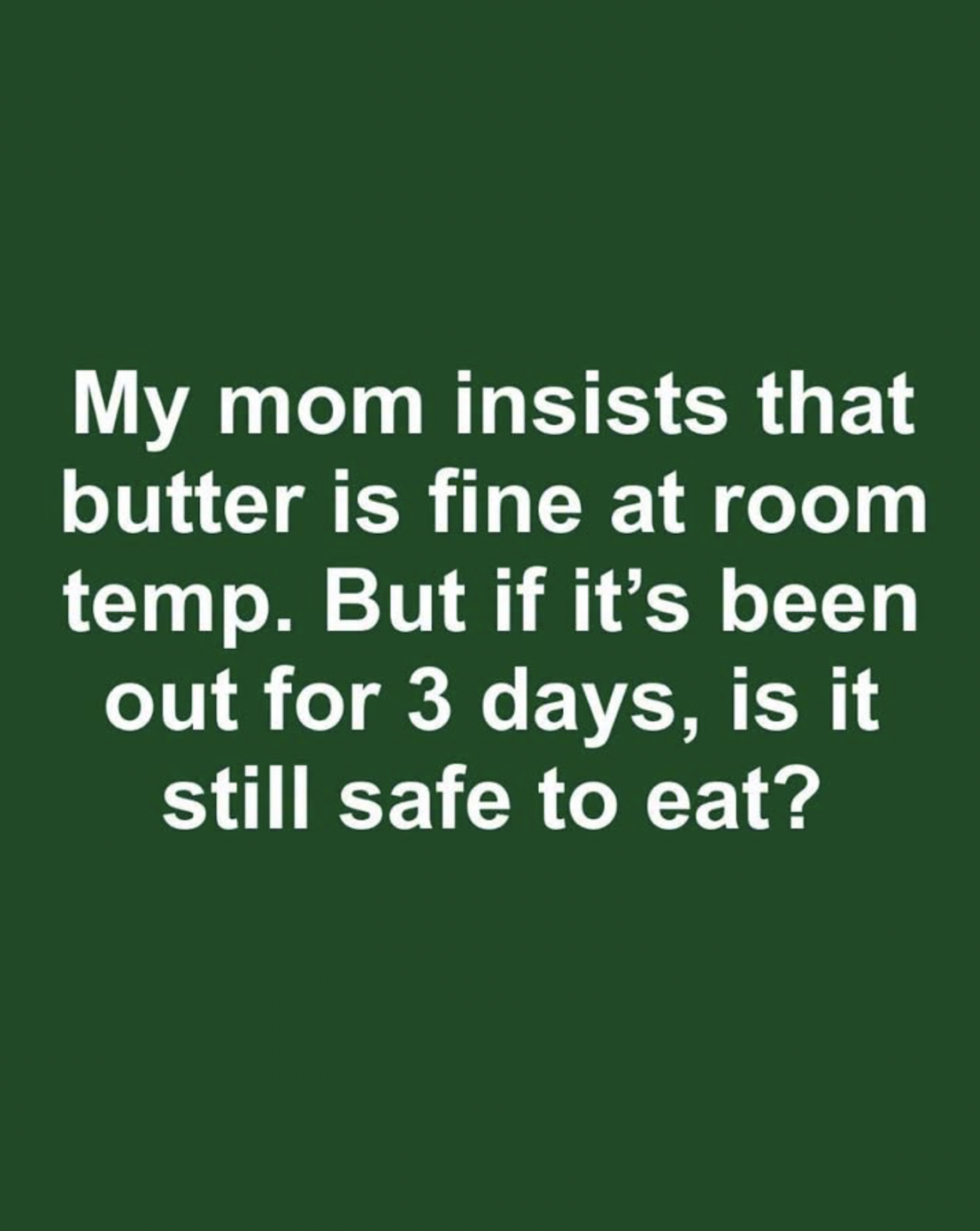
Butter is one of the most versatile and widely used ingredients found in kitchens around the world. Whether it is spread on warm toast, melted over vegetables, incorporated into rich sauces, or used to create flaky pastries and delicious baked goods, butter has long been considered an essential staple in everyday cooking. Despite its popularity, one question continues to spark debate among home cooks, food enthusiasts, and even families: Is it safe to leave butter out at room temperature for several days?
Some people insist that butter should always be refrigerated immediately after use to preserve its freshness and prevent spoilage. Others keep a butter dish on the kitchen counter year-round, believing that butter remains perfectly safe and tastes better when it is soft and easy to spread. If you have ever visited different households, you may have noticed that storage habits vary considerably from one family to another.
One common situation that raises concern is discovering that butter has been left on the counter for two or three days. Should it be thrown away immediately, or is it still safe to use? The answer depends on several important factors, including the type of butter, the surrounding temperature, how it was stored, and whether any signs of spoilage have developed.
Understanding how butter is made, why it is relatively stable compared to many other dairy products, and what conditions can eventually cause it to spoil can help you make informed decisions and reduce unnecessary food waste.
What Is Butter Made Of?
Butter is produced by churning cream until the fat separates from the liquid. During this process, tiny fat droplets combine to form a solid mass, while most of the liquid, known as buttermilk, is removed.
Traditional butter typically contains approximately:
- 80% milk fat
- 16–18% water
- Small amounts of milk proteins and milk sugars
- Salt (in salted varieties)
This unusually high fat content is one of the primary reasons butter has a much longer shelf life than many other dairy products.
Unlike milk, yogurt, or cream, butter contains relatively little moisture, making it a less favorable environment for many types of bacteria.
Why Butter Does Not Spoil as Quickly as Milk
Many people assume that because butter is made from dairy, it should spoil just as quickly as milk. In reality, butter behaves quite differently.
Most harmful bacteria require moisture to grow and multiply efficiently. Since butter contains comparatively little water, bacterial growth occurs much more slowly under normal household conditions.
The fat also surrounds much of the remaining moisture, making it even more difficult for microorganisms to spread throughout the product.
This natural composition explains why butter can often remain at room temperature for limited periods without immediately becoming unsafe.
Salted Butter vs. Unsalted Butter
Not all butter behaves the same way when stored outside the refrigerator.
Salted Butter
Salt has been used as a natural preservative for centuries.
In salted butter, the added salt helps slow the growth of many microorganisms while also reducing some spoilage processes.
For this reason, salted butter generally tolerates room-temperature storage better than unsalted butter.
Many households that routinely keep butter on the counter specifically choose salted butter for this reason.
Unsalted Butter
Unsalted butter contains no added salt to inhibit microbial growth.
Although it can still remain safe for limited periods, it is generally more vulnerable to spoilage and may develop off-flavors sooner than salted butter.
If you use unsalted butter primarily for baking, refrigeration is usually the safer long-term storage option.
What Happens When Butter Sits Out?
When butter is exposed to room temperature, several gradual changes begin to occur.
Initially, it simply softens, making it easier to spread.
Over longer periods, however, exposure to:
- Oxygen
- Heat
- Light
- Air
can slowly affect its quality.
The most common change is oxidation, a natural chemical reaction in which fats react with oxygen.
Oxidation does not necessarily make butter unsafe immediately, but it can gradually produce unpleasant flavors and odors commonly described as rancid.
What Is Rancidity?
Rancidity occurs when fats begin breaking down due to exposure to oxygen, light, or heat.
As butter oxidizes, its pleasant creamy flavor may gradually be replaced by notes that taste:
- Sour
- Bitter
- Metallic
- Paint-like
- Stale
Unlike bacterial spoilage, rancidity mainly affects quality rather than food safety, although heavily rancid butter should generally be discarded because of its poor taste and reduced quality.
Is Butter Safe After Three Days on the Counter?
In many cases, yes—particularly if all of the following conditions are true:
- The butter is salted.
- The room has remained relatively cool.
- It was stored in a covered butter dish or another clean container.
- It was not exposed to direct sunlight.
- It has no unusual smell, mold, or discoloration.
Under these conditions, butter often remains usable after several days.
However, this does not mean that every situation is identical.
If your kitchen becomes very warm, especially during summer, butter may deteriorate more quickly.
Temperature Makes a Big Difference
Room temperature varies considerably between homes.
Butter stored in a cool kitchen at around 18–21°C (64–70°F) generally remains in better condition than butter sitting in a kitchen that regularly reaches 27–30°C (80–86°F) or higher.
Warm temperatures accelerate both oxidation and microbial activity.
If your home lacks air conditioning or experiences prolonged heat waves, refrigeration is usually the safer choice.
Proper Counter Storage
If you prefer soft butter that is always ready to spread, proper storage can significantly extend its quality.
Many people use:
- Covered butter dishes.
- Ceramic butter crocks.
- Butter bells (French butter keepers).
- Airtight containers.
These storage methods help protect butter from excessive air exposure, dust, insects, and strong kitchen odors.
Keeping butter away from windows and stovetops also helps reduce heat exposure.
Can Mold Grow on Butter?
Although butter’s low moisture content discourages microbial growth, mold can still develop under certain conditions.
Mold becomes more likely if:
- Butter remains out for extended periods.
- Moisture is introduced.
- Dirty utensils are repeatedly used.
- Food particles contaminate the butter.
- The surrounding environment is warm and humid.
If mold appears anywhere on the butter, the safest approach is to discard the entire portion rather than removing only the visible spot.
Signs That Butter Has Gone Bad
Before using butter that has been sitting out, inspect it carefully.
Discard it if you notice:
- Mold growth.
- A sour or unpleasant smell.
- A sharp rancid odor.
- Significant discoloration.
- Dark or unusual spots.
- An unusually sticky or slimy surface.
These changes suggest that the butter’s quality has deteriorated or that contamination may have occurred.
Refrigeration Benefits
Refrigerating butter slows nearly every process responsible for spoilage.
Cold temperatures help preserve:
- Fresh flavor.
- Creamy texture.
- Nutritional quality.
- Shelf life.
Unopened butter can often remain in good condition for several weeks or even months when properly refrigerated.
Butter can also be frozen for much longer storage without greatly affecting its performance in cooking and baking.
Should You Refrigerate After Opening?
Many food safety experts recommend refrigerating most butter after opening, especially unsalted varieties.
However, many households successfully keep a small quantity of butter at room temperature for daily use while storing the remaining supply in the refrigerator.
This approach combines convenience with longer-term freshness.
Common Myths About Butter Storage
Several misconceptions continue to circulate.
One myth suggests that butter becomes dangerous within a few hours of sitting out. In reality, butter’s low moisture content makes it much more stable than many other dairy products.
Another myth claims that butter can remain on the counter indefinitely. Although butter is relatively stable, quality gradually declines over time, particularly under warm conditions.
Some people also believe that refrigeration ruins butter. While refrigeration hardens butter, it helps preserve freshness for much longer.
Frequently Asked Questions
Can I cook with butter that has been left out?
If the butter still smells fresh, looks normal, and shows no signs of spoilage, it is generally suitable for cooking or baking.
Does salted butter last longer?
Yes. Salt acts as a natural preservative and generally allows salted butter to remain stable at room temperature longer than unsalted butter.
Should butter always be refrigerated?
Refrigeration provides the longest shelf life, but many people safely keep a small amount of salted butter on the counter for daily use in appropriate conditions.
Is butter safe after three days?
In many cases, yes—provided it has been stored properly in a cool environment and has not developed any signs of spoilage. However, if there is any doubt about its quality, it is always safer to discard it.

Welcome to my kitchen!
I’m a passionate home cook and recipe creator who loves turning simple ingredients into delicious, comforting meals that everyone can enjoy. Through this website, I share carefully prepared recipes, practical cooking tips, and easy-to-understand food education to help you feel more confident in the kitchen.
My goal is to make cooking simple, enjoyable, and accessible. Whether you are looking for a quick family dinner, a delicious dessert, healthy meal ideas, or traditional recipes with a modern touch, you’ll find inspiration here.
More Than Just Recipes
I believe that cooking is also a way to learn. That’s why this website is not only about recipes. I also create educational articles about ingredients, cooking techniques, kitchen tips, food preparation, and the stories behind different dishes.
Each article is designed to give you useful knowledge that you can apply in your own kitchen. From understanding how ingredients work together to learning better cooking methods, my aim is to help you become a more confident and creative cook.
My Philosophy
Good food doesn’t always require complicated ingredients or professional equipment. With a little knowledge, patience, and creativity, simple ingredients can become something truly special.
I believe in sharing recipes that are practical, clearly explained, and enjoyable to make. I also love exploring new flavors while appreciating traditional cooking and the recipes passed down through generations.
Thank you for visiting my kitchen and being part of this food-loving community. I hope my recipes and articles inspire you to cook, learn, experiment, and most importantly, enjoy every bite!
Happy cooking!