The Forgotten Transmission Letter That Left Modern Drivers Confused
Most drivers today are familiar with the standard letters found on automatic car gear selectors:
- P for Park
- R for Reverse
- N for Neutral
- D for Drive.
Some vehicles may also include:
- L for Low
- S for Sport
- M for Manual mode.
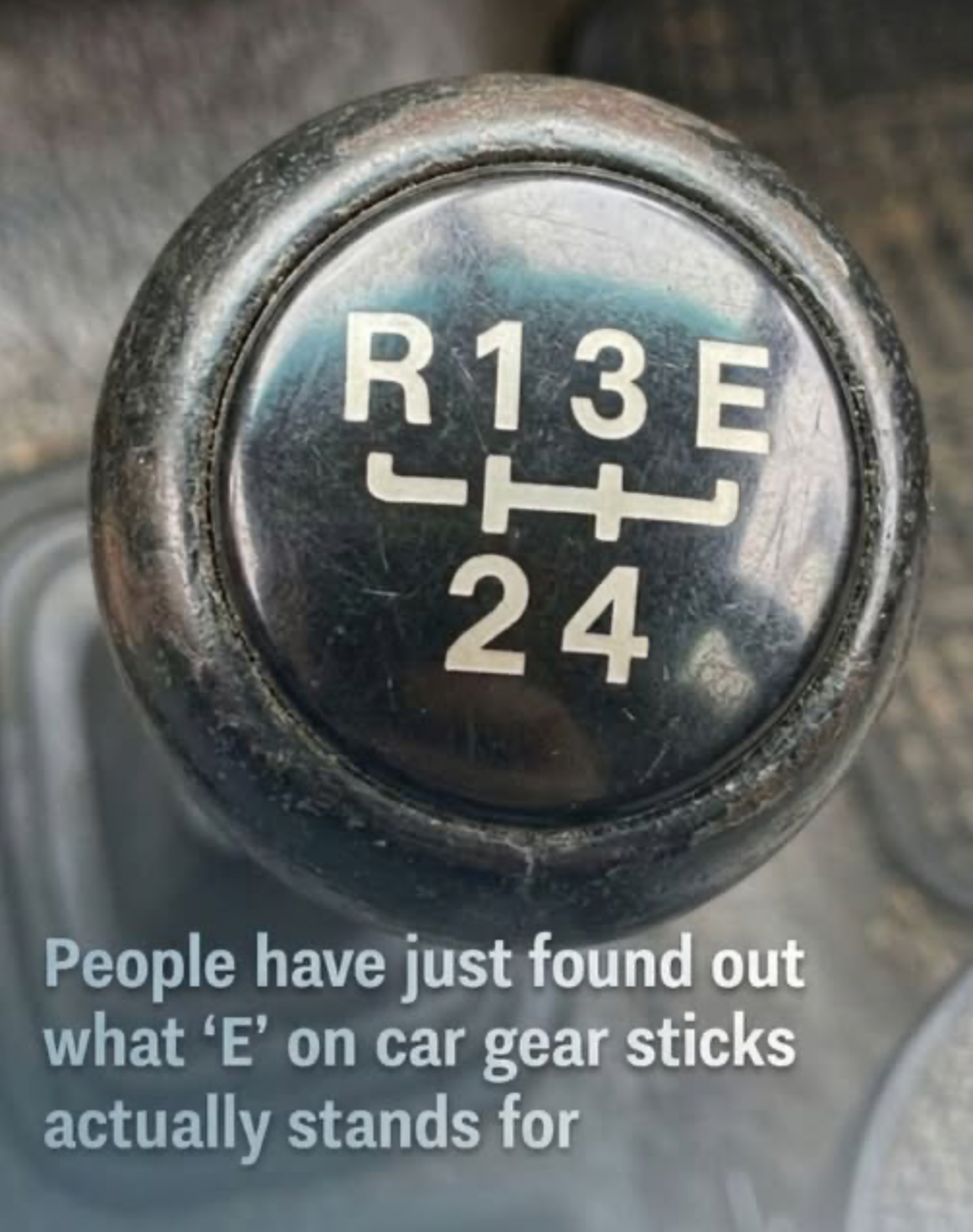
But every so often, someone notices an unfamiliar letter on an older car or imported vehicle:
“E.”
That single letter has sparked endless curiosity online, with many drivers wondering:
- Is it an emergency gear?
- Does it mean economy?
- Is it electric mode?
- Is something wrong with the transmission?
The truth is actually tied to the evolution of automotive engineering and the changing priorities of car manufacturers over the decades.
Depending on the vehicle and era, the “E” on a gear selector most commonly stands for:
- Economy mode
or, in some cases, - a specific transmission setting designed for efficiency and smoother driving.
Its meaning reflects a time when automakers were beginning to focus heavily on:
- fuel economy
- energy conservation
- smoother automatic shifting
- and driver-adjustable transmission behavior.
What seems mysterious today was once considered an innovative feature designed to help drivers save fuel and improve comfort.
Why Gear Selector Letters Exist in the First Place
Gear selector letters exist to communicate what the transmission is doing.
Each letter corresponds to a driving function:
- Park locks the transmission
- Reverse moves the vehicle backward
- Neutral disconnects power from the wheels
- Drive handles normal forward motion.
As automatic transmissions evolved, manufacturers began adding extra modes to provide more control.
The Early Days of Automatic Transmissions
Early automatic transmissions were considered revolutionary because they eliminated the need for:
- manual clutch operation
- constant gear shifting
- complicated driving techniques.
However, early automatics were not always:
- fuel-efficient
- smooth
- or highly customizable.
Manufacturers eventually began adding special driving modes to improve different aspects of performance.
What “E” Usually Stands For: Economy Mode
In many cars, especially older European and Japanese models, “E” stands for:
Economy.
Economy mode changes the way the transmission behaves to prioritize:
- fuel savings
- smoother acceleration
- lower engine speed.
Instead of aggressively holding gears for power, the car shifts earlier to keep engine RPM lower.
Why Lower RPM Helps Save Fuel
Engines generally consume less fuel when operating at:
- lower revolutions per minute (RPM).
Economy mode encourages:
- earlier upshifts
- gentler throttle response
- reduced engine strain.
This can improve:
- fuel efficiency
- cruising comfort
- long-distance driving economy.
Why Economy Modes Became Popular
The rise of economy driving modes was heavily influenced by:
- fuel crises
- rising gasoline prices
- growing environmental awareness.
During the 1970s and 1980s especially, fuel economy became a major selling point for automakers.
Manufacturers searched for ways to help drivers reduce fuel consumption without sacrificing convenience.
How Economy Mode Changes Driving Feel
Cars in Economy mode often feel:
- smoother
- calmer
- less aggressive.
Acceleration becomes more gradual because the transmission shifts sooner.
Some drivers appreciate the relaxed feel, while others find it less responsive.
Economy Mode vs Sport Mode
Many modern vehicles now use:
- Eco mode
and - Sport mode.
These are essentially opposites.
Economy mode:
- prioritizes fuel efficiency
- shifts earlier
- softens throttle response.
Sport mode:
- keeps RPM higher
- delays shifts
- increases responsiveness
- improves acceleration feel.
Why Drivers Today Get Confused by “E”
Modern vehicles rarely use a single “E” on the gear selector anymore.
Instead, manufacturers now use:
- buttons
- touchscreen settings
- digital drive modes.
You may see:
- ECO
- Eco Pro
- Efficiency
- EV
rather than just one letter.
Because of this, younger drivers encountering “E” on older vehicles often assume it means something entirely different.
The Confusion With Electric Cars
The rise of electric vehicles has created even more confusion because people naturally associate “E” with:
- Electric
- EV mode
- battery operation.
However, on many older gasoline-powered cars, the “E” had nothing to do with electricity at all.
Other Meanings of “E” in Some Vehicles
Although Economy is the most common explanation, “E” has occasionally meant different things depending on manufacturer and model.
In some cases:
- “E” referred to a specific transmission program
- electronic shifting mode
- or efficiency-oriented drivetrain setting.
Vehicle manuals were always important because manufacturers sometimes used unique terminology.
Why Car Controls Used to Be Less Standardized
Modern cars are relatively standardized, but older vehicles often varied significantly between manufacturers.
Different automakers created their own:
- symbols
- letters
- gear layouts
- driving modes.
This is why certain older gear selectors can appear confusing today.
The Evolution of Transmission Technology
Transmission systems have changed dramatically over the decades.
Older automatics were relatively simple compared to today’s electronically controlled systems.
Modern vehicles now use:
- adaptive transmissions
- computerized shift logic
- continuously variable transmissions (CVTs)
- paddle shifters
- drive mode selectors.
Features once represented by a single “E” are now integrated into sophisticated onboard software.
Why Fuel Economy Became So Important
Fuel economy matters because it affects:
- driving cost
- environmental impact
- engine wear
- long-distance travel efficiency.
Automakers began competing heavily on fuel efficiency ratings as consumers became more conscious of gasoline expenses.
How Economy Mode Can Affect Performance
While Economy mode saves fuel, it may also:
- reduce acceleration feel
- soften throttle response
- make passing maneuvers feel slower.
Some drivers switch out of Economy mode when:
- climbing hills
- towing
- accelerating quickly.
Why Some Drivers Prefer Economy Mode Full-Time
Many people enjoy Economy settings because they create:
- smoother rides
- less aggressive shifting
- quieter engine operation.
For commuting and highway driving, the calmer behavior can feel more relaxing.
The Psychology of Driving Modes
Driving modes influence not only mechanical performance, but also:
- driver behavior
- perception of speed
- fuel habits.
When drivers know they are in Economy mode, they often unconsciously drive more gently.
Why Automotive Symbols Fascinate People
Car controls often spark curiosity because they blend:
- engineering
- design
- daily life.
Many drivers use features every day without fully knowing:
- why they exist
- how they work
- or where they originated.
That mystery naturally creates fascination online.
Other Gear Selector Letters People Commonly Misunderstand
“L” – Low Gear
Used for:
- steep hills
- towing
- engine braking.
“S” – Sport
Changes transmission behavior for:
- quicker acceleration
- higher RPM driving.
“B” – Brake Mode
Common in hybrids for:
- regenerative braking
- downhill control.
“M” – Manual Mode
Allows manual gear selection without a clutch pedal.
Why Older Cars Had More Mechanical Personality
Older vehicles often felt more mechanically distinctive because:
- controls varied widely
- transmissions behaved differently
- driver involvement was greater.
Modern cars prioritize standardization and automation.
Why Automotive History Gets Forgotten
As technology advances, many once-common features quietly disappear.
Younger drivers may never encounter:
- manual window cranks
- choke knobs
- cassette players
- column shifters
- or transmission letters like “E.”
Over time, these features become small pieces of forgotten automotive history.
How Modern Eco Modes Work Today
Today’s Eco modes are far more advanced than older “E” settings.
Modern systems may adjust:
- transmission timing
- throttle sensitivity
- air conditioning power
- regenerative braking
- engine management software.
Some vehicles even analyze driving behavior in real time.
The Relationship Between Technology and Simplicity
Interestingly, older “E” modes were mechanically simple compared to today’s systems.
One letter represented a basic philosophy:
save fuel by shifting differently.
Modern vehicles achieve the same goal using complex computer algorithms.
Why These Discoveries Go Viral Online
Simple automotive mysteries spread online because they combine:
- nostalgia
- practicality
- hidden knowledge
- everyday curiosity.
People enjoy realizing they have overlooked something familiar for years.

Welcome to my kitchen!
I’m a passionate home cook and recipe creator who loves turning simple ingredients into delicious, comforting meals that everyone can enjoy. Through this website, I share carefully prepared recipes, practical cooking tips, and easy-to-understand food education to help you feel more confident in the kitchen.
My goal is to make cooking simple, enjoyable, and accessible. Whether you are looking for a quick family dinner, a delicious dessert, healthy meal ideas, or traditional recipes with a modern touch, you’ll find inspiration here.
More Than Just Recipes
I believe that cooking is also a way to learn. That’s why this website is not only about recipes. I also create educational articles about ingredients, cooking techniques, kitchen tips, food preparation, and the stories behind different dishes.
Each article is designed to give you useful knowledge that you can apply in your own kitchen. From understanding how ingredients work together to learning better cooking methods, my aim is to help you become a more confident and creative cook.
My Philosophy
Good food doesn’t always require complicated ingredients or professional equipment. With a little knowledge, patience, and creativity, simple ingredients can become something truly special.
I believe in sharing recipes that are practical, clearly explained, and enjoyable to make. I also love exploring new flavors while appreciating traditional cooking and the recipes passed down through generations.
Thank you for visiting my kitchen and being part of this food-loving community. I hope my recipes and articles inspire you to cook, learn, experiment, and most importantly, enjoy every bite!
Happy cooking!