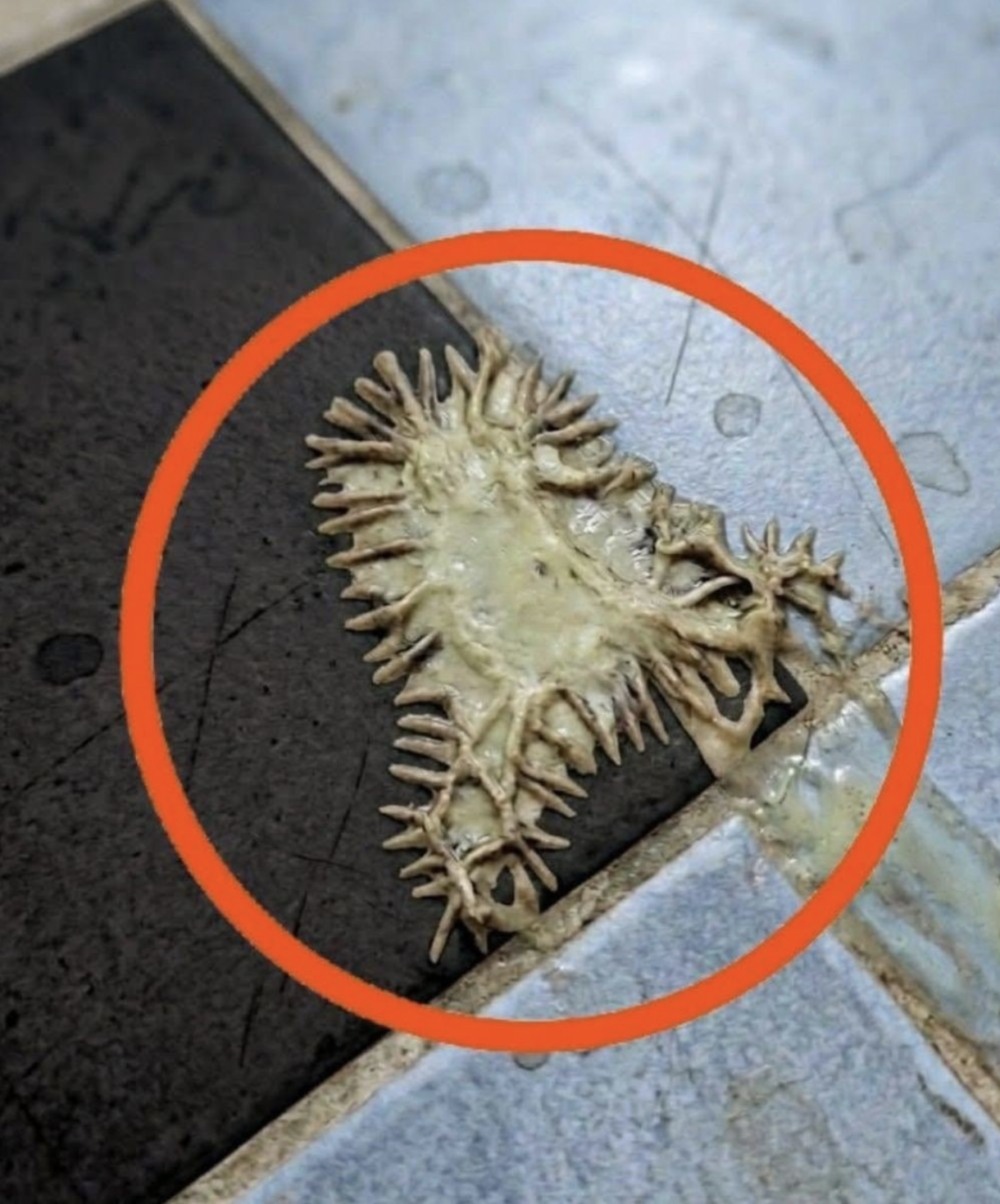
The Truth About Slime Mold—And Why You Don’t Need to Panic
It often begins with a moment of quiet confusion.
You step into your bathroom, expecting the usual—tiles, towels, the familiar rhythm of a daily routine. But something is off. In a corner, near the floor or creeping along a damp surface, there it is: a strange, shapeless blob.
It looks alive—but not quite.
It doesn’t resemble anything you recognize. It’s soft, maybe slightly glossy, sometimes pale, sometimes yellowish or even gray. It sits there silently, as if it appeared overnight.
And just like that, your mind starts racing.
Is it dangerous?
Is it growing?
Did something die here?
Should I be worried?
What you may have encountered is something both fascinating and misunderstood: slime mold.
And despite how unsettling it looks, the truth is far less alarming—and far more interesting—than it seems.
What Is Slime Mold, Really?
Slime mold is not a fungus, not a plant, and not an animal—though it shares characteristics with all three.
Scientifically, it belongs to a group of organisms that behave more like giant, single-celled amoebas. At certain stages of its life, slime mold exists as a flowing, jelly-like mass called a plasmodium.
This means:
- It has no brain
- No nervous system
- No defined body structure
And yet, it can:
- Move slowly across surfaces
- Seek out food sources
- Adapt to its environment
It’s one of those rare organisms that challenges how we think about life itself.
Why Did It Appear in Your Bathroom?
Slime mold doesn’t appear randomly. It shows up when conditions are just right—and bathrooms often provide exactly what it needs.
The ideal environment includes:
- Moisture
- Organic material (like dust, hair, or microscopic debris)
- Low light
- Warm temperatures
Bathrooms, especially those with poor ventilation, can become perfect habitats.
What looks like a sudden appearance is actually the result of:
- Invisible spores landing on a surface
- Favorable conditions allowing them to grow
- A rapid expansion phase that makes it seem like it “appeared overnight”
Why It Looks So Strange
Slime mold doesn’t grow like plants or fungi. Instead, it spreads.
It can:
- Form irregular, blob-like shapes
- Change color depending on its stage
- Develop vein-like patterns as it moves
Some species even resemble:
- Foam
- Melted plastic
- Wet paper
- Or something almost… alive in a way that feels unfamiliar
This unusual appearance is what triggers alarm.
It doesn’t fit into our mental categories of “normal.”
Is Slime Mold Dangerous?
This is the most important question—and the answer is reassuring.
In most cases, slime mold is harmless to humans.
It:
- Does not bite or sting
- Does not produce harmful toxins in typical household conditions
- Does not invade the body
However, like many organic materials, it can contribute to:
- Mild irritation in sensitive individuals
- Allergic reactions in rare cases
The main concern is not danger—but discomfort and hygiene.
Why It Feels So Unsettling
The reaction people have to slime mold is rarely about actual risk. It’s about perception.
Slime mold triggers a sense of unease because:
- It looks unfamiliar
- It appears suddenly
- It seems to move or grow
- It resembles something biological but undefined
Humans are wired to react strongly to unknown substances—especially those that appear organic and uninvited.
It’s a psychological response rooted in survival instinct.
How Fast Does It Grow?
One of the most surprising features of slime mold is its speed.
Under the right conditions:
- It can expand visibly within hours
- It can spread across surfaces in a single day
This rapid growth is what makes it seem “alive” in a way that feels almost intentional.
But it’s not intelligence—it’s biology.
What Happens If You Leave It Alone?
If left undisturbed, slime mold typically follows a natural cycle.
It will:
- Grow and spread while feeding
- Dry out as conditions change
- Release spores
- Disappear
Eventually, it turns into a dry, powdery residue and fades away.
However, the spores it releases can lead to new growth if conditions remain favorable.
How to Remove Slime Mold Safely
While it’s not dangerous, most people prefer to remove it—and that’s completely reasonable.
Step 1: Wear Basic Protection
- Gloves are recommended
- Avoid direct contact if possible
Step 2: Remove the Material
- Use paper towels or a disposable cloth
- Gently wipe it away
Step 3: Clean the Area
Use:
- Soap and water
- Or a mild disinfectant
Step 4: Dry Thoroughly
Moisture is the main factor that allows it to return.
Preventing It from Coming Back
Prevention focuses on controlling the environment.
1. Reduce Moisture
- Use a bathroom fan
- Open windows when possible
- Wipe down wet surfaces
2. Improve Airflow
- Keep the area ventilated
- Avoid damp, closed spaces
3. Clean Regularly
- Remove dust and organic debris
- Keep surfaces dry
When Should You Be Concerned?
In most cases, slime mold is harmless and temporary.
However, you should pay attention if:
- It keeps returning frequently
- It spreads extensively
- It appears alongside other signs of dampness (like mold growth)
These may indicate a larger moisture problem in your home.
Slime Mold in Nature: A Hidden Genius
Interestingly, slime mold is studied by scientists for its surprising abilities.
Despite having no brain, it can:
- Solve simple problems
- Find efficient paths to food
- Adapt to obstacles
Researchers have even used slime mold models to simulate:
- Transportation networks
- Decision-making processes
It’s a reminder that intelligence in nature doesn’t always look the way we expect.
A Different Way to See It
What first appears as something disturbing can, with understanding, become something fascinating.
That strange blob on your bathroom floor is not:
- A threat
- A sign of something sinister
It’s simply a natural organism responding to its environment.
A small, temporary visitor.

Welcome to my kitchen!
I’m a passionate home cook and recipe creator who loves turning simple ingredients into delicious, comforting meals that everyone can enjoy. Through this website, I share carefully prepared recipes, practical cooking tips, and easy-to-understand food education to help you feel more confident in the kitchen.
My goal is to make cooking simple, enjoyable, and accessible. Whether you are looking for a quick family dinner, a delicious dessert, healthy meal ideas, or traditional recipes with a modern touch, you’ll find inspiration here.
More Than Just Recipes
I believe that cooking is also a way to learn. That’s why this website is not only about recipes. I also create educational articles about ingredients, cooking techniques, kitchen tips, food preparation, and the stories behind different dishes.
Each article is designed to give you useful knowledge that you can apply in your own kitchen. From understanding how ingredients work together to learning better cooking methods, my aim is to help you become a more confident and creative cook.
My Philosophy
Good food doesn’t always require complicated ingredients or professional equipment. With a little knowledge, patience, and creativity, simple ingredients can become something truly special.
I believe in sharing recipes that are practical, clearly explained, and enjoyable to make. I also love exploring new flavors while appreciating traditional cooking and the recipes passed down through generations.
Thank you for visiting my kitchen and being part of this food-loving community. I hope my recipes and articles inspire you to cook, learn, experiment, and most importantly, enjoy every bite!
Happy cooking!