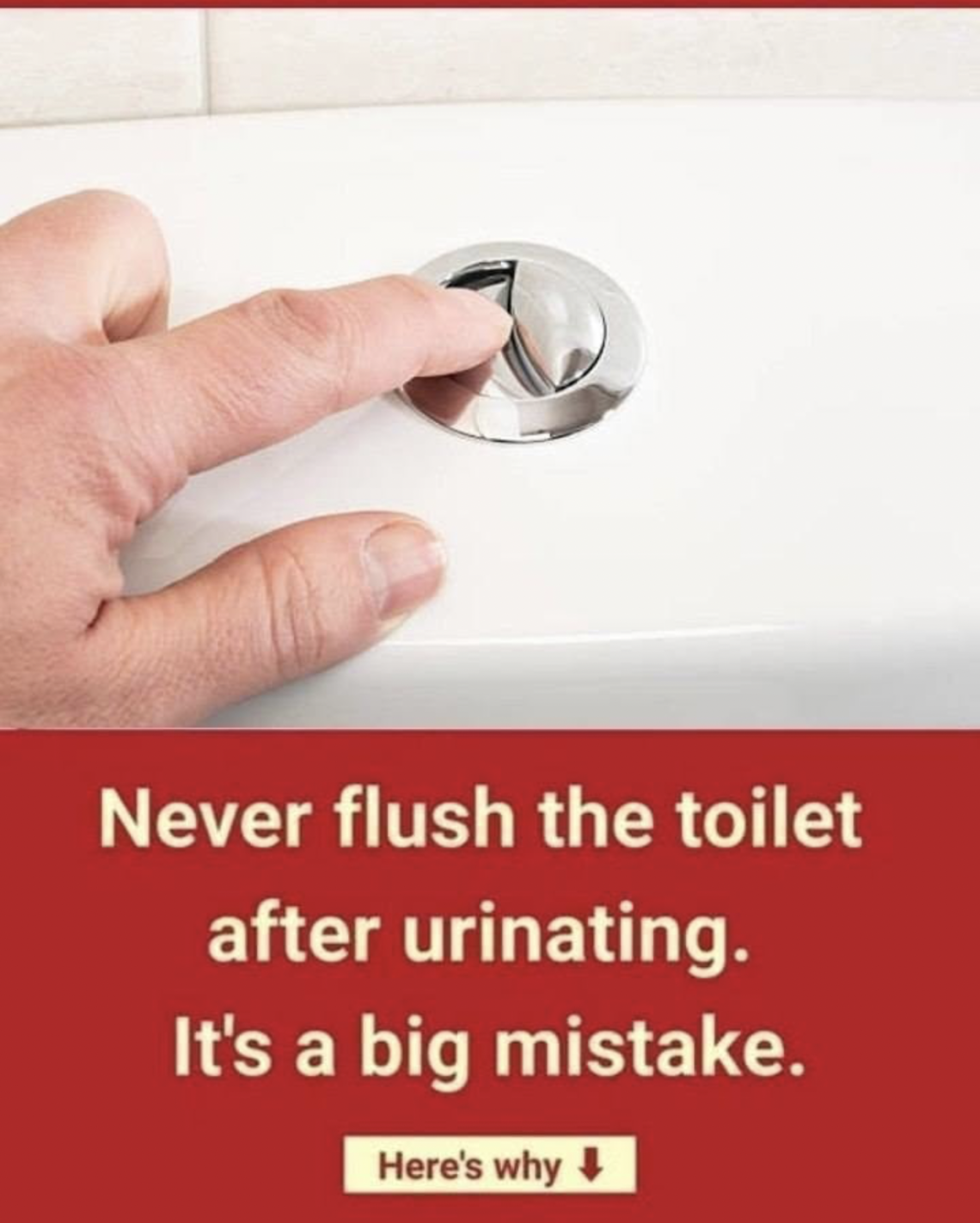
You’ve probably heard the familiar saying:
“If it’s yellow, let it mellow; if it’s brown, flush it down.”
It’s an old household phrase that has been repeated for generations, particularly by people looking for simple ways to conserve water.
The idea sounds straightforward: if you use the toilet only to urinate, why flush every single time?
After all, every flush uses water.
But once you look beyond the catchy rhyme, the question becomes more complicated.
How much water can you actually save?
Does leaving urine in the toilet create hygiene problems?
Could it affect plumbing?
And is it a reasonable habit for every household?
The answer depends on the type of toilet, how often it is used, the number of people sharing the bathroom, and how the bathroom is maintained.
Why Does a Toilet Use So Much Water?
Every time a toilet is flushed, water is released from the tank or supplied directly through the plumbing system.
Older toilets can use considerably more water per flush than modern high-efficiency models.
Newer toilets are generally designed to accomplish the same basic task with less water.
That means the potential savings from skipping occasional flushes can vary dramatically from one household to another.
If your toilet is older and uses a relatively large volume of water per flush, avoiding some unnecessary flushes could make a noticeable difference over time.
If you already have a modern, water-efficient toilet, the savings may be smaller.
So How Much Water Could Be Saved?
There isn’t one universal number because toilets have different flush volumes.
A household using an older, high-volume toilet could potentially save more water by reducing the number of flushes.
A household with a newer low-flow toilet would generally save less per skipped flush.
The easiest way to estimate the potential savings is to check your toilet’s specifications or look for the flush-volume information printed on the fixture.
Then consider how many urine-only flushes are normally made each day.
For example, if a household avoids several flushes each day, the savings can accumulate over weeks and months.
The key word, however, is potential.
Skipping every urine flush isn’t automatically the best water-conservation strategy for every home.
What Happens If Urine Sits in the Toilet?
Fresh urine is not simply a harmless, completely sterile liquid that remains unchanged indefinitely.
Once it sits in a toilet bowl, its composition can change.
Over time, odors can become more noticeable, particularly when the bathroom is warm or poorly ventilated.
Mineral deposits can also accumulate, especially in areas with hard water.
If urine repeatedly sits on the same surfaces, deposits may become more difficult to remove.
This doesn’t mean that leaving a single urine-only use unflushed automatically creates an unsanitary bathroom.
It means that prolonged accumulation can create additional cleaning and odor issues.
The Smell Is Often the Biggest Problem
For many households, odor is the most obvious tradeoff.
A toilet that isn’t flushed after every urine-only use may develop a noticeable smell, particularly if several people are using the same bathroom.
This can be more apparent in:
- small bathrooms,
- bathrooms with poor ventilation,
- warm environments,
- heavily used household bathrooms,
- or bathrooms where the toilet isn’t cleaned frequently.
What seems perfectly tolerable to one person may be unpleasant to someone else.
That’s especially important in a shared home.
Hygiene Is More Complicated Than “Flush or Don’t Flush”
Skipping a flush doesn’t automatically make a toilet dangerously unhygienic.
However, a bathroom still needs regular cleaning.
The toilet bowl, seat, lid, handle, surrounding floor, and other frequently touched surfaces can accumulate microorganisms and dirt regardless of whether every urine-only use is flushed.
Good bathroom hygiene therefore depends on more than the flushing schedule.
Regular cleaning and handwashing remain important.
What About Guests?
This is where the old saying can become less practical.
A household may decide that skipping some urine-only flushes is acceptable when everyone living there agrees.
Guests, however, shouldn’t be expected to understand a family’s personal bathroom habits.
If you’re hosting people, keeping the toilet clean, fresh-smelling, and ready to use is usually the more considerate approach.
A water-saving habit shouldn’t come at the expense of making visitors uncomfortable.
Shared Bathrooms Are Different
The more people who use a bathroom, the faster odors and deposits can become noticeable.
In a single-person household, leaving the bowl unflushed for a short period may be relatively easy to manage.
In a busy family bathroom, several people may use the toilet between cleanings.
That can make the practice considerably less appealing.
Household preferences matter.
Conservation is valuable, but so is maintaining a bathroom that everyone can comfortably use.
Could Skipping Flushes Damage the Toilet?
Simply leaving urine in the bowl for a while isn’t normally what damages a toilet.
The bigger concern is long-term buildup.
Urine contains compounds and minerals that can contribute to deposits over time, especially when water evaporates from the bowl.
Hard-water conditions can make mineral accumulation more noticeable.
If deposits become significant, they can make cleaning more difficult and contribute to an unpleasant-looking bowl.
Regular cleaning helps prevent this.
What About the Plumbing?
A common misconception is that urine sitting in the bowl will somehow automatically damage household pipes.
That’s not generally how plumbing works.
The toilet is designed to contain water and waste in the bowl between flushes.
However, toilets and plumbing systems can develop problems for many other reasons, including mineral buildup, clogs, aging components, tree-root intrusion in certain sewer systems, and inappropriate items being flushed.
Skipping an occasional urine-only flush isn’t a substitute for maintaining a functioning plumbing system.
One Important Exception: If the Toilet Looks Dirty
If the toilet bowl already contains visible residue, discoloration, or buildup, allowing additional urine to sit there isn’t likely to improve the situation.
Clean the toilet instead.
Water conservation should not mean postponing necessary sanitation.
The goal is to reduce unnecessary water use while still maintaining a clean bathroom.
Ventilation Makes a Difference
If your household chooses to skip some urine-only flushes, good ventilation becomes particularly useful.
An exhaust fan can help remove humid air and odors.
Opening a window, when appropriate and practical, can also improve airflow.
However, ventilation shouldn’t be used to conceal a persistent sewage or plumbing odor.
A strong or unusual smell that remains even after cleaning may indicate a plumbing problem that deserves investigation.
There Are Other Ways to Save Water
Skipping some flushes is only one possible conservation strategy.
A modern high-efficiency toilet can reduce water use every time it is flushed.
Fixing a toilet that runs continuously can also save a surprising amount of water.
A leaking toilet may waste water around the clock without anyone actively using it.
That can make repairing the leak more important than debating whether to skip occasional flushes.
Check for a Running Toilet
If you hear water constantly moving inside the toilet tank or bowl, don’t ignore it.
A faulty flapper, fill valve, or other component can allow water to escape continuously.
Even a relatively small leak can add up over time.
If you’re interested in conservation, making sure the toilet isn’t wasting water unnecessarily may be one of the most worthwhile improvements you can make.
What About Dual-Flush Toilets?
Dual-flush toilets are designed around the idea that different types of waste don’t necessarily require the same amount of water.
They generally provide a lower-volume option for liquid waste and a higher-volume option for solid waste.
This allows users to conserve water without simply leaving the toilet unflushed.
For households considering a bathroom upgrade, water-efficient fixtures can provide a more consistent long-term conservation strategy.
Is “Let It Mellow” Actually Environmentally Friendly?
Potentially, yes.
Reducing unnecessary flushing means reducing the amount of treated water being used.
It can also reduce the amount of wastewater entering the sewer or septic system.
But environmental impact isn’t determined by one household habit alone.
Water conservation involves many factors, including toilet efficiency, household size, local water availability, plumbing conditions, and overall consumption.
For someone living in a region experiencing water shortages, even small reductions may feel worthwhile.
In an area with abundant water and a very efficient toilet, the practical benefit may be less noticeable.
What About Septic Systems?
Households with septic systems sometimes think that avoiding flushes will automatically protect the septic tank.
That isn’t necessarily the case.
Septic systems are designed to handle household wastewater, and their performance depends on proper maintenance and appropriate water use.
Using dramatically less water isn’t always better if it interferes with normal household wastewater flow.
The best approach is to follow the guidance provided for your specific septic system and have it maintained appropriately.
A Balanced Approach
Rather than treating the old saying as an absolute household rule, consider it one possible water-saving habit.
For example, some households may choose to flush normally when:
- guests are present,
- the bathroom is shared by many people,
- odors are becoming noticeable,
- the bowl needs cleaning,
- or someone in the household prefers regular flushing.
They may choose to skip an occasional urine-only flush at other times.
There’s no requirement to follow the tradition at all.
The best habit is the one that balances water conservation, cleanliness, comfort, and household preferences.
When You Should Definitely Flush
There are situations where regular flushing makes sense.
If there is solid waste, flush appropriately.
If the toilet bowl is becoming noticeably dirty or odorous, flush and clean it.
If multiple people are sharing the bathroom, consider the comfort of everyone using the space.
And if you’re unsure whether a particular plumbing system can handle a change in household habits, follow the advice of a qualified plumber or the system manufacturer.
Don’t Forget the Simple Habit of Handwashing
Regardless of whether you flush immediately or later, handwashing remains one of the most important bathroom habits.
Wash your hands thoroughly with soap and water after using the toilet.
A water-saving strategy shouldn’t involve reducing basic hygiene.
Saving water and maintaining good hygiene aren’t mutually exclusive.
So, Is It Better to Let It Mellow?
There isn’t one answer that applies perfectly to every household.
Yes, skipping some urine-only flushes can save water.
But the savings depend on your toilet’s flush volume and how frequently it is used.
At the same time, leaving urine in the bowl for extended periods can contribute to odor and mineral buildup, particularly in busy or poorly ventilated bathrooms.
So the old saying contains a genuine conservation idea, but it shouldn’t be treated as a universal rule.