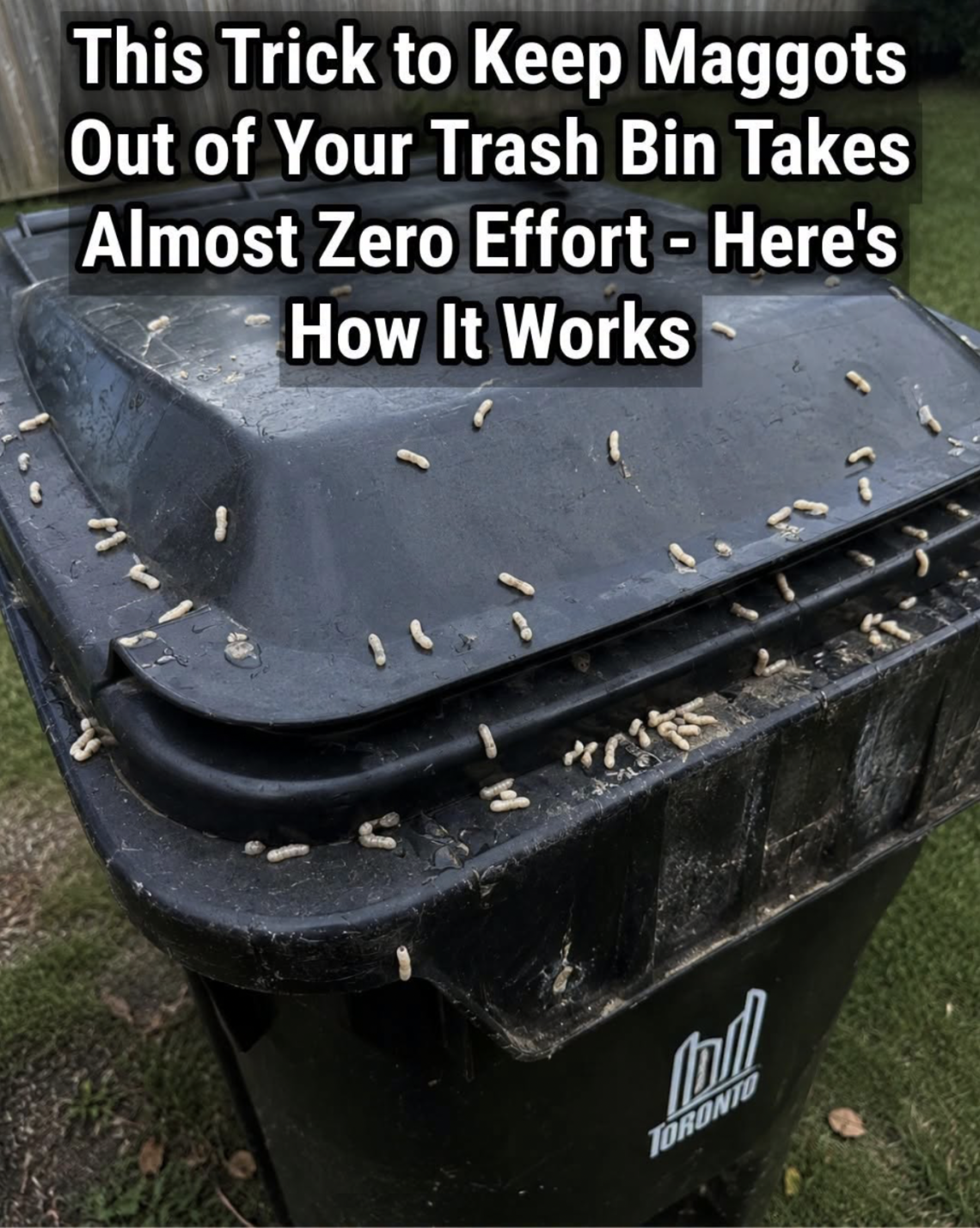
Few household problems are as unpleasant as opening your outdoor trash bin on a warm day and discovering it crawling with maggots. One moment you’re taking out the garbage, and the next you’re greeted by an unpleasant odor and dozens—or even hundreds—of tiny, wriggling white larvae feeding on food waste.
It’s an experience that can make even the strongest stomach turn.
The good news is that while maggots are certainly unwelcome, they are also entirely preventable. Understanding why they appear, how they develop, and what simple habits can stop them from multiplying can help you keep your trash bin cleaner, fresher, and far less attractive to flies.
The key is to remember that maggots don’t appear out of thin air. They are the larval stage of flies, most commonly houseflies and blowflies, which are constantly searching for moist, decaying organic material where they can lay their eggs. A garbage bin filled with food scraps, especially during warm weather, provides the perfect environment.
Fortunately, with a little routine maintenance and a few smart storage habits, you can dramatically reduce the chances of ever seeing maggots in your trash again.
What Are Maggots?
Maggots are the immature larvae of flies.
After an adult fly lays eggs, those eggs hatch into tiny, soft-bodied larvae whose primary job is to feed and grow.
They are usually:
- Cream-colored or white.
- Legless.
- Soft-bodied.
- Tapered at one end.
- Constantly moving while feeding.
Although they may look alarming, maggots are simply part of the natural life cycle of many fly species.
How Do Maggots Get Into a Trash Bin?
The process happens surprisingly quickly.
Step 1: Adult Flies Find the Bin
Flies are attracted by:
- Food odors.
- Rotting fruit.
- Meat scraps.
- Fish waste.
- Pet food.
- Moist garbage.
Even a small amount of exposed food waste can attract flies from a considerable distance.
Step 2: Eggs Are Laid
Female flies lay clusters of tiny eggs on damp organic material.
A single fly can lay hundreds of eggs during her lifetime.
The eggs are extremely small and often go unnoticed.
Step 3: Eggs Hatch
During warm weather, eggs may hatch in as little as 8 to 24 hours, depending on the species and environmental conditions.
Tiny larvae immediately begin feeding.
Step 4: Rapid Growth
Over the next several days, the larvae consume organic material almost continuously.
As they feed, they grow rapidly before eventually leaving the food source to pupate and later emerge as adult flies.
Why Summer Makes the Problem Worse
Warm temperatures greatly accelerate the fly life cycle.
Heat:
- Speeds egg development.
- Encourages fly activity.
- Increases food decomposition.
- Produces stronger odors.
- Creates ideal breeding conditions.
During hot summer months, a trash bin can become infested surprisingly fast if food waste is left exposed.
Foods That Attract Flies Most
Certain waste is especially attractive.
Common culprits include:
- Raw meat.
- Poultry.
- Seafood.
- Fish scraps.
- Dairy products.
- Cooked leftovers.
- Fruit peels.
- Vegetable scraps.
- Pet food.
- Greasy paper towels.
The stronger the smell, the more attractive it becomes to flies.
Keep Your Trash Bags Sealed
One of the simplest preventive measures is sealing trash bags tightly.
Always:
- Tie garbage bags securely.
- Avoid overfilling bags.
- Replace torn bags.
- Double-bag especially messy waste.
A tightly sealed bag makes it much harder for flies to reach food.
Wrap Food Waste
Before throwing food away:
- Wrap meat packaging.
- Seal seafood scraps.
- Place leftovers inside smaller bags.
- Wrap especially smelly waste in newspaper or paper towels.
Reducing exposed food greatly decreases odors.
Freeze Especially Smelly Waste
If garbage collection is several days away, consider freezing items such as:
- Fish remains.
- Raw meat trimmings.
- Poultry scraps.
Dispose of them on collection day.
This greatly reduces odors and slows decomposition.
Keep the Lid Closed
An open trash bin is an invitation for flies.
Always:
- Close the lid completely.
- Repair broken hinges.
- Replace damaged lids.
- Ensure the lid fits tightly.
Even small openings allow flies to enter.
Clean the Bin Regularly
Cleaning removes food residue that attracts insects.
Wash the bin using:
- Hot water.
- Dish soap.
- A long-handled brush.
Pay special attention to:
- Bottom corners.
- Lid undersides.
- Side walls.
- Handles.
- Drain holes.
Allow the bin to dry completely before adding a new liner or bag.
Use Bin Liners
Large bin liners help contain leaks.
Benefits include:
- Less food residue.
- Easier cleaning.
- Reduced odors.
- Better hygiene.
Replace liners if they become damaged.
Sprinkle Baking Soda
Baking soda can help absorb moisture and reduce odors.
Sprinkle a thin layer in the bottom of a clean bin before adding trash.
While it won’t eliminate flies, reducing odors may make the bin less attractive.
Keep the Bin Dry
Moisture accelerates decomposition.
Avoid allowing:
- Rainwater.
- Leaking garbage.
- Melted ice.
- Food liquids.
to collect in the bottom.
A dry bin is generally less attractive to flies.
Store the Bin in Shade
Sunlight heats garbage quickly.
Whenever possible, place outdoor bins:
- Under a covered area.
- In the shade.
- Away from direct afternoon sun.
Lower temperatures slow decomposition and reduce odors.
Clean Around the Bin
Food spills outside the bin also attract flies.
Regularly sweep away:
- Fallen scraps.
- Sticky liquids.
- Pet food.
- Spilled garbage.
Keeping the surrounding area clean discourages insects.
What If You Already Have Maggots?
If maggots are present, act promptly.
Empty the Bin
Dispose of all trash on collection day or place it in a larger disposal container if available.
Wash Thoroughly
Scrub the interior with hot, soapy water, paying attention to every surface.
Disinfect
After cleaning, disinfect the bin using an appropriate household disinfectant according to the product’s directions. Rinse if required by the label and allow the bin to dry completely before using it again.
Dry Completely
Moisture encourages future infestations.
Leave the lid open until the bin is fully dry.
Common Mistakes
Avoid these habits:
- Leaving food exposed.
- Allowing bags to leak.
- Forgetting to close the lid.
- Waiting months between cleanings.
- Leaving garbage in direct sunlight.
- Ignoring small spills around the bin.
Small changes make a big difference.
Preventing Flies Before They Arrive
To discourage flies:
- Take garbage out regularly.
- Keep compost separate from household trash if possible.
- Clean bins routinely.
- Avoid letting food waste sit uncovered.
- Store bins away from doors and windows when practical.
Consistency is the best long-term strategy.
Frequently Asked Questions
Are maggots dangerous?
Maggots themselves generally do not bite people or pets. However, because they develop in decaying waste, they should not be handled directly, and good hygiene is important when cleaning an infested bin.
Why do they appear so quickly?
Fly eggs can hatch within a day under warm conditions, and larvae begin feeding immediately. Hot weather speeds up the entire life cycle.
Will bleach prevent maggots?
Cleaning and disinfecting can help maintain a sanitary bin, but long-term prevention depends more on removing food residue, keeping the bin dry, sealing trash bags, and preventing flies from accessing the waste in the first place.
Does freezing meat scraps really help?
Yes. Keeping particularly odorous food waste frozen until collection day slows decomposition and greatly reduces odors that attract flies.
How often should I clean my trash bin?
A thorough cleaning every few weeks during warm weather—or anytime leaks or spills occur—helps prevent odors and insect problems.
Can maggots survive after the trash is removed?
Some larvae may remain in residue stuck to the sides or bottom of the bin. That’s why washing the container thoroughly after emptying it is an important step in breaking the fly life cycle.

Welcome to my kitchen!
I’m a passionate home cook and recipe creator who loves turning simple ingredients into delicious, comforting meals that everyone can enjoy. Through this website, I share carefully prepared recipes, practical cooking tips, and easy-to-understand food education to help you feel more confident in the kitchen.
My goal is to make cooking simple, enjoyable, and accessible. Whether you are looking for a quick family dinner, a delicious dessert, healthy meal ideas, or traditional recipes with a modern touch, you’ll find inspiration here.
More Than Just Recipes
I believe that cooking is also a way to learn. That’s why this website is not only about recipes. I also create educational articles about ingredients, cooking techniques, kitchen tips, food preparation, and the stories behind different dishes.
Each article is designed to give you useful knowledge that you can apply in your own kitchen. From understanding how ingredients work together to learning better cooking methods, my aim is to help you become a more confident and creative cook.
My Philosophy
Good food doesn’t always require complicated ingredients or professional equipment. With a little knowledge, patience, and creativity, simple ingredients can become something truly special.
I believe in sharing recipes that are practical, clearly explained, and enjoyable to make. I also love exploring new flavors while appreciating traditional cooking and the recipes passed down through generations.
Thank you for visiting my kitchen and being part of this food-loving community. I hope my recipes and articles inspire you to cook, learn, experiment, and most importantly, enjoy every bite!
Happy cooking!