Moving into a new home is always filled with surprises. As you unpack boxes, open forgotten drawers, and explore every cabinet, it’s common to discover unfamiliar tools or accessories left behind by previous owners. Some are instantly recognizable, while others can seem completely mysterious, leaving you wondering whether they belong in the kitchen, the garage, or somewhere else entirely.
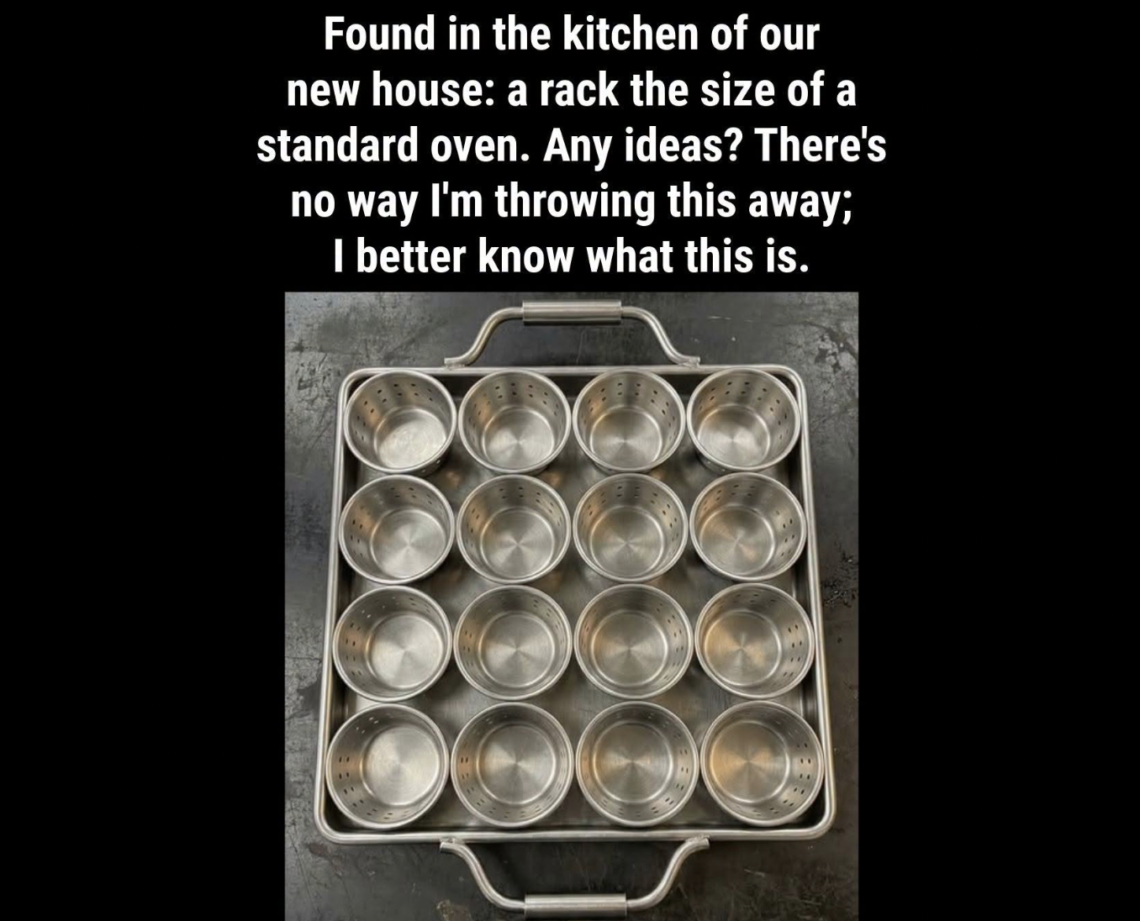
One of the most frequently shared internet mysteries involves a photograph of a large metal rack roughly the size of a standard oven rack, accompanied by captions such as:
“Found this in the kitchen of our new house. Does anyone know what it is?”
“The previous owners left this behind. Any ideas?”
“I’ve searched everywhere and still can’t figure out what this rack is used for.”
These posts quickly attract thousands of comments, with people offering everything from serious explanations to humorous guesses. Some believe it is an antique cooking tool, while others jokingly describe it as a medieval torture device, an oversized cooling rack, or a forgotten barbecue accessory.
In reality, the mystery is usually much simpler. Most racks matching this description belong to one of several practical kitchen appliances or cooking systems. Their unusual appearance often makes them seem unfamiliar, especially if they have become separated from the appliance they were originally designed to accompany.
Understanding the most common possibilities can help identify the rack correctly and determine whether it may still be useful in your kitchen.
Why This Mystery Appears So Often Online
This particular mystery has become popular because many kitchen accessories are designed to fit inside larger appliances rather than being used independently.
When these accessories become separated from the original appliance, they appear unusual and difficult to identify.
As homes change owners over the years, these loose racks are frequently left behind in:
- Kitchen cabinets.
- Storage rooms.
- Utility closets.
- Garages.
- Basements.
- Pantries.
Without the original appliance nearby, even experienced cooks may struggle to recognize them.
The Three Most Common Answers
Although dozens of guesses appear online, most mystery racks turn out to be one of three practical kitchen accessories.
1. Oven Roasting Rack
This is the most common explanation.
A roasting rack sits inside a roasting pan and elevates meat above the bottom of the pan during cooking.
Its primary purpose is to allow:
- Hot air to circulate evenly.
- Fat to drip away from the meat.
- Better browning.
- Crispier skin.
- More even roasting.
Because the meat is lifted above the cooking juices, it roasts rather than steams.
Roasting racks are commonly used for:
- Whole chickens.
- Turkey.
- Roast beef.
- Pork loin.
- Lamb.
- Duck.
Some versions are flat, while others have curved supports designed to cradle large cuts of meat.
Advantages of a Roasting Rack
Using a roasting rack helps:
- Improve air circulation.
- Prevent soggy bottoms.
- Produce crisp, golden skin.
- Reduce excess grease.
- Make carving easier.
Many professional kitchens rely on roasting racks for consistent results.
2. Oven Cooling Rack
Another very common possibility is a cooling rack.
Unlike roasting racks, cooling racks are designed to hold baked goods after they leave the oven.
Freshly baked items continue releasing steam after baking.
Placing them directly on a solid surface traps moisture underneath.
A cooling rack allows air to circulate completely around the food.
This helps maintain crisp textures.
Cooling racks are perfect for:
- Cookies.
- Cakes.
- Brownies.
- Muffins.
- Bread.
- Pastries.
- Biscuits.
Some heavy-duty cooling racks are also oven-safe and can double as roasting racks.
Why Cooling Racks Matter
Proper cooling helps prevent:
- Soggy bottoms.
- Condensation.
- Uneven cooling.
- Soft crusts.
Professional bakers almost always cool baked goods on wire racks.
3. Broiler or Grill Rack
Many older ovens included removable broiler racks.
These racks sit above a drip tray and allow fat to fall away from food while it cooks under intense heat.
Broiler racks are commonly used for:
- Steaks.
- Hamburgers.
- Sausages.
- Fish.
- Chicken breasts.
- Vegetables.
Their open design improves airflow while reducing smoke caused by accumulated grease.
Some barbecue accessories closely resemble broiler racks, making identification even more confusing.
Other Possible Explanations
Although less common, the mystery rack could also be one of the following.
Dehydrator Rack
Food dehydrators often include multiple flat wire trays.
These racks allow warm air to circulate around:
- Fruit.
- Vegetables.
- Herbs.
- Mushrooms.
- Meat.
If separated from the dehydrator itself, they can resemble ordinary oven racks.
Air Fryer Oven Rack
Large countertop air fryer ovens frequently include removable wire shelves.
These racks are designed for:
- Air frying.
- Toasting.
- Baking.
- Dehydrating.
Their dimensions often match those of a standard oven rack.
Convection Oven Shelf
Some convection ovens include specialized racks that maximize airflow during cooking.
They may feature:
- Raised sections.
- Curved supports.
- Fine mesh construction.
These racks improve even cooking by allowing hot air to circulate freely.
Smoker Rack
Outdoor smokers frequently use removable cooking racks.
These are designed for:
- Brisket.
- Ribs.
- Chicken.
- Vegetables.
If brought indoors for storage, they may easily be mistaken for oven accessories.
Baking Rack for Bread
Some artisan bread bakers use specialized racks for cooling multiple loaves simultaneously.
These racks may feature:
- Heavy steel construction.
- Closely spaced wires.
- Reinforced frames.
How to Identify the Rack
Several clues can help determine its purpose.
Look at the Material
Heavy stainless steel often indicates roasting or broiling.
Thin chrome wire usually suggests a cooling rack.
Check the Size
Measure:
- Width.
- Length.
- Height.
Compare these measurements with:
- Your oven.
- Roasting pans.
- Countertop appliances.
Examine the Feet
Raised feet often indicate a cooling rack.
Curved supports usually belong to roasting racks.
Look for Burn Marks
Dark discoloration or baked-on grease suggests oven use.
A perfectly clean finish may indicate light use or storage.
Search for Manufacturer Markings
Many racks include stamped:
- Brand names.
- Part numbers.
- Model numbers.
These markings can often identify the original appliance.
Why Appliances Include Separate Racks
Manufacturers design specialized racks to improve cooking performance.
Different racks optimize:
- Air circulation.
- Heat distribution.
- Grease drainage.
- Browning.
- Crisping.
Removing food from direct contact with pans often produces significantly better results.
Why These Racks Get Left Behind
Loose kitchen accessories are frequently forgotten because they are stored separately.
Previous homeowners may leave them behind when:
- Replacing appliances.
- Moving.
- Remodeling.
- Cleaning storage areas.
Without the matching appliance, the rack may seem unimportant.
Can You Still Use It?
In many cases, yes.
If the rack is:
- Rust-free.
- Straight.
- Stable.
- Food-safe.
It may still serve many useful purposes.
Possible uses include:
- Cooling baked goods.
- Roasting vegetables.
- Resting grilled meat.
- Drying herbs.
- Decorating cookies.
- Holding freshly fried foods while excess oil drains.
Always ensure the rack is clean and suitable for food contact before using it.
Cleaning an Old Metal Rack
If you plan to reuse it:
- Wash thoroughly with hot water and dish soap.
- Remove baked-on residue with a non-abrasive scrubber.
- Soak in warm water if necessary.
- Dry completely to prevent rust.
- Inspect for damaged welds or loose wires.
Avoid using heavily rusted racks for cooking.
Frequently Asked Questions
Could it belong to the oven itself?
Yes.
Many ovens include removable cooking shelves or broiler racks.
Is it safe to use?
If it is structurally sound, rust-free, and made from food-safe materials, it is generally suitable for cooking or cooling food.
Why does it look unfamiliar?
Because many appliance accessories are rarely seen outside the appliance they were designed to fit.
Once separated, they often appear unusual.
Could it have multiple uses?
Absolutely.
Many wire racks are versatile enough to be used for roasting, cooling, draining fried foods, or supporting baked goods.

Welcome to my kitchen!
I’m a passionate home cook and recipe creator who loves turning simple ingredients into delicious, comforting meals that everyone can enjoy. Through this website, I share carefully prepared recipes, practical cooking tips, and easy-to-understand food education to help you feel more confident in the kitchen.
My goal is to make cooking simple, enjoyable, and accessible. Whether you are looking for a quick family dinner, a delicious dessert, healthy meal ideas, or traditional recipes with a modern touch, you’ll find inspiration here.
More Than Just Recipes
I believe that cooking is also a way to learn. That’s why this website is not only about recipes. I also create educational articles about ingredients, cooking techniques, kitchen tips, food preparation, and the stories behind different dishes.
Each article is designed to give you useful knowledge that you can apply in your own kitchen. From understanding how ingredients work together to learning better cooking methods, my aim is to help you become a more confident and creative cook.
My Philosophy
Good food doesn’t always require complicated ingredients or professional equipment. With a little knowledge, patience, and creativity, simple ingredients can become something truly special.
I believe in sharing recipes that are practical, clearly explained, and enjoyable to make. I also love exploring new flavors while appreciating traditional cooking and the recipes passed down through generations.
Thank you for visiting my kitchen and being part of this food-loving community. I hope my recipes and articles inspire you to cook, learn, experiment, and most importantly, enjoy every bite!
Happy cooking!