Finding a strange little bug or unfamiliar speck in your child’s hair can turn an ordinary evening into an unexpectedly stressful one.
Maybe you notice something while brushing their hair.
Perhaps your child mentions that their scalp feels itchy.
Or you might spot a tiny moving object while helping them get ready for bed.
Almost immediately, the questions begin:
Is it head lice?
Could it be a tick?
Is it an insect from outside?
Are those tiny white spots eggs?
Does everyone in the house need treatment?
Before you panic, take a breath.
A strange object in the hair does not automatically mean your child has head lice, and not every speck attached to a hair is an insect or an egg.
Several different things can look surprisingly similar when they’re tiny.
The first step is figuring out what you’re actually looking at.
What Could Be in Your Child’s Hair?
There are several possibilities.
The object could be:
- head lice,
- a louse egg, sometimes called a nit,
- a small insect picked up outdoors,
- a tick,
- dandruff,
- dried hair product,
- lint or debris,
- a tiny piece of skin,
- or another harmless material.
Appearance alone can sometimes be misleading, particularly when you’re looking at something only a few millimeters long.
That’s why careful inspection is more useful than immediately assuming the worst.
Head Lice: One of the Most Common Concerns
When parents discover something unusual in a child’s hair, head lice are often the first thing they think about.
Head lice are small parasitic insects that live on the human scalp and feed on blood.
They are especially common among school-aged children because close head-to-head contact makes it easier for lice to move from one person to another.
Importantly, having head lice is not a sign that a child is dirty.
Lice can affect children and adults regardless of how clean their hair is or how frequently they bathe.
What Do Head Lice Look Like?
Adult head lice are small insects, generally difficult to see clearly without close inspection.
They can vary in color from pale gray or tan to brownish.
They move through the hair rather than jumping or flying.
One useful clue is movement.
If you see something that is clearly crawling through the hair, lice become one possibility worth considering.
However, movement alone doesn’t establish the diagnosis.
What Are Nits?
Nits are lice eggs.
They can be extremely small and may appear as tiny pale, yellowish, tan, or whitish objects attached to individual hairs.
This is where things can become confusing.
Dandruff and other debris can look very similar.
One useful distinction is that nits are typically firmly attached to the hair shaft, whereas loose flakes of dandruff or ordinary debris can often be brushed or shaken away more easily.
Still, visual identification can be difficult, especially when the object is tiny.
Itchy Scalp Doesn’t Always Mean Lice
An itchy scalp can certainly occur with head lice, but itching has many other possible causes.
For example, a child may experience itching because of:
- dry skin,
- dandruff,
- irritation from shampoo,
- sensitivity to hair products,
- eczema,
- sweating,
- or another scalp condition.
Some children with head lice may not have noticeable itching at first.
So don’t use itching alone as proof that lice are present.
Look for additional evidence.
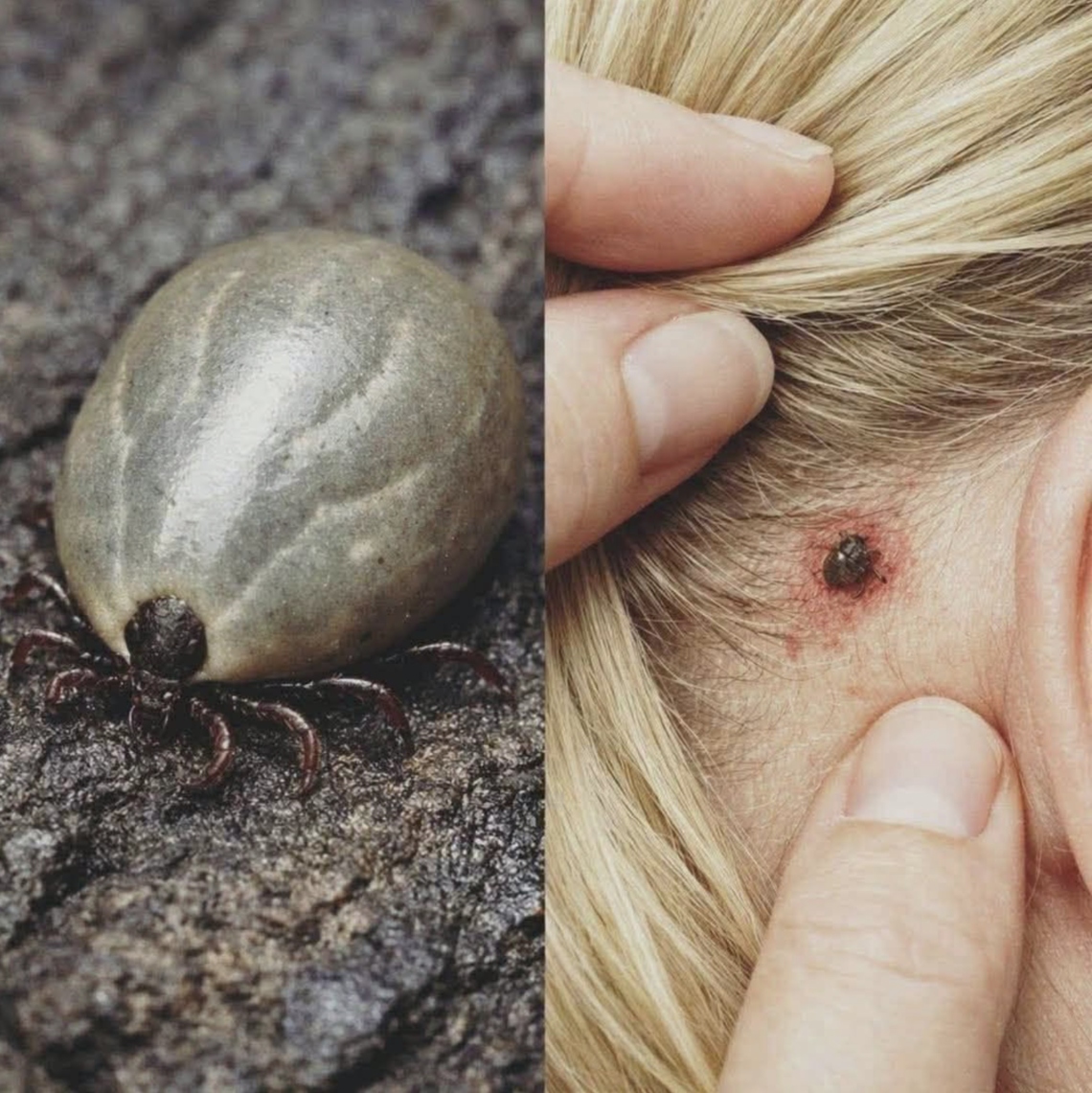
What About a Tick?
A tick can occasionally become attached to a person’s scalp, particularly after outdoor activities.
This is one reason parents should check children’s hair and skin after spending time in areas where ticks are common.
A tick is different from head lice.
It may remain attached to the skin rather than simply moving around among the hairs.
If you suspect that a tick is attached to your child’s skin, don’t try to identify it solely from a vague description.
A healthcare professional can help if you’re uncertain about what you’re seeing or what to do next.
Outdoor Insects Can End Up in Hair Too
Children play outside.
They run through grass, explore gardens, climb around playgrounds, and spend time around trees and bushes.
It’s therefore entirely possible for an ordinary outdoor insect or piece of plant material to end up in their hair.
A tiny insect discovered after an afternoon outdoors doesn’t automatically indicate an infestation.
This is another reason context matters.
Ask yourself:
Where has your child been today?
Was there close contact with other children?
Have they been playing outdoors?
Has anyone else in the household experienced similar symptoms?
Those details can help narrow down the possibilities.
What Should You Do First?
If you discover something unusual, don’t immediately start treating the entire household.
Instead, examine the hair carefully in good lighting.
Part the hair into small sections, particularly around the scalp and behind the ears.
Look closely at the roots and individual strands.
If possible, use a fine-toothed comb designed for checking for lice.
The goal is to determine whether you’re actually seeing an insect, an attached egg, ordinary debris, or something else.
Don’t Confuse Dandruff With Nits
This is one of the most common sources of confusion.
Dandruff tends to appear as irregular flakes that are relatively easy to move through the hair.
Nits are generally attached to individual hairs.
However, dandruff, product residue, and other scalp debris can sometimes cling to hair strongly enough to make identification difficult.
If you’re unsure, don’t guess.
A pharmacist, pediatrician, school health professional, or other qualified healthcare provider may be able to help determine what you’re looking at.
Does the Whole Family Need Treatment?
Not automatically.
If head lice are confirmed, close household contacts may need to be checked, but that doesn’t mean everyone should automatically receive treatment.
Treatment should be based on an actual finding of live lice or appropriate professional guidance.
Using insecticidal products unnecessarily isn’t a good substitute for diagnosis.
Different products also have different age restrictions, instructions, and precautions.
Always follow the product label or advice from a qualified healthcare professional.
Don’t Use Household Insecticides
This is especially important.
Never use pesticides intended for furniture, gardens, pets, or household insects on a child’s scalp.
A child’s scalp is not an appropriate place for household insecticides.
If treatment for head lice is necessary, use a product specifically intended for human head lice and appropriate for the child’s age, following its directions carefully.
What About Sharing Combs and Hats?
If head lice are suspected, it’s sensible to avoid sharing personal items that come into contact with the hair.
That includes:
- combs,
- brushes,
- hair accessories,
- hats,
- and similar personal items.
Head lice primarily spread through direct hair-to-hair contact.
They don’t jump or fly from person to person.
Understanding how they spread can help families avoid unnecessary panic and excessive cleaning.
You Don’t Need to Panic-Clean the Entire House
One of the biggest misconceptions about head lice is that discovering them means the entire house needs to be disinfected.
That isn’t generally necessary.
The primary focus should be the affected person’s hair and appropriate management of close contacts.
Ordinary household cleaning is sufficient for most situations.
There’s no need to start spraying furniture, carpets, walls, or beds with pesticides.
In fact, unnecessary pesticide exposure can create its own risks.
What About Bedding?
If head lice are confirmed, follow current guidance from a healthcare professional or public-health authority regarding recently used bedding and clothing.
The focus should be on sensible cleaning rather than trying to sterilize the entire home.
Lice survive best on the scalp, where they have access to a blood meal.
They do not thrive indefinitely away from a person.
When Should You Contact a Healthcare Professional?
Consider asking a healthcare professional for help if:
- you cannot identify the object,
- something appears firmly attached to the scalp,
- you suspect a tick,
- your child has significant scalp irritation,
- there are sores or signs of infection,
- symptoms persist despite appropriate care,
- or you aren’t sure which treatment is safe for your child’s age.
A professional can help distinguish among lice, skin conditions, insects, and other causes.
What If You Only Found One Bug?
Finding a single insect doesn’t necessarily mean there’s an infestation.
It depends on what the insect is.
If it’s an outdoor insect that simply landed in the hair, there may be nothing else to address.
If it’s a live head louse, however, further checking is appropriate because finding one live louse can indicate that additional lice may be present.
That’s why identification matters more than the number of insects you initially see.
The Most Important Thing: Don’t Blame Your Child
Children can feel embarrassed when adults suddenly become concerned about insects in their hair.
It’s important to keep the conversation calm and matter-of-fact.
Head lice, when present, are a common problem—not a reflection of cleanliness, intelligence, or personal behavior.
Your child hasn’t done anything wrong.
Treating the situation like an ordinary health or hygiene issue can help prevent unnecessary embarrassment.
A Calm Checklist for Parents
If you discover something strange in your child’s hair, remember these steps:
1. Stay calm.
Don’t assume it’s lice immediately.
2. Get good lighting.
Tiny objects are much easier to inspect properly under bright light.
3. Check the scalp and hair carefully.
Pay particular attention to areas behind the ears and near the back of the neck.
4. Look for movement.
A crawling insect is more significant than a loose piece of debris.
5. Check whether anything is firmly attached to the hair.
This can help distinguish possible nits from ordinary flakes.
6. Consider recent activities.
Think about school, sleepovers, outdoor activities, sports, and close contact with other children.
7. Ask for professional help if you’re uncertain.
There’s no prize for correctly diagnosing a mystery insect at home.
Don’t Let Internet Photos Make You Panic
Tiny insects can look dramatically different depending on lighting, camera quality, magnification, and the angle of the photograph.
A blurry photograph can make ordinary debris look frightening.
Online searches can be useful for learning, but they shouldn’t replace professional identification when you’re uncertain.
If something doesn’t look right or your child is experiencing persistent symptoms, getting an expert opinion is the better option.