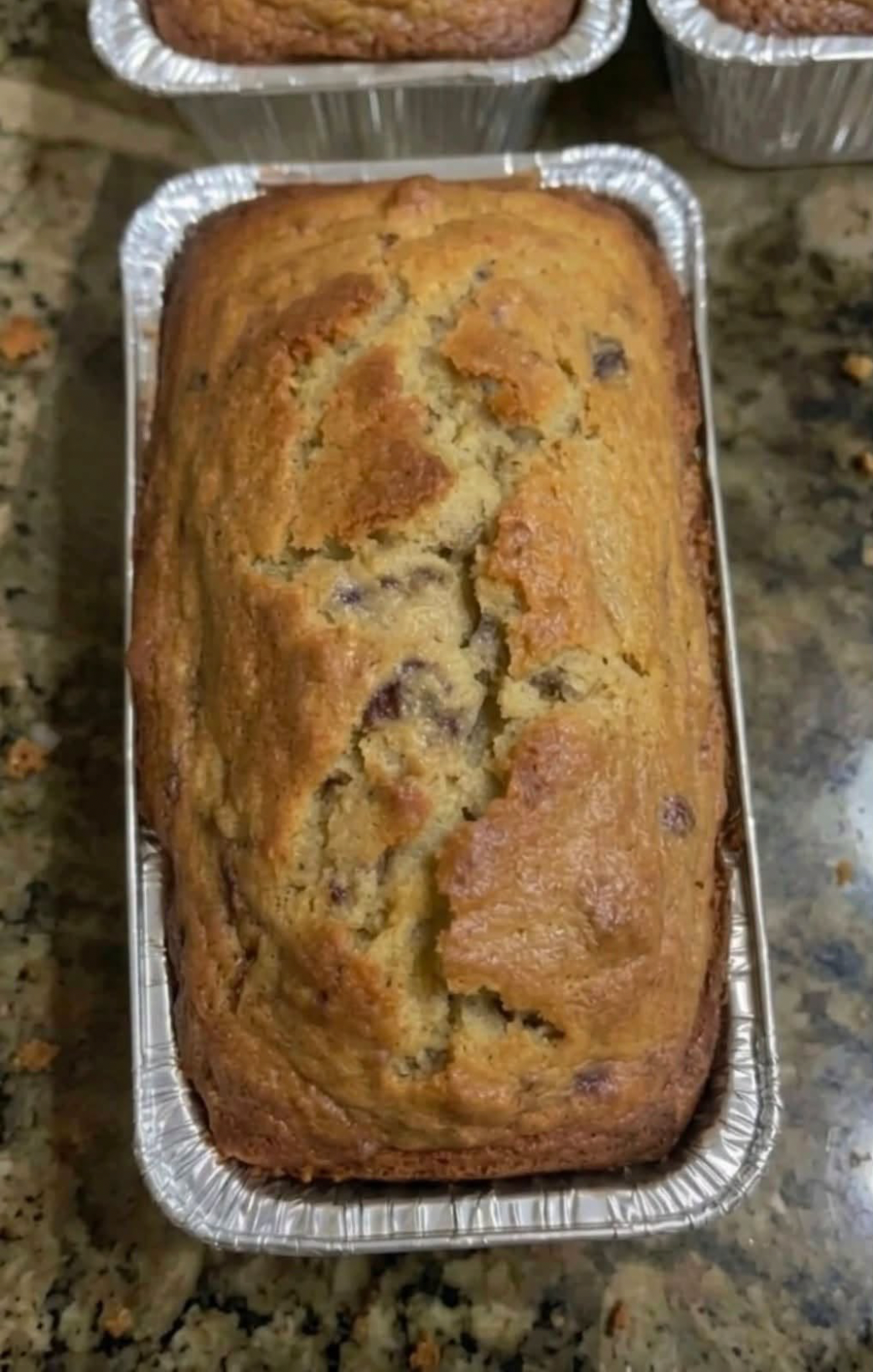
There is something wonderfully comforting about a loaf of homemade banana bread.
It fills the kitchen with the warm aroma of ripe bananas, butter, and vanilla, and it has a way of making even an ordinary afternoon feel a little more special. Best of all, banana bread is one of those wonderfully practical recipes that turns something you might otherwise throw away—very ripe bananas—into a soft, fragrant, delicious homemade treat.
Those bananas sitting on the counter with brown spots and deeply softened skins may not look particularly appealing anymore, but they are often exactly what you want for banana bread. As bananas ripen, their natural sweetness becomes more pronounced and their flesh becomes soft enough to mash easily.
The result is a loaf that is moist, tender, flavorful, and wonderfully easy to prepare.
Why You’ll Love This Banana Bread
This recipe is designed to be simple enough for everyday baking while still producing a loaf that feels special.
You’ll love it because:
- It uses very ripe bananas.
- The ingredients are simple and familiar.
- You don’t need a mixer.
- The batter comes together quickly.
- It makes the kitchen smell wonderful.
- The finished loaf is soft and moist.
- It works beautifully for breakfast or an afternoon snack.
- It’s delicious warm or completely cooled.
- You can customize it with nuts, chocolate, or spices.
It’s also an excellent recipe for beginners because there are only a few important techniques to remember.
Ingredients
For one standard loaf, you’ll need:
- 3 very ripe bananas, mashed
- 1/2 cup unsalted butter, melted and slightly cooled
- 3/4 cup granulated sugar
- 2 large eggs
- 1 teaspoon vanilla extract
- 1 1/2 cups all-purpose flour
- 1 teaspoon baking soda
- 1/2 teaspoon salt
- 1/2 teaspoon ground cinnamon, optional
For an extra-rich banana flavor, you can add another half banana if your bananas are particularly small.
Optional additions include:
- 1/2 cup chopped walnuts or pecans
- 1/2 cup chocolate chips
- 1/2 teaspoon nutmeg
- A small handful of shredded coconut
- A teaspoon of orange zest
Try not to overload the batter with additions, because too many extras can make the loaf heavier and affect the baking time.
Choosing the Best Bananas
This is probably the most important part of the recipe.
The best bananas for banana bread are usually very ripe.
Look for bananas with:
- Lots of brown spots
- Deep yellow or brown-speckled skins
- Soft flesh
- A strong banana aroma
You don’t necessarily need bananas that are completely black.
The key is that they should be significantly riper and softer than the bananas you would normally choose for eating fresh.
The more ripe the banana, the easier it is to mash and the more pronounced its sweetness and flavor can be.
Can You Use Frozen Bananas?
Absolutely.
Frozen bananas are excellent for banana bread.
If you have bananas that are becoming too ripe, peel them and place them in a freezer-safe container or bag.
When you’re ready to bake, allow them to thaw.
They may release quite a bit of liquid as they thaw. That’s normal.
Mash the softened bananas and incorporate them into the recipe.
Freezing is a wonderful way to avoid wasting ripe fruit.
Step 1: Prepare the Oven
Preheat your oven to 350°F (175°C).
Grease a standard loaf pan and, if desired, line it with parchment paper.
Leaving a little parchment extending over the long sides of the pan creates convenient handles that make removing the finished loaf much easier.
Step 2: Mash the Bananas
Place the peeled bananas in a large mixing bowl.
Mash them with a fork.
You don’t have to make them completely smooth.
A few small pieces of banana are actually quite nice in the finished bread because they create little pockets of intense banana flavor.
If you prefer a very uniform texture, mash them more thoroughly.
Step 3: Add the Melted Butter
Pour the melted butter into the mashed bananas.
Make sure the butter isn’t extremely hot.
Warm butter is fine, but very hot butter can make the mixture less pleasant to work with and may affect the eggs when they’re added later.
Stir the bananas and butter together until well combined.
Step 4: Add the Sugar and Wet Ingredients
Add the sugar and stir.
Then add the eggs and vanilla extract.
Mix until everything is evenly combined.
At this point, the mixture should look smooth and creamy with visible pieces of mashed banana.
There is no need to beat it excessively.
Step 5: Combine the Dry Ingredients
In a separate bowl, whisk together:
- Flour
- Baking soda
- Salt
- Cinnamon, if using
This helps distribute the baking soda and salt evenly throughout the flour.
Step 6: Combine Wet and Dry Ingredients
Add the dry ingredients to the banana mixture.
Use a wooden spoon or rubber spatula to gently fold everything together.
This is one of the most important steps.
Do not overmix.
Stir only until you no longer see large streaks of dry flour.
A few small lumps are perfectly acceptable.
Overmixing can develop too much gluten and make banana bread heavier or tougher than you’d like.
Step 7: Add Your Favorite Extras
If you’re using nuts or chocolate chips, gently fold them into the batter.
Chopped walnuts and pecans are classic choices.
Chocolate chips create a sweeter, dessert-like loaf.
You can also divide the batter and experiment with different additions in different batches.
Step 8: Fill the Loaf Pan
Pour the batter into the prepared loaf pan.
Use a spatula to gently spread the batter into an even layer.
You can leave the top relatively natural, or arrange a banana sliced lengthwise on top before baking for an attractive presentation.
If you add a banana on top, keep in mind that the extra moisture may slightly change the appearance of the surface.
Step 9: Bake
Place the loaf in the preheated oven.
Bake for approximately 50 to 65 minutes.
The exact baking time depends on your oven, the size and material of your loaf pan, and how moist your bananas are.
Start checking toward the end of the baking period.
The top should be golden brown and the center should be set.
Insert a toothpick or thin skewer into the middle.
If it comes out with a few moist crumbs attached, the bread is generally ready.
If it comes out covered in wet batter, give the loaf additional time.
Don’t Overbake It
Banana bread should be moist, but there’s a difference between moist and underbaked.
Once the center is fully set, remove the loaf from the oven.
Leaving it in too long can result in a dry, crumbly loaf.
Remember that the bread will continue cooking slightly from residual heat after it comes out of the oven.
Let the Loaf Cool
Allow the banana bread to rest in the pan for approximately 10 to 15 minutes.
Then carefully remove it and transfer it to a wire rack.
Let it cool further before slicing.
This can be difficult because the smell will be tempting, but allowing the loaf to cool helps the crumb finish setting.
If you cut it immediately, the center can sometimes appear overly soft or gummy.
What Makes Banana Bread Moist?
Several factors contribute to banana bread’s characteristic texture.
The ripe bananas provide moisture and natural sweetness.
Butter contributes richness.
Eggs help bind the ingredients together and provide structure.
Most importantly, avoiding overmixing helps preserve a tender crumb.
The goal is to combine the ingredients sufficiently without turning the batter into a heavily worked dough.
Classic Walnut Banana Bread
For a traditional variation, fold approximately 1/2 cup of chopped walnuts into the batter.
Walnuts provide a pleasant contrast to the soft banana bread.
Toast the nuts lightly beforehand if you want a deeper, nuttier flavor.
Allow them to cool before adding them to the batter.
Chocolate Chip Banana Bread
For a more dessert-like loaf, add approximately 1/2 cup of chocolate chips.
Semisweet chocolate works particularly well because it balances the sweetness of the bananas.
You can also sprinkle a few extra chips over the top before baking.
Cinnamon Banana Bread
Cinnamon adds warmth without overpowering the banana flavor.
A small amount is enough.
For an especially cozy variation, you can combine cinnamon with a tiny pinch of nutmeg.
This version is particularly lovely during cooler months.
How to Make a Beautiful Crust
For a slightly more polished-looking loaf, sprinkle a little granulated sugar over the batter before placing it in the oven.
The sugar can create a delicate, lightly crisp surface.
You can also place a few banana slices on top for decoration.
Just avoid adding too many, because excess fruit on the surface can make the top overly moist.
How to Store Banana Bread
Once completely cooled, wrap the loaf tightly or place it in an airtight container.
At room temperature, it is best enjoyed within a few days.
If your kitchen is particularly warm, refrigeration can help extend its freshness, although refrigeration can make the texture somewhat firmer.
Allow refrigerated slices to come closer to room temperature before serving if you prefer a softer texture.
Can You Freeze Banana Bread?
Yes, banana bread freezes very well.
You can freeze the entire loaf or individual slices.
For individual portions, wrap each slice securely and place the wrapped slices in a freezer-safe container or bag.
That way, you can take out only as much as you need.
Allow frozen banana bread to thaw at room temperature.
Individual slices can also be gently warmed before serving.
Serving Ideas
Fresh banana bread is delicious on its own, but there are plenty of ways to serve it.
Try a warm slice with:
- Butter
- Cream cheese
- Peanut butter
- Greek yogurt
- A drizzle of honey
- Fresh berries
- Sliced bananas
For a simple breakfast, serve it alongside fresh fruit and a cup of tea or coffee.
For dessert, warm a slice and serve it with a scoop of vanilla ice cream.
Helpful Baking Tips
Measure the Flour Carefully
Too much flour can make banana bread dry.
If you’re measuring by volume, avoid packing the flour tightly into the measuring cup.
For the most consistent results, use a kitchen scale when possible.
Don’t Overmix
Once the flour disappears, stop stirring.
Use the Right Pan
A standard loaf pan works best.
A pan that is significantly smaller or larger can change the baking time and shape of the loaf.
Check the Center
The center is usually the last part to finish baking.
Don’t judge the loaf solely by its color.
Let It Cool
Cooling gives the crumb time to settle and makes slicing much easier.
Why This Recipe Is So Practical
Banana bread has a special place in home baking because it doesn’t require perfection.
The bananas can be a little more or less ripe.
The loaf doesn’t need to be beautifully decorated.
The batter can contain a few small lumps.
And the finished bread doesn’t need frosting or complicated toppings.
It’s simply a warm, homemade loaf made from ingredients that are probably already sitting in your kitchen.
That simplicity is part of its charm.