If you’ve ever turned over a leaf in your garden and noticed tiny, unusual shapes clustered together—sometimes black, sometimes yellow, sometimes arranged in neat geometric patterns—it can be surprising, even a little alarming.
Many people’s first reaction is to remove them immediately, assuming they are pests.
But in many cases, what you’re seeing is something very different—and actually very helpful.
Those small clusters are often eggs from beneficial insects, especially ladybugs or lacewings, both of which play an important role in protecting your plants naturally.
Understanding what they are, how they look, and why they matter can completely change how you respond.
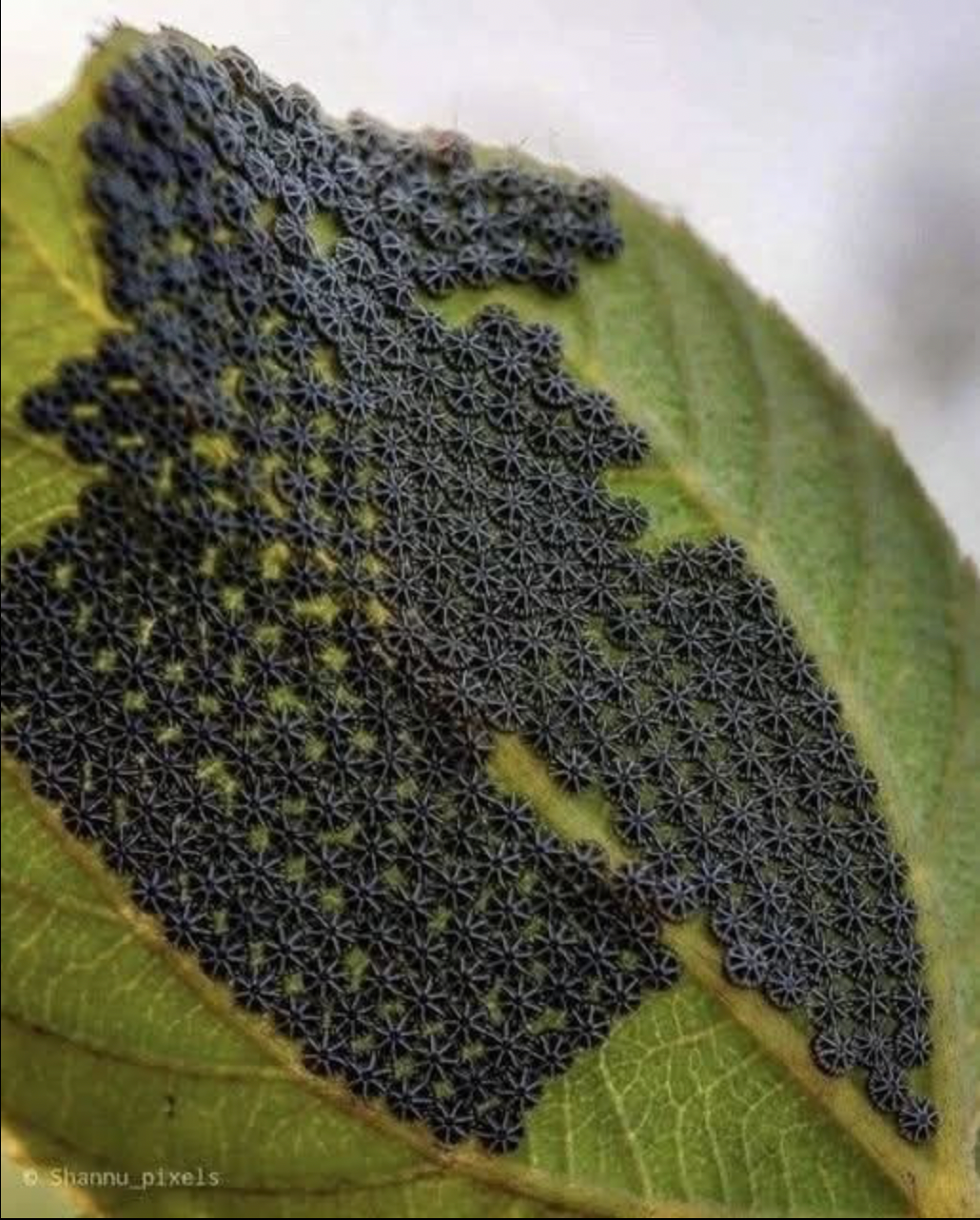
What Are Those “Black Geometric Shapes”?
In many situations, these clusters are eggs laid by the ladybug (also known as lady beetles).
Ladybug eggs are:
- Tiny and oval-shaped
- Laid in tight clusters
- Usually found on the underside of leaves
- Often placed near insect prey like aphids
Color and Appearance
While many people expect them to be bright yellow or orange, they can sometimes appear:
- Pale yellow
- Deep orange
- Dark or even black (depending on lighting, age, or species)
Because they are grouped closely and arranged neatly, they can look:
- Geometric
- Artificial
- Like tiny beads or dots
This structured appearance is what often causes confusion.
Why Ladybugs Lay Eggs on Your Plants
Ladybugs are not randomly choosing your plants—they are making a strategic decision.
They lay eggs where their larvae will have food immediately after hatching.
That food is usually:
- Aphids
- Small soft-bodied pests
- Plant-damaging insects
This means:
If you see ladybug eggs, it is often a sign your plant has pests—but also that help is already on the way.
What Happens After the Eggs Hatch
Within a few days, the eggs hatch into larvae.
Ladybug larvae do NOT look like adult ladybugs.
They look more like:
- Small, elongated insects
- Dark-colored with spots or patterns
- Slightly “spiky” or textured
Because of this, many people mistakenly think they are harmful and remove them.
But in reality:
Ladybug larvae are even more effective at eating pests than adult ladybugs.
A single larva can consume dozens of aphids per day.
Another Possibility: Lacewing Eggs
Sometimes the clusters you see may belong to the lacewing, another beneficial insect.
Lacewing eggs look different:
- Each egg sits on top of a very thin thread-like stalk
- They often appear spaced apart, not tightly packed
- Usually pale or light-colored
Why they are important:
Lacewing larvae are also powerful predators of:
- Aphids
- Mealybugs
- Small garden pests
They are sometimes called “aphid lions” because of how aggressively they feed.
Why You Should NOT Remove These Eggs
It can be tempting to clean your plants when you see unusual shapes, but removing these eggs can actually make things worse.
If you remove them:
- You eliminate natural pest control
- Pest populations can grow quickly
- You may need to rely on chemical solutions
If you leave them:
- They hatch and reduce pests naturally
- Your plant becomes healthier over time
- You support a balanced garden ecosystem
Nature’s Built-In Pest Control System
Beneficial insects like ladybugs and lacewings are part of a natural balance.
Instead of spraying chemicals, they:
- Hunt pests
- Reduce infestations
- Protect plant health
This is called biological pest control, and it is one of the most effective and sustainable gardening methods.
How to Tell If Eggs Are Beneficial or Harmful
Not all insect eggs are helpful, so it’s good to observe carefully.
Likely beneficial:
- Neatly arranged clusters
- Located near aphids
- Bright or uniform in color
- No damage spreading from them
Possibly harmful:
- Eggs accompanied by visible plant damage
- Large irregular masses spreading rapidly
- Presence of chewing insects nearby
When unsure, it is better to observe for a few days before removing anything.
What This Means for Your Garden
Seeing these egg clusters is actually a positive sign.
It means:
- Your garden is attracting helpful insects
- Natural pest control is happening
- Your environment supports biodiversity
Healthy gardens are not completely insect-free—they are balanced.
Simple Gardening Advice
If you find these clusters:
- Do not touch or remove them
- Avoid spraying chemicals nearby
- Monitor your plants over the next few days
- Watch for larvae appearing
It can be a great opportunity to observe nature up close.
Final Thoughts
Those small, strange, geometric clusters on your plants may look unusual, but they are often a sign of something good happening quietly in your garden.
They represent the beginning of a natural process where beneficial insects help protect your plants without any effort from you.
So the next time you see them, instead of removing them, take a closer look.
What seems like a problem at first glance may actually be your garden taking care of itself.

Welcome to my kitchen!
I’m a passionate home cook and recipe creator who loves turning simple ingredients into delicious, comforting meals that everyone can enjoy. Through this website, I share carefully prepared recipes, practical cooking tips, and easy-to-understand food education to help you feel more confident in the kitchen.
My goal is to make cooking simple, enjoyable, and accessible. Whether you are looking for a quick family dinner, a delicious dessert, healthy meal ideas, or traditional recipes with a modern touch, you’ll find inspiration here.
More Than Just Recipes
I believe that cooking is also a way to learn. That’s why this website is not only about recipes. I also create educational articles about ingredients, cooking techniques, kitchen tips, food preparation, and the stories behind different dishes.
Each article is designed to give you useful knowledge that you can apply in your own kitchen. From understanding how ingredients work together to learning better cooking methods, my aim is to help you become a more confident and creative cook.
My Philosophy
Good food doesn’t always require complicated ingredients or professional equipment. With a little knowledge, patience, and creativity, simple ingredients can become something truly special.
I believe in sharing recipes that are practical, clearly explained, and enjoyable to make. I also love exploring new flavors while appreciating traditional cooking and the recipes passed down through generations.
Thank you for visiting my kitchen and being part of this food-loving community. I hope my recipes and articles inspire you to cook, learn, experiment, and most importantly, enjoy every bite!
Happy cooking!