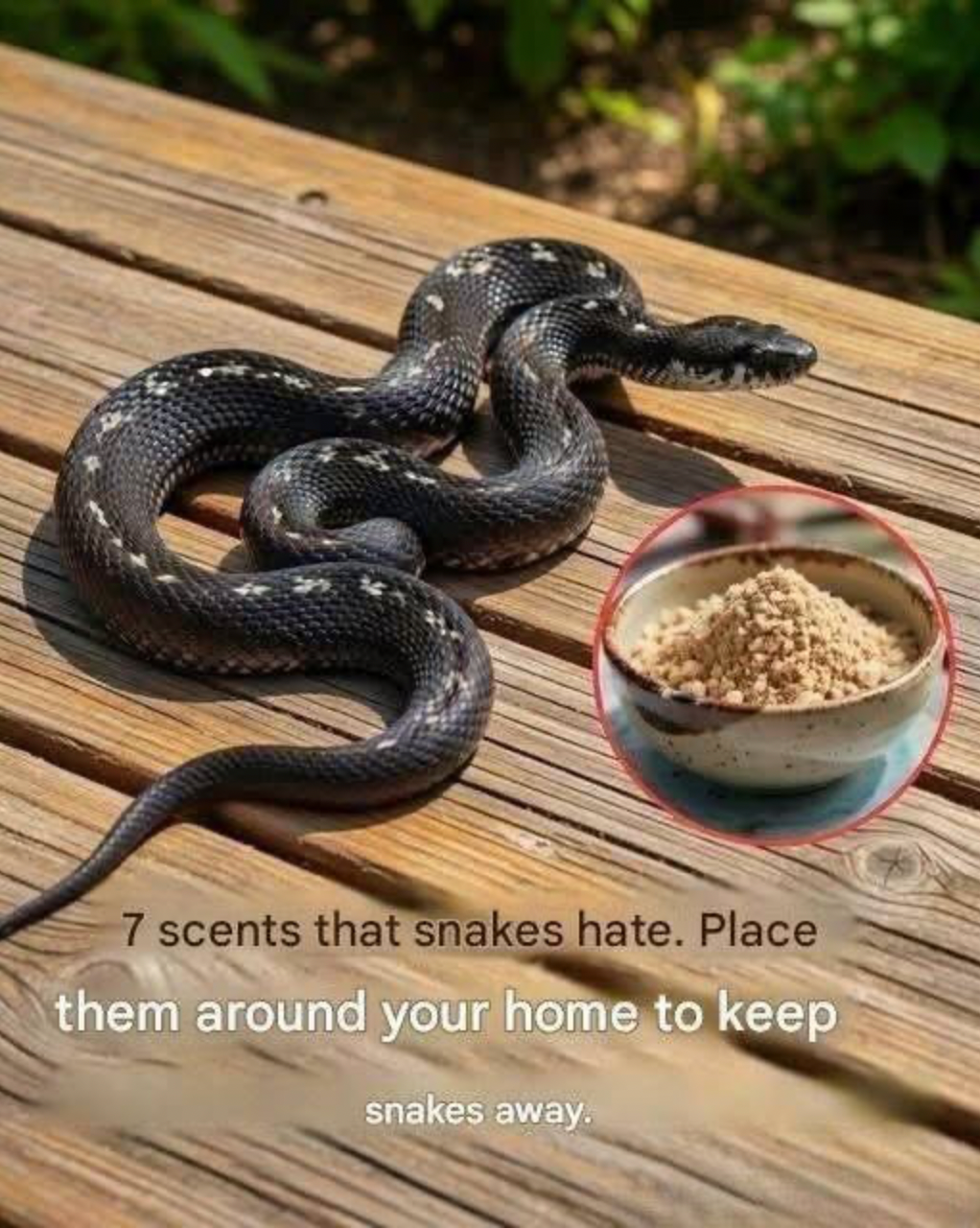
For many homeowners, few unexpected discoveries create as much anxiety as spotting a snake in the yard, garden, garage, or even near the front porch. Whether the snake is harmless or venomous, the surprise alone is often enough to make anyone stop in their tracks. It is a reaction rooted deeply in human history. For thousands of years, people have learned to treat snakes with caution, and that instinct remains strong today.
Because of this natural concern, countless articles, videos, and social media posts promise simple ways to keep snakes away. Some recommend sprinkling sulfur around the yard. Others suggest spraying vinegar, placing mothballs near fences, or soaking cotton balls in essential oils like peppermint, clove, cinnamon, cedarwood, or eucalyptus. Garden centers even sell products labeled as “snake repellents,” and many homeowners swear by homemade remedies passed down through generations.
But an important question remains:
Do certain smells actually keep snakes away?
The answer is more complicated than a simple yes or no.
Although snakes rely heavily on chemical cues from their environment, there is limited scientific evidence that ordinary household scents or natural oils consistently repel wild snakes under real outdoor conditions. Some substances may temporarily discourage certain snakes from moving through a small treated area, while others have little measurable effect. Wind, rain, sunlight, temperature, and the snake’s motivation—such as searching for food or shelter—can all reduce the effectiveness of scent-based repellents.
In many cases, the most reliable way to reduce snake encounters has little to do with smells at all. Instead, it comes down to making your property less attractive by removing food sources, hiding places, and easy access points.
This guide explores the science behind how snakes detect their surroundings, examines popular natural repellents, separates myths from facts, and explains the practical steps homeowners can take to reduce the likelihood of unwanted snake visitors.
How Snakes Sense the World
Unlike humans, snakes do not rely primarily on their noses to smell the environment.
Instead, they use a remarkable combination of specialized senses.
One of the most recognizable behaviors is tongue flicking.
When a snake repeatedly flicks its forked tongue into the air, it is collecting tiny chemical particles from the environment.
The tongue then delivers those particles to a specialized sensory structure inside the roof of the mouth known as the Jacobson’s organ, or vomeronasal organ.
This organ allows snakes to detect chemical signals that help them locate:
- Prey
- Potential predators
- Other snakes
- Suitable shelter
- Breeding opportunities
- Environmental changes
Rather than simply “smelling” odors as people do, snakes analyze chemical information in a highly specialized way.
Why Home Remedies Became Popular
Long before commercial wildlife control products existed, people relied on homemade solutions to discourage unwanted animals.
Over time, many traditional snake remedies became widely accepted.
Common recommendations include:
- Sulfur
- Vinegar
- Cinnamon oil
- Clove oil
- Peppermint oil
- Garlic
- Onion
- Ammonia
- Mothballs
- Lime
- Cedar mulch
Some homeowners report success.
Others notice no difference at all.
Scientific studies, however, generally show mixed or limited evidence for many of these methods.
Popular Natural Snake Repellents
1. Cinnamon Oil
Cinnamon oil is frequently mentioned as a snake repellent.
Laboratory studies have suggested it may irritate some snake species under controlled conditions.
However:
- Outdoor effectiveness remains inconsistent.
- Rain quickly washes it away.
- Sunlight causes the scent to fade.
- Wind disperses the aroma.
Repeated application would likely be necessary.
2. Clove Oil
Clove oil is another commonly recommended essential oil.
Like cinnamon oil, it may produce temporary avoidance behavior in some situations.
However, no evidence suggests it creates a permanent protective barrier around a property.
3. Peppermint Oil
Peppermint has a strong scent that many people enjoy.
Claims that it reliably repels snakes are largely anecdotal.
While some homeowners report fewer snake sightings after using peppermint oil, controlled scientific support is limited.
4. Vinegar
Vinegar is often suggested for use near ponds or water features.
Although its acidic smell is strong, there is little evidence that vinegar consistently deters snakes in outdoor environments.
Its effects diminish quickly once diluted or exposed to weather.
5. Sulfur
Sulfur has been used as a traditional snake deterrent for generations.
Some people believe snakes dislike crawling across powdered sulfur.
Research has not established sulfur as a consistently effective long-term snake repellent.
It may also become ineffective after rain or heavy moisture.
6. Garlic and Onion
Some homemade recipes combine crushed garlic with onions or essential oils.
These mixtures produce strong odors but have not been shown to provide reliable snake control.
What About Mothballs?
One of the most common myths involves placing mothballs around yards, gardens, or foundations.
Mothballs are designed specifically for controlling clothes moths in sealed containers.
Using them outdoors:
- Is generally not recommended.
- May not effectively repel snakes.
- Can expose children, pets, and wildlife to unnecessary chemicals.
- May violate product label instructions.
Always use pesticides only according to their labeled directions.
Why Smell Alone Often Isn’t Enough
Imagine a snake searching for:
- Shelter
- Water
- Warmth
- Food
If your property provides all of those resources, a temporary scent may not outweigh those attractions.
A snake’s behavior depends on many factors, including:
- Species
- Temperature
- Season
- Hunger
- Breeding activity
- Habitat availability
Because of these variables, no scent can guarantee that snakes will avoid an area entirely.
What Actually Attracts Snakes?
Rather than asking what drives snakes away, it is often more helpful to ask what brings them in.
Common attractions include:
Rodents
Mice and rats are a major food source for many snake species.
Bird Feed
Bird seed often attracts rodents, which in turn attract snakes.
Dense Vegetation
Tall grass and thick shrubs provide excellent hiding places.
Rock Piles
These create cool, protected shelter.
Firewood Stacks
Wood piles often harbor rodents and insects while offering shade and protection.
Standing Water
Water sources may attract both snakes and their prey.
Clutter
Unused equipment, construction materials, and debris provide ideal hiding spots.
The Best Long-Term Snake Prevention Strategies
The most effective approach focuses on habitat management.
Keep Grass Short
Regular mowing reduces cover.
Trim Dense Shrubs
Open spaces are less attractive to snakes.
Remove Yard Debris
Clear away piles of:
- Leaves
- Lumber
- Bricks
- Rocks
Store Firewood Properly
Keep stacks elevated and away from the home.
Seal Entry Points
Inspect foundations, crawl spaces, garages, and sheds.
Seal gaps where appropriate.
Control Rodents
Reducing prey often reduces snake activity.
Store pet food securely and clean up spilled bird seed.
Keep Outdoor Areas Tidy
Regular maintenance limits hiding places.
What To Do If You See a Snake
Remain calm.
Most snakes prefer avoiding people whenever possible.
If you encounter one:
- Keep a safe distance.
- Do not attempt to handle it.
- Allow it space to move away.
- Keep children and pets away.
- Contact local wildlife authorities if the snake appears dangerous or is inside the home.
Trying to capture or kill a snake increases the risk of injury.
Common Myths
Myth: Every snake near a house is dangerous.
False.
Many species are harmless and help control rodent populations.
Myth: Snakes actively chase people.
Generally false.
Most snakes try to escape rather than pursue humans.
Myth: One smell keeps every snake away.
False.
Different species respond differently, and no scent provides universal protection.
Myth: Snake repellents replace yard maintenance.
False.
Property maintenance remains the most effective preventive strategy.
Frequently Asked Questions
Do essential oils guarantee snake protection?
No.
Evidence for consistent outdoor effectiveness is limited.
Is there one best natural repellent?
No single natural product has been proven to reliably repel all snake species under all conditions.
Can snakes climb?
Some species are excellent climbers and can access trees, fences, shrubs, and even parts of buildings.
Should I remove every snake I see?
Not necessarily.
Many snakes are harmless and play valuable ecological roles by helping control rodents and other small animals.
Tips for Homeowners
- Keep lawns well maintained.
- Eliminate clutter.
- Seal gaps around buildings.
- Store firewood properly.
- Reduce rodent activity.
- Learn which snake species are common in your region.
- Observe from a safe distance rather than attempting to handle wildlife.

Welcome to my kitchen!
I’m a passionate home cook and recipe creator who loves turning simple ingredients into delicious, comforting meals that everyone can enjoy. Through this website, I share carefully prepared recipes, practical cooking tips, and easy-to-understand food education to help you feel more confident in the kitchen.
My goal is to make cooking simple, enjoyable, and accessible. Whether you are looking for a quick family dinner, a delicious dessert, healthy meal ideas, or traditional recipes with a modern touch, you’ll find inspiration here.
More Than Just Recipes
I believe that cooking is also a way to learn. That’s why this website is not only about recipes. I also create educational articles about ingredients, cooking techniques, kitchen tips, food preparation, and the stories behind different dishes.
Each article is designed to give you useful knowledge that you can apply in your own kitchen. From understanding how ingredients work together to learning better cooking methods, my aim is to help you become a more confident and creative cook.
My Philosophy
Good food doesn’t always require complicated ingredients or professional equipment. With a little knowledge, patience, and creativity, simple ingredients can become something truly special.
I believe in sharing recipes that are practical, clearly explained, and enjoyable to make. I also love exploring new flavors while appreciating traditional cooking and the recipes passed down through generations.
Thank you for visiting my kitchen and being part of this food-loving community. I hope my recipes and articles inspire you to cook, learn, experiment, and most importantly, enjoy every bite!
Happy cooking!