Social media loves a good math challenge, especially when it appears deceptively easy. Every few months, a new arithmetic puzzle spreads across Facebook, Instagram, TikTok, and X, generating thousands of comments from people confidently posting different answers. What makes these puzzles so fascinating is that they often involve nothing more than basic math that most of us learned in elementary school. Yet despite their simplicity, they consistently spark debate, confusion, and even arguments.
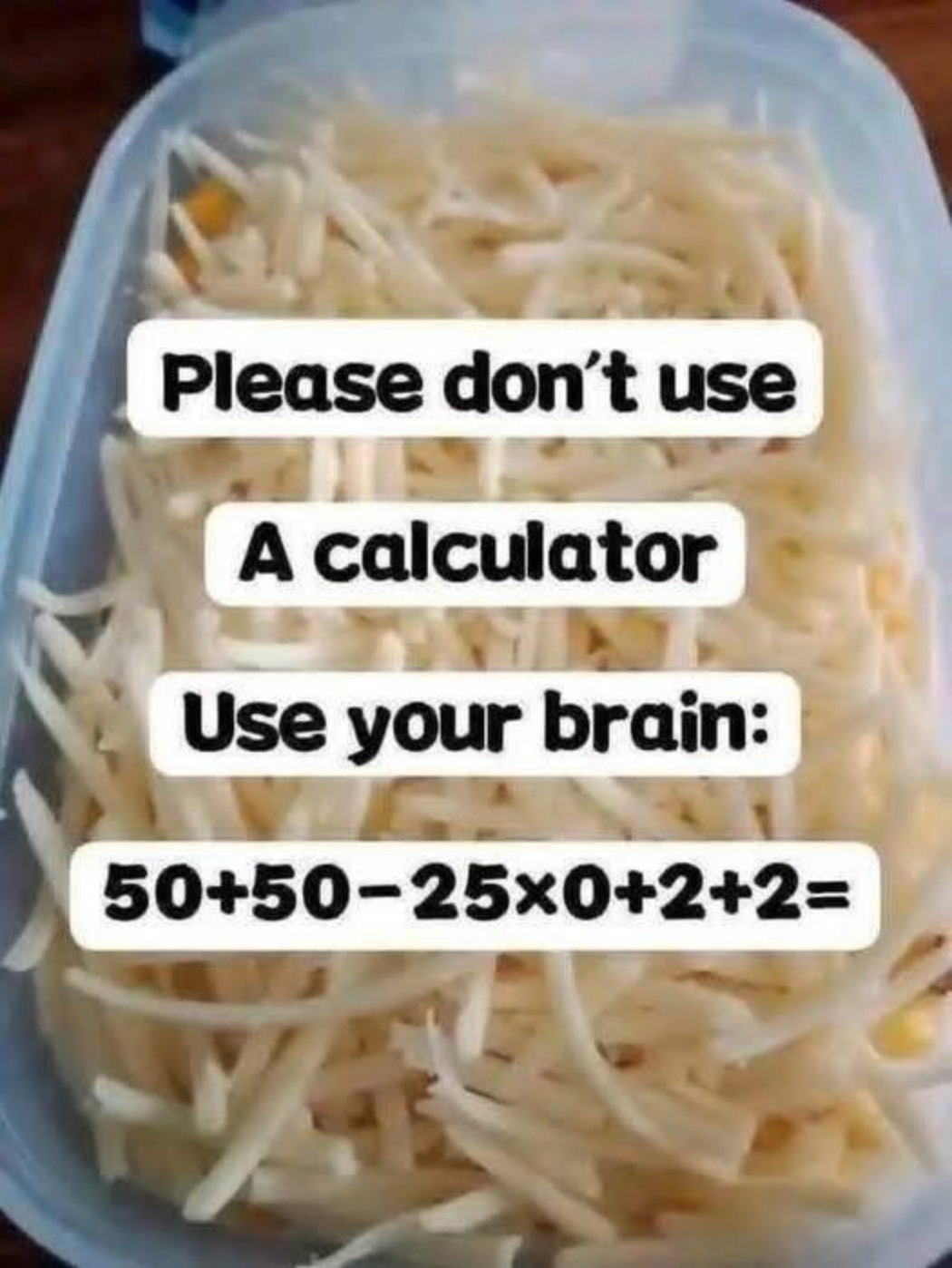
One of the latest examples is this equation:
At first glance, many people think they can solve it instantly. After all, there are no complicated fractions, exponents, or advanced algebra involved. It’s just addition, subtraction, multiplication, and a zero. How hard could it be?
As it turns out, the difficulty is not the math itself. The challenge lies in resisting the urge to rush. Most incorrect answers come from people who perform the calculations in the wrong order. This puzzle is a perfect reminder that mathematics follows specific rules, and those rules matter every time.
Why This Puzzle Has Gone Viral
The reason puzzles like this spread so quickly online is simple: they create disagreement.
When people see a basic equation, they often assume everyone should arrive at the same answer immediately. When they discover that friends, family members, and strangers are posting completely different results, curiosity takes over.
Common answers include:
- 0
- 4
- 79
- 104
Only one of these is correct.
The others result from skipping or misapplying the order of operations.
Because the equation looks so straightforward, many people are surprised when they discover they made a mistake.
The Common Trap
Most incorrect answers come from reading the equation exactly as we read a sentence: from left to right.
People often begin like this:
50 + 50 = 100
100 – 25 = 75
75 × 0 = 0
0 + 2 + 2 = 4
This leads to an answer of 4.
The problem is that mathematics does not allow us to simply work from left to right whenever multiple operations are involved.
Instead, we must follow the order of operations.
Understanding the Order of Operations
The order of operations is a set of rules that ensures everyone solves equations consistently.
Without these rules, mathematical expressions could have multiple answers, creating endless confusion.
Many students learn the acronym:
PEMDAS
which stands for:
- Parentheses
- Exponents
- Multiplication
- Division
- Addition
- Subtraction
Some people remember it using the phrase:
Please Excuse My Dear Aunt Sally
While the phrase is helpful, it’s important to understand what the rules actually mean.
A Common Misunderstanding About PEMDAS
Many people mistakenly believe multiplication must always be completed before division and addition must always be completed before subtraction.
That isn’t entirely true.
Multiplication and division share the same priority.
Addition and subtraction also share the same priority.
When operations share equal priority, you solve them from left to right.
Understanding this distinction prevents many common mistakes.
Applying PEMDAS to the Puzzle
Let’s solve the equation carefully.
The expression is:
50 + 50 − 25 × 0 + 2 + 2
First, look for parentheses.
There are none.
Next, check for exponents.
There are none.
Now move to multiplication and division.
The only multiplication is:
25 × 0
Which equals:
0
Now the equation becomes:
50 + 50 − 0 + 2 + 2
At this point, only addition and subtraction remain.
We solve from left to right.
50 + 50 = 100
100 − 0 = 100
100 + 2 = 102
102 + 2 = 104
The correct answer is:
104
Why Zero Tricks People
The multiplication by zero is the part that confuses many people.
Most people know that any number multiplied by zero becomes zero.
However, when solving quickly, they often apply the subtraction before the multiplication.
Instead of treating “25 × 0” as a single operation, they mistakenly calculate:
100 − 25
before multiplying.
That shortcut completely changes the result.
The zero essentially acts as a trap, catching people who ignore the order of operations.
Why Our Brains Make This Mistake
Human brains are designed to find shortcuts.
In daily life, shortcuts are useful because they save time and effort.
When we see a simple-looking equation, our brains often assume:
“I already know how to do this.”
As a result, we stop paying attention to the rules and start calculating automatically.
This phenomenon is known as cognitive bias.
The puzzle isn’t testing advanced math skills.
It’s testing attention and discipline.
The Psychology Behind Viral Math Puzzles
Many viral puzzles are intentionally designed to exploit common thinking errors.
They often include:
- hidden multiplication
- division traps
- misleading spacing
- ambiguous symbols
- visual distractions
Their goal is not necessarily to test mathematical ability.
Instead, they test whether people slow down enough to apply the correct rules.
That’s why highly educated adults sometimes make mistakes on problems that children solve correctly.
Why Fast Answers Are Often Wrong
Social media encourages speed.
People want to:
- answer first
- prove they’re smart
- avoid overthinking
Ironically, the faster someone responds, the more likely they are to miss an important detail.
Mathematics rewards careful reasoning, not speed.
Many viral puzzles become popular precisely because they expose this tendency.
The Value of Slowing Down
One lesson from puzzles like this is the importance of slowing down.
Whether you’re solving math problems, making decisions, or evaluating information online, taking a few extra seconds often leads to better results.
A quick glance can be misleading.
A careful look often reveals the truth.
Why Order of Operations Matters in Real Life
Some people wonder why the order of operations is important outside school.
The answer is consistency.
Engineers, scientists, programmers, accountants, and mathematicians all rely on standardized rules.
Without a shared system:
- formulas would break
- calculations would vary
- software would malfunction
- financial records would become unreliable
The same rules used in this simple puzzle help support everything from construction projects to computer systems.
Similar Viral Puzzles
The internet has seen countless variations of this challenge.
Popular examples include:
8 ÷ 2(2 + 2)
6 ÷ 2(1 + 2)
7 × 7 − 7 ÷ 7 + 7
Each puzzle generates debate because people apply different interpretations or forget basic rules.
The lesson remains the same:
Follow the order of operations.
Why People Love These Challenges
Math puzzles are appealing because they combine:
- simplicity
- competition
- curiosity
- surprise
Everyone feels capable of solving them, yet many people discover they overlooked something.
That moment of realization is part of what makes these puzzles so entertaining.
The Final Answer
After applying the correct order of operations:
- Calculate 25 × 0 = 0
- Rewrite the equation as 50 + 50 − 0 + 2 + 2
- Solve from left to right
The final result is:
104
Welcome to my kitchen!
I’m a passionate home cook and recipe creator who loves turning simple ingredients into delicious, comforting meals that everyone can enjoy. Through this website, I share carefully prepared recipes, practical cooking tips, and easy-to-understand food education to help you feel more confident in the kitchen.
My goal is to make cooking simple, enjoyable, and accessible. Whether you are looking for a quick family dinner, a delicious dessert, healthy meal ideas, or traditional recipes with a modern touch, you’ll find inspiration here.
More Than Just Recipes
I believe that cooking is also a way to learn. That’s why this website is not only about recipes. I also create educational articles about ingredients, cooking techniques, kitchen tips, food preparation, and the stories behind different dishes.
Each article is designed to give you useful knowledge that you can apply in your own kitchen. From understanding how ingredients work together to learning better cooking methods, my aim is to help you become a more confident and creative cook.
My Philosophy
Good food doesn’t always require complicated ingredients or professional equipment. With a little knowledge, patience, and creativity, simple ingredients can become something truly special.
I believe in sharing recipes that are practical, clearly explained, and enjoyable to make. I also love exploring new flavors while appreciating traditional cooking and the recipes passed down through generations.
Thank you for visiting my kitchen and being part of this food-loving community. I hope my recipes and articles inspire you to cook, learn, experiment, and most importantly, enjoy every bite!
Happy cooking!