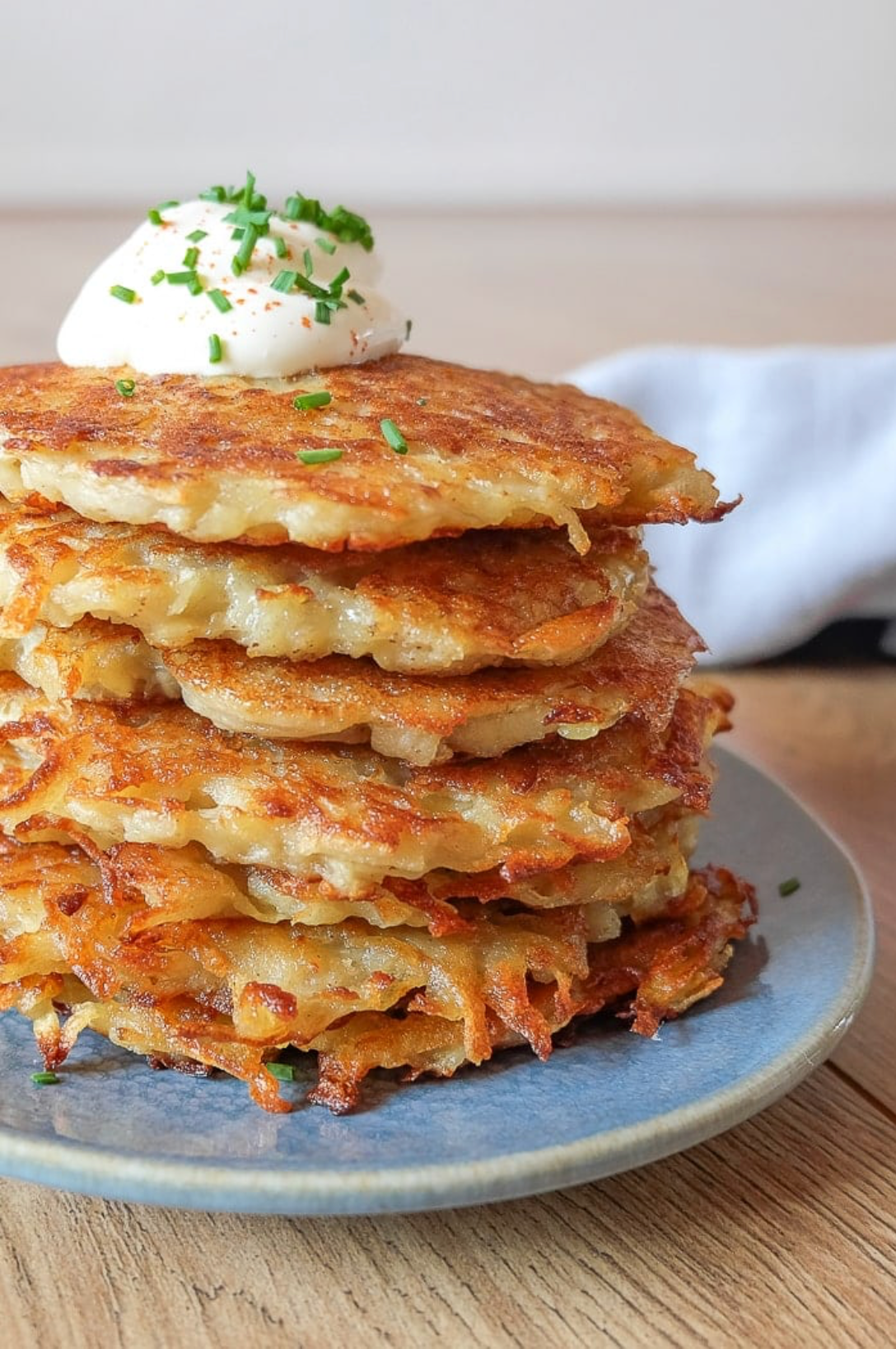
Few dishes capture the essence of German home cooking like Reibekuchen, or Kartoffelpuffer — savory potato pancakes that are crispy on the outside, tender and almost creamy inside, and so satisfying you’ll want to eat them straight out of the pan.
These golden pancakes are beloved across Germany. You’ll find them sizzling at Christmas markets, served with bowls of warm apple sauce, or enjoyed fresh from a cast-iron skillet in family kitchens. They’re made from freshly grated potatoes mixed with onion, eggs, and a bit of flour to bind — then fried slowly in oil until golden and crisp on the edges.
The secret to the perfect Reibekuchen lies in balance: the right potato variety, the ideal texture of the batter, and frying them at the correct temperature to achieve that shattering crust while keeping the inside soft and moist.
Ingredients (Serves 4–6)
For the Pancakes:
- 2 pounds (about 900 g) starchy potatoes (Russet or Yukon Gold are perfect)
- 1 small to medium onion, finely grated or minced
- 2 large eggs
- 3 tablespoons all-purpose flour (plus a little more if needed)
- 1 teaspoon salt (adjust to taste)
- ¼ teaspoon freshly ground black pepper
- A pinch of nutmeg (optional, traditional in some regions)
- Vegetable oil, sunflower oil, or clarified butter (for frying)
For Serving (Optional but Traditional):
- Homemade or store-bought apple sauce (Apfelmus)
- Sour cream or crème fraîche
- Chives or parsley, finely chopped (for garnish)
Instructions
Step 1: Prepare and Grate the Potatoes
- Peel the potatoes and keep them in a bowl of cold water as you work, to prevent browning.
- Using the coarse side of a box grater, grate the potatoes finely but not into a puree — you want small shreds, not mush.
Alternatively, you can use a food processor fitted with a grating disc for speed, but hand-grated potatoes give a slightly more rustic texture. - As soon as the potatoes are grated, place them into a clean kitchen towel or cheesecloth. Gather the towel and squeeze out as much liquid as possible over the sink or into a separate bowl.
The more moisture you remove, the crispier the pancakes will be.
Pro Tip: After squeezing, let the extracted liquid sit for a minute. You’ll notice a layer of potato starch settling at the bottom — carefully pour off the water and scrape that starch back into the grated potatoes. It acts as a natural binder and enhances crispness.
Step 2: Combine the Mixture
- In a large mixing bowl, combine the grated potatoes, grated onion, eggs, flour, salt, pepper, and nutmeg (if using).
- Mix gently but thoroughly with a spoon or your hands until everything is evenly coated.
The mixture should be slightly wet but cohesive — not soupy. If it seems too loose, sprinkle in a bit more flour. - Taste the raw mixture for seasoning (a small bit, if you’re comfortable), adjusting the salt and pepper to your preference.
Note: The onions add flavor and a touch of sweetness, balancing the potatoes. Some traditional cooks lightly sauté the onion before adding it to the mix for a milder taste.
Step 3: Heat the Oil
- Pour about ¼ inch (6 mm) of oil or clarified butter into a large, heavy skillet — cast iron or stainless steel works best.
- Heat the oil over medium-high heat until it shimmers but doesn’t smoke. You can test by dropping a small bit of the potato mixture into the pan — it should sizzle immediately and start to brown within a few seconds.
Temperature Tip: Around 350°F (175°C) is ideal. If the oil is too hot, the pancakes will burn before cooking through; too cool, and they’ll absorb too much oil and become greasy.
Step 4: Fry the Pancakes
- Working in batches, drop about 2 to 3 tablespoons of the potato mixture per pancake into the hot oil.
- Use the back of a spoon or spatula to flatten each portion into a thin round, about ¼ inch (0.5 cm) thick. The thinner the pancake, the crispier it will be.
- Fry each side for about 3–4 minutes, or until deeply golden brown and crisp around the edges.
- Flip carefully using a spatula and cook the other side for another 3–4 minutes.
- Once golden and firm, remove the pancakes from the pan and place them on a plate lined with paper towels to drain any excess oil.
Pro Tip: Avoid overcrowding the pan — too many pancakes at once will lower the oil temperature and make them soggy.
Step 5: Serve Immediately
Reibekuchen are best served hot and fresh, straight from the pan when they’re still crisp. Traditionally, they’re served with apple sauce — the sweetness contrasts beautifully with the savory potato. In some regions, people enjoy them with sour cream, smoked salmon, or even sugar sprinkled on top for a sweet-salty combination.
Arrange them on a warm plate, garnish with chopped chives or parsley if desired, and serve alongside a small bowl of apple sauce or sour cream for dipping.
Texture and Taste Notes
The perfect German potato pancake should have a crunchy, caramelized exterior that gives way to a soft, tender, and slightly creamy center. The balance of salt and onion brings out the natural sweetness of the potatoes. The flavor is simple but deeply satisfying — comforting, homey, and incredibly moreish.
When done right, they stay crisp even after cooling slightly, and the edges have that delicate lace-like texture that melts as you bite into them.
Storage and Reheating
- Refrigerate: Leftovers can be stored in an airtight container for up to 3 days.
- Reheat: Place them in a hot oven (400°F / 200°C) on a baking sheet for 10–12 minutes to re-crisp. Avoid microwaving — it will make them soggy.
- Freeze: Stack between layers of parchment paper and freeze for up to 2 months. Reheat directly from frozen in a 400°F oven for 15–20 minutes.
Regional and Modern Variations
- Rheinland Reibekuchen: Often fried in lard and eaten with black rye bread and apple sauce.
- Bavarian Style: Made with finely grated potatoes for a more delicate, pancake-like texture.
- Austrian Erdäpfelpuffer: Sometimes include a touch of garlic or marjoram for flavor.
- Vegetable Version: Add grated carrots, zucchini, or parsnips to the mix for a colorful variation.
Tips for the Best Results
- Use the right potatoes: Starchy or all-purpose potatoes give the best crispness.
- Grate fresh: Don’t let the potatoes sit too long before frying — they’ll darken and lose starch.
- Control moisture: The drier the mixture, the better the texture. Always squeeze thoroughly.
- Fry in batches: Give each pancake enough space to brown evenly.
- Keep warm in the oven: Place finished pancakes on a wire rack in a 200°F (95°C) oven while you finish frying the rest.
Serving Ideas
- With homemade apple sauce for the classic German pairing.
- With sour cream and smoked salmon for a brunch-style dish.
- As a side to roast pork, sausages, or sauerbraten.
- Topped with poached eggs for a hearty breakfast.
These German Potato Pancakes bring together everything wonderful about comfort food: golden edges that crunch when you cut them, a fluffy center that melts on your tongue, and a flavor that feels both rustic and elegant. Whether you serve them at a Christmas market stall, for a Sunday brunch, or as a side to your main course, they always disappear faster than you can make them.
Welcome to my kitchen!
I’m a passionate home cook and recipe creator who loves turning simple ingredients into delicious, comforting meals that everyone can enjoy. Through this website, I share carefully prepared recipes, practical cooking tips, and easy-to-understand food education to help you feel more confident in the kitchen.
My goal is to make cooking simple, enjoyable, and accessible. Whether you are looking for a quick family dinner, a delicious dessert, healthy meal ideas, or traditional recipes with a modern touch, you’ll find inspiration here.
More Than Just Recipes
I believe that cooking is also a way to learn. That’s why this website is not only about recipes. I also create educational articles about ingredients, cooking techniques, kitchen tips, food preparation, and the stories behind different dishes.
Each article is designed to give you useful knowledge that you can apply in your own kitchen. From understanding how ingredients work together to learning better cooking methods, my aim is to help you become a more confident and creative cook.
My Philosophy
Good food doesn’t always require complicated ingredients or professional equipment. With a little knowledge, patience, and creativity, simple ingredients can become something truly special.
I believe in sharing recipes that are practical, clearly explained, and enjoyable to make. I also love exploring new flavors while appreciating traditional cooking and the recipes passed down through generations.
Thank you for visiting my kitchen and being part of this food-loving community. I hope my recipes and articles inspire you to cook, learn, experiment, and most importantly, enjoy every bite!
Happy cooking!