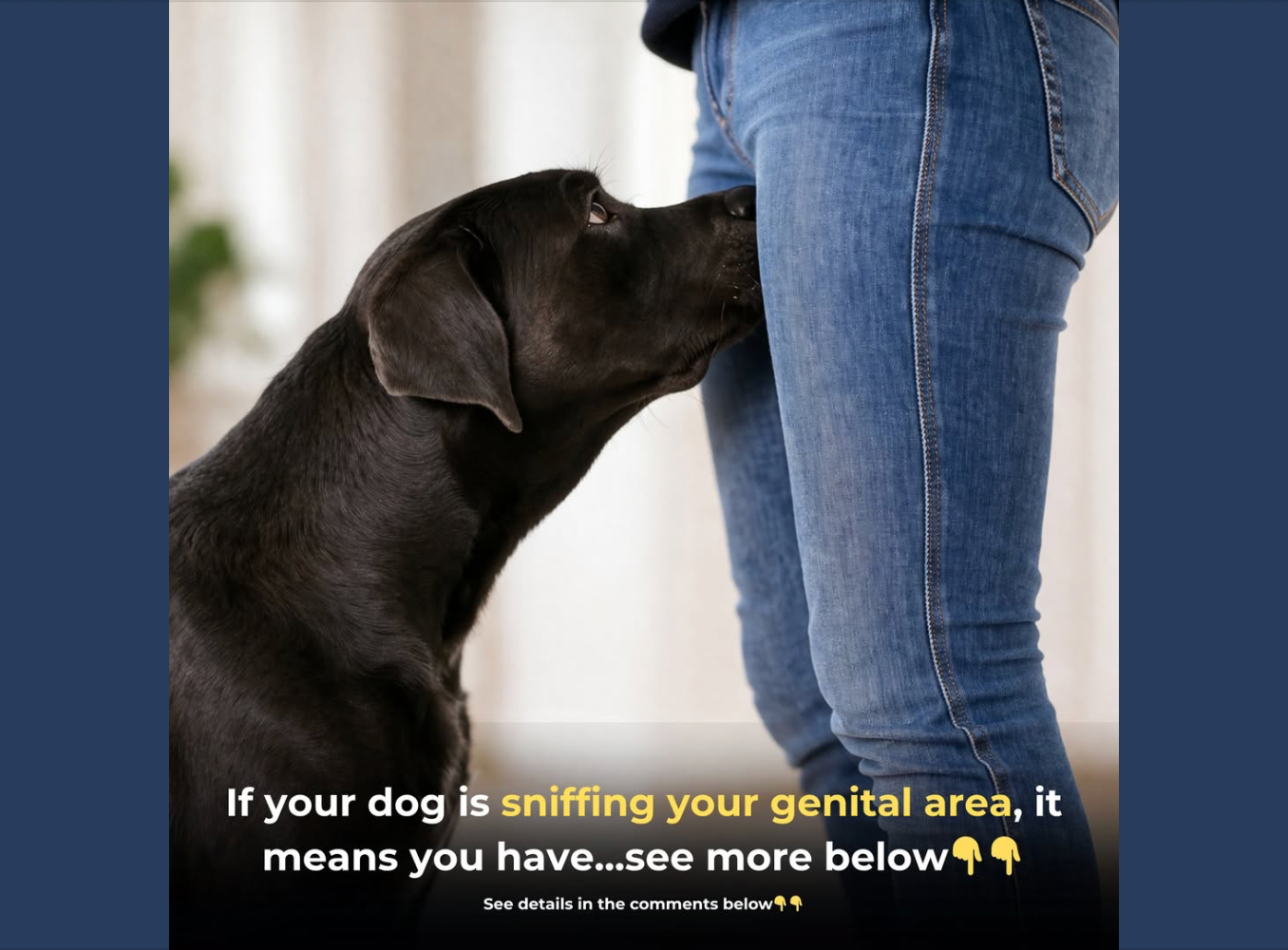
It’s one of those moments almost every dog owner—or even casual visitor—has experienced.
You walk into a room, and a dog approaches you. At first, it seems friendly… curious… maybe even excited.
Then suddenly, it starts sniffing you—very specifically.
Not your face. Not your hands.
But areas that feel awkward, unexpected, even embarrassing.
And you wonder:
Why do dogs do this? Is it normal? Are they trying to tell me something?
The answer is fascinating—and it reveals just how different a dog’s world is from ours.
1. Dogs Experience the World Through Smell, Not Sight
Humans rely mostly on vision. Dogs don’t.
For a dog, smell is the primary sense—the way they interpret everything around them.
To understand the difference:
- Humans have about 5 million scent receptors
- Dogs can have up to 300 million
But it’s not just about quantity.
The part of a dog’s brain that processes smells is massively more developed, allowing them to:
- Detect extremely faint odors
- Separate complex scent layers
- Track changes over time
To a dog, every person is like a walking story made of scents.
2. Why Certain Areas Attract More Attention
Dogs don’t sniff randomly. They go where the information is strongest.
Areas like:
- Armpits
- Groin region
- Feet
produce more sweat and natural body chemicals.
These areas contain higher concentrations of scent-producing glands, which release information-rich compounds.
To a dog, these scents are like:
- Identification cards
- Emotional signals
- Biological data
It may feel strange to us—but for them, it’s the most efficient way to learn about you.
3. The Power of the Vomeronasal Organ
Dogs have a special sensory tool that humans don’t actively use: the vomeronasal organ.
This organ allows them to detect pheromones—chemical signals that carry deep biological information.
Through this system, dogs can sense:
- Emotional states (fear, stress, calmness)
- Hormonal changes
- Reproductive signals
- Even subtle changes in body chemistry
So when a dog sniffs you, it’s not just smelling—it’s analyzing information at a level we can’t perceive.
4. Dogs Are “Reading” You Like a Book
When a dog sniffs you, it’s essentially gathering data.
It may be trying to answer questions like:
- Who are you?
- Are you familiar or new?
- Are you calm, nervous, or excited?
- Have you been around other animals?
- Where have you been today?
Your scent contains traces of:
- Your environment
- Your activities
- Your emotional state
In seconds, a dog can form a surprisingly detailed impression of you.
5. It’s Their Version of a Greeting
Among dogs, sniffing is completely normal social behavior.
When dogs meet, they often sniff each other’s rear area. This might seem odd to humans, but it’s actually a respectful and information-rich greeting.
For dogs, this is equivalent to:
“Hello, nice to meet you.”
When they do it to humans, they are simply applying the same instinct.
They are not being rude—they are being social.
6. Emotional Detection: Dogs Can Smell Feelings
One of the most surprising discoveries is that dogs can detect human emotions through scent.
When you feel:
- Fear
- Anxiety
- Stress
your body releases chemical signals that dogs can detect.
Research shows that dogs can react differently depending on these signals.
For example:
- A nervous person may receive more intense sniffing
- A calm person may get a relaxed response
This is why dogs sometimes behave differently around different people.
7. Why Some Dogs Do It More Than Others
Not all dogs behave the same way.
Several factors influence this behavior:
Breed
Scent-driven breeds (like hounds) rely heavily on smell and are more likely to sniff intensely.
Age
Puppies are naturally more curious and explore the world through scent.
Training
Well-trained dogs may be taught to greet people more politely.
Personality
Some dogs are simply more curious and investigative.
8. When It Becomes Too Much
Even though it’s natural, this behavior can feel uncomfortable in social situations.
If a dog is sniffing too much, you can:
- Step slightly away
- Redirect its attention
- Give a command (if trained)
The key is gentle correction—not punishment.
Dogs don’t understand that this behavior is “awkward” for humans.
9. Should You Be Concerned?
In most cases, no.
Sniffing is:
- Normal
- Healthy
- Essential for dogs
However, if a dog becomes:
- Overly fixated
- Aggressive
- Unresponsive to commands
it may need training or professional guidance.
10. Amazing Facts About Dogs and Smell
Dogs’ sense of smell is so powerful that they can:
- Detect certain diseases
- Track scents days old
- Recognize individuals by scent alone
- Sense changes in body chemistry
This is why dogs are used in:
- Search and rescue
- Medical detection
- Security work
11. Why Humans Misunderstand This Behavior
From a human perspective, this behavior seems:
- Strange
- Embarrassing
- Random
But in reality, it is:
- Logical
- Purposeful
- Highly intelligent
Dogs are not acting inappropriately—they are simply using their natural abilities.

Welcome to my kitchen!
I’m a passionate home cook and recipe creator who loves turning simple ingredients into delicious, comforting meals that everyone can enjoy. Through this website, I share carefully prepared recipes, practical cooking tips, and easy-to-understand food education to help you feel more confident in the kitchen.
My goal is to make cooking simple, enjoyable, and accessible. Whether you are looking for a quick family dinner, a delicious dessert, healthy meal ideas, or traditional recipes with a modern touch, you’ll find inspiration here.
More Than Just Recipes
I believe that cooking is also a way to learn. That’s why this website is not only about recipes. I also create educational articles about ingredients, cooking techniques, kitchen tips, food preparation, and the stories behind different dishes.
Each article is designed to give you useful knowledge that you can apply in your own kitchen. From understanding how ingredients work together to learning better cooking methods, my aim is to help you become a more confident and creative cook.
My Philosophy
Good food doesn’t always require complicated ingredients or professional equipment. With a little knowledge, patience, and creativity, simple ingredients can become something truly special.
I believe in sharing recipes that are practical, clearly explained, and enjoyable to make. I also love exploring new flavors while appreciating traditional cooking and the recipes passed down through generations.
Thank you for visiting my kitchen and being part of this food-loving community. I hope my recipes and articles inspire you to cook, learn, experiment, and most importantly, enjoy every bite!
Happy cooking!