The Classic Riddle That Tricks Your Brain Into Thinking the Wrong Way
At first glance, this riddle sounds impossible.
How could something survive a massive fall—a situation most living things wouldn’t survive—yet be destroyed by something as ordinary and harmless as water?
That contradiction is exactly what makes the riddle memorable.
It forces your brain to stop thinking literally and start thinking creatively.
This is the essence of lateral thinking riddles: questions designed not to test intelligence through facts or calculations, but through flexibility of thought.
And interestingly, this famous riddle has developed more than one accepted answer over time. Different interpretations lead to different solutions—and that’s part of what makes it so fascinating.
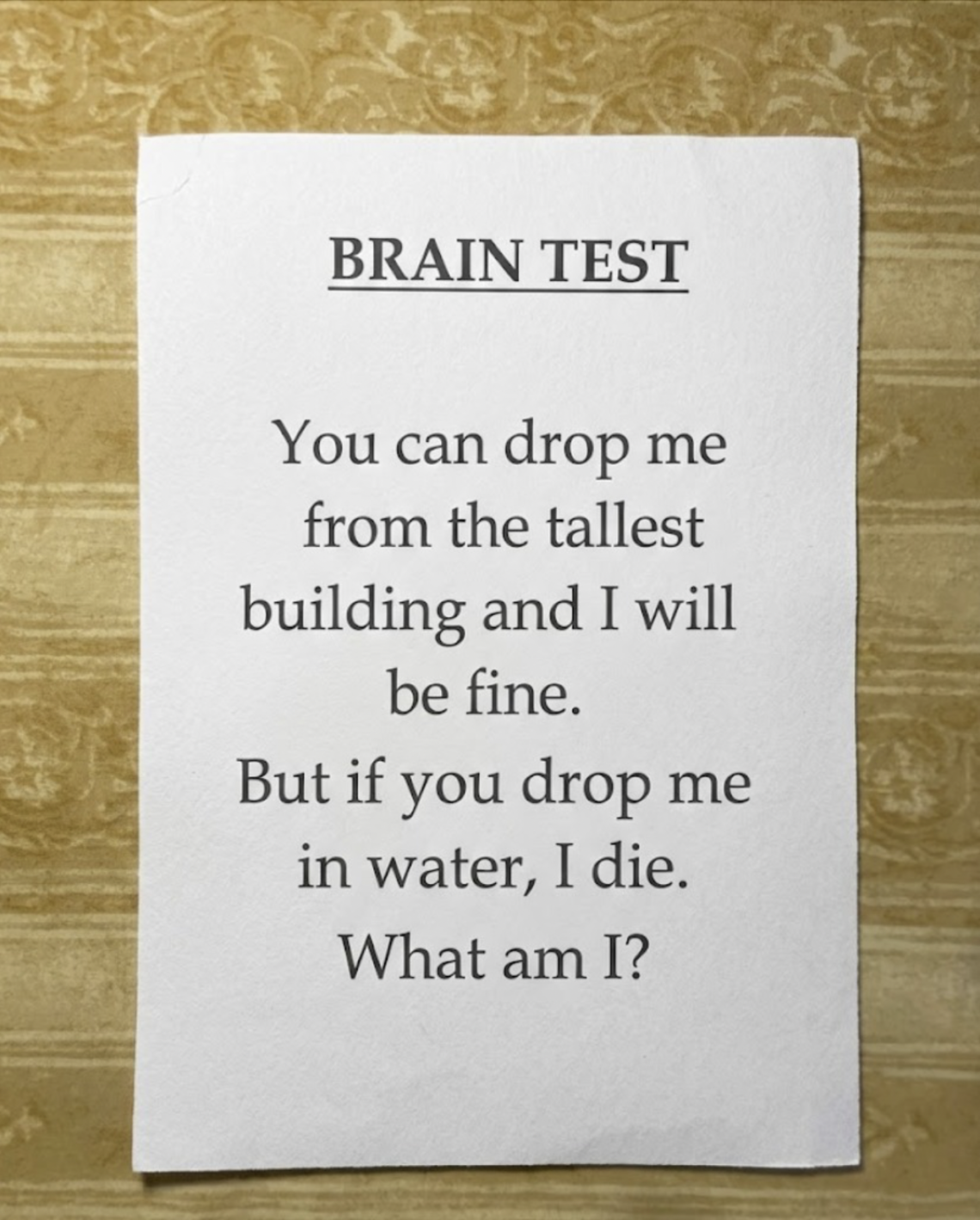
The Riddle
“What survives a huge fall but dies in water?”
At first, most people imagine:
- animals
- humans
- objects
- machines
They begin thinking in physical terms:
“What can survive impact but not survive water?”
But the trick lies in changing perspective completely.
The Most Famous Answer: Paper
The classic answer is:
Paper
Why?
Because paper can survive:
- being dropped from a great height
- floating through the air
- falling off a building
without necessarily being damaged.
But once paper enters water:
- it weakens
- tears
- dissolves
- loses structure
In other words:
- the “huge fall” doesn’t destroy it
- water does
Why This Answer Works So Well
The riddle succeeds because your brain naturally assumes:
- “huge fall” = deadly
- “water” = harmless
But for paper, those assumptions reverse completely.
This mental reversal creates the “aha!” moment.
The Psychological Trick Behind the Riddle
Your brain constantly uses shortcuts called:
cognitive assumptions
When you hear:
- huge fall
your brain automatically imagines danger.
When you hear:
- water
your brain imagines safety.
The riddle manipulates those expectations intentionally.
The Second Common Answer: Salt
Another widely accepted answer is:
Salt
Why?
Salt can survive:
- being dropped from any height
- falling from cliffs or buildings
because falling doesn’t fundamentally change it.
But when placed in water:
- it dissolves completely
So in a symbolic sense:
- water “kills” it
Why Some People Prefer the Salt Answer
The salt interpretation feels elegant because:
- water directly destroys its solid form
- the transformation is immediate
- dissolution feels more complete than paper damage
Some people even argue salt is the “cleaner” logical answer.
Which Answer Is Correct?
Technically:
both answers are valid
That’s the interesting thing about many classic riddles:
- they are not strict math problems
- they depend on interpretation
- multiple solutions can fit logically
Riddles often reward:
- creativity
- flexibility
- unconventional thinking
rather than one absolute answer.
Why Lateral Thinking Riddles Fascinate People
These riddles are popular because they challenge how we process information.
Normally, the brain:
- seeks patterns quickly
- relies on assumptions
- fills in missing information automatically
Lateral thinking interrupts that process.
It asks you to:
- reconsider assumptions
- detach from obvious interpretations
- look at language differently
The Brain Loves “Aha!” Moments
When you finally understand the answer, your brain experiences a small reward response.
Psychologists sometimes call this:
insight satisfaction
That sudden realization:
“Ohhhh… I was thinking about it the wrong way.”
creates a pleasurable mental shift.
That’s why riddles spread so easily online and on social media.
How These Riddles Trick Us
Most people fail initially because they:
- overcomplicate the problem
- assume living creatures are involved
- focus only on survival in biological terms
But the answer is usually hidden in:
- wording
- assumptions
- interpretation
Other Creative Interpretations
Over time, people have invented additional answers too:
Sugar
Falls safely, dissolves in water.
Sandcastle
Can survive falling sand grains, but water destroys it.
Tissue Paper
Survives a fall but disintegrates when wet.
While less traditional, these still follow the same logic pattern.
What Makes a Good Riddle?
A strong riddle usually contains:
- misdirection
- simplicity
- contradiction
- hidden assumptions
This riddle succeeds because it feels impossible at first while actually having a very simple answer.
The Educational Value of Riddles
Though they seem playful, riddles help develop:
- flexible thinking
- creativity
- pattern recognition
- problem-solving skills
They encourage people to pause before accepting their first assumption.
Why Social Media Loves Riddles
Riddles perform well online because they create:
- curiosity
- debate
- emotional engagement
- quick participation
People enjoy:
- testing themselves
- sharing answers
- arguing interpretations
- experiencing surprise
Welcome to my kitchen!
I’m a passionate home cook and recipe creator who loves turning simple ingredients into delicious, comforting meals that everyone can enjoy. Through this website, I share carefully prepared recipes, practical cooking tips, and easy-to-understand food education to help you feel more confident in the kitchen.
My goal is to make cooking simple, enjoyable, and accessible. Whether you are looking for a quick family dinner, a delicious dessert, healthy meal ideas, or traditional recipes with a modern touch, you’ll find inspiration here.
More Than Just Recipes
I believe that cooking is also a way to learn. That’s why this website is not only about recipes. I also create educational articles about ingredients, cooking techniques, kitchen tips, food preparation, and the stories behind different dishes.
Each article is designed to give you useful knowledge that you can apply in your own kitchen. From understanding how ingredients work together to learning better cooking methods, my aim is to help you become a more confident and creative cook.
My Philosophy
Good food doesn’t always require complicated ingredients or professional equipment. With a little knowledge, patience, and creativity, simple ingredients can become something truly special.
I believe in sharing recipes that are practical, clearly explained, and enjoyable to make. I also love exploring new flavors while appreciating traditional cooking and the recipes passed down through generations.
Thank you for visiting my kitchen and being part of this food-loving community. I hope my recipes and articles inspire you to cook, learn, experiment, and most importantly, enjoy every bite!
Happy cooking!