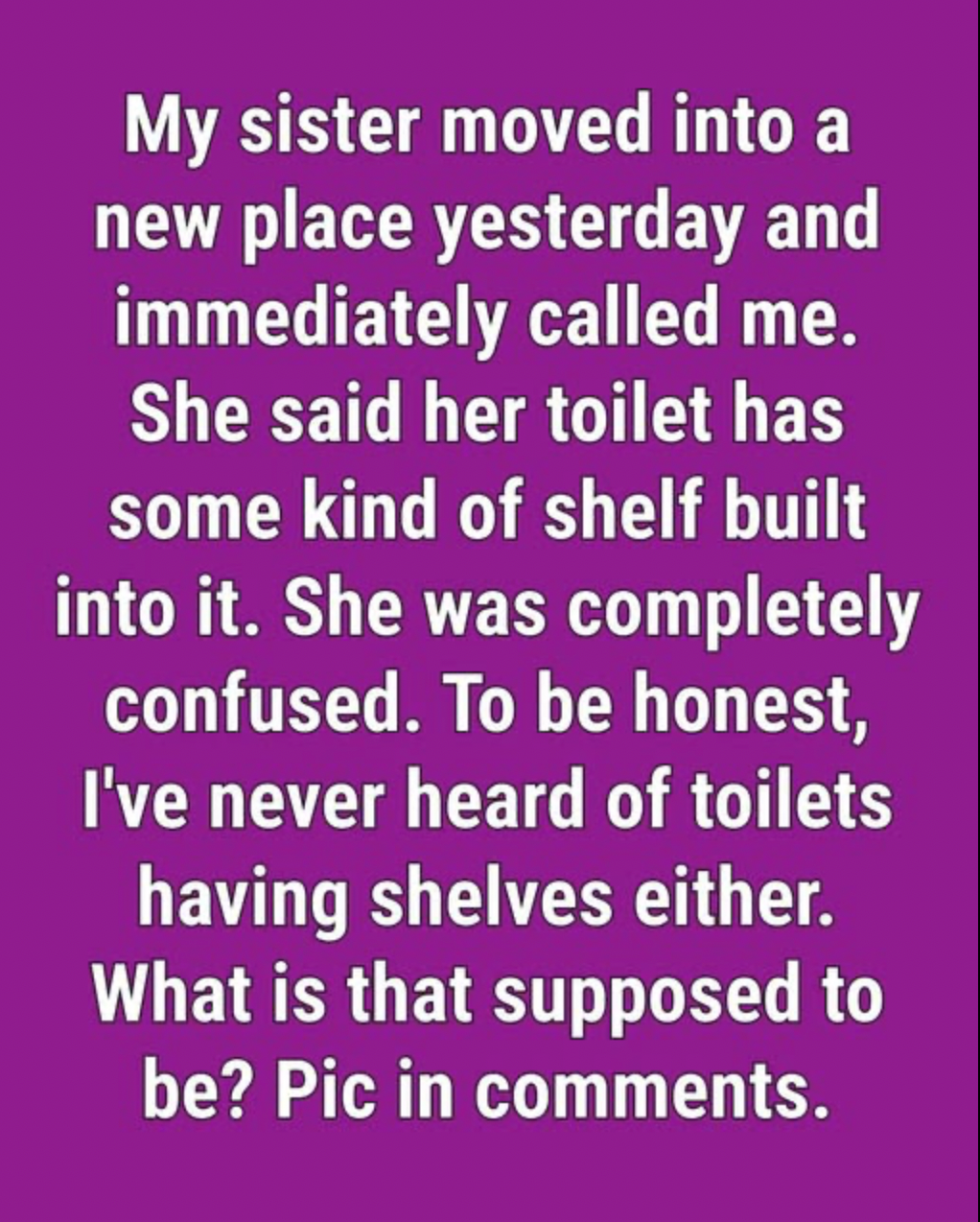
If you have ever traveled through parts of Europe—especially countries such as Germany, Austria, or Netherlands—you may have encountered a toilet that looks surprisingly different from what most people are used to. At first glance, everything appears normal. There is a bowl, a seat, and a flush mechanism. But when you look inside, you notice something unusual: a flat porcelain shelf positioned above the water level.
For many first-time visitors, this design can be confusing, surprising, or even a little unsettling. Why would a toilet have a shelf? Was it designed incorrectly? Is it an old-fashioned model? Or does it serve a specific purpose?
The answer is that the shelf is completely intentional. In fact, this design was once very common in several European countries and was created for practical reasons. While it may seem strange to people accustomed to modern deep-water toilets, the shelf toilet reflects a different approach to hygiene, health monitoring, and plumbing design.
What Is a Shelf Toilet?
A shelf toilet, sometimes called a “washout toilet,” is a toilet in which solid waste lands on a flat porcelain platform before being flushed away.
Unlike modern deep-bowl toilets, where waste falls directly into water, shelf toilets position the water pool toward the front or rear of the bowl while leaving a dry porcelain shelf in the middle.
When flushed, water rushes through the bowl and carries everything away.
At first glance, the design appears unusual because it goes against what many people consider normal toilet engineering.
Yet for decades, it was regarded as a practical and even superior design in many homes.
The History Behind the Shelf Design
The shelf toilet became popular in parts of Europe during the nineteenth and twentieth centuries.
At the time, designers and public health officials were looking for ways to improve sanitation and disease detection.
Medical understanding was advancing rapidly, and doctors increasingly recognized that a person’s waste could reveal important information about their health.
The shelf design offered a simple solution.
Instead of immediately submerging waste in water, it remained visible for inspection.
This allowed people to observe potential signs of illness before flushing.
For generations, this was considered a useful feature rather than an inconvenience.
The Original Purpose: Health Monitoring
One of the main reasons shelf toilets were developed was to make health observation easier.
Doctors often advise patients to pay attention to changes in stool appearance because these changes can sometimes indicate health issues.
The shelf allowed users to inspect for things such as:
- unusual coloration
- blood
- parasites
- mucus
- digestive abnormalities
- signs of illness
Before modern medical testing became widely accessible, visual observation was often one of the simplest health-monitoring tools available.
Many households considered this a practical advantage.
Reducing Water Splash
Another reason shelf toilets gained popularity was their ability to reduce splash-back.
In traditional deep-water toilets, waste drops directly into water. This can sometimes create an upward splash that many people find unpleasant.
Because waste initially lands on the shelf instead of entering the water immediately, splash-back is greatly reduced.
Supporters of the design often cited this as one of its biggest advantages.
For some users, the reduction in splash made the toilet feel cleaner and more comfortable.
Differences Between Shelf Toilets and Modern Toilets
Modern toilets typically use a deep-water design.
In these toilets:
- water fills the bottom of the bowl
- waste falls directly into the water
- odors are partially contained by the water barrier
- flushing usually requires less water movement
Shelf toilets function differently.
They feature:
- a raised porcelain platform
- a smaller water pool
- visible waste before flushing
- different flushing mechanics
Both designs accomplish the same goal, but they approach it differently.
Advantages of Shelf Toilets
Although they are less common today, shelf toilets offer several potential benefits.
1. Easier Health Observation
As mentioned earlier, the shelf allows visual inspection before flushing.
This can help individuals notice unusual changes and seek medical advice if necessary.
2. Reduced Splash
Because waste lands on a dry surface first, there is less chance of water splashing upward.
Many users appreciate this feature.
3. Lower Initial Water Contact
Some people prefer that waste does not immediately enter standing water.
This design provides that separation until flushing occurs.
4. Historical Practicality
When medical care and laboratory testing were less available, the design served a practical public-health purpose.
Disadvantages of Shelf Toilets
Despite their benefits, shelf toilets also have drawbacks.
These disadvantages have contributed to their declining popularity.
1. Increased Odor
Because waste remains exposed rather than submerged in water, odors can become noticeable more quickly.
This is perhaps the most commonly cited criticism.
Modern deep-water toilets help trap odors beneath the water surface.
Shelf toilets provide less odor containment.
2. More Frequent Cleaning
The shelf often requires additional cleaning.
Residue may remain on the porcelain surface after flushing.
This can lead to:
- more brushing
- more frequent maintenance
- additional cleaning products
3. Cultural Preferences
As global travel increased and modern toilet designs became standardized, many people began favoring deep-water bowls.
The shelf design started to seem outdated compared to newer alternatives.
4. Less Common Replacement Parts
As manufacturers shifted toward modern designs, shelf toilets became less widely produced.
This made replacement and repair more difficult in some regions.
Why Are Shelf Toilets Common in Certain Countries?
Cultural habits and historical development play important roles.
In countries where shelf toilets became standard generations ago, people grew accustomed to using them.
Builders continued installing familiar designs because consumers expected them.
Over time, however, global trends shifted toward deep-water systems, causing shelf toilets to become less common even in countries where they once dominated.
Today, many older buildings still contain them, while newer construction often uses modern bowl designs.
Are Shelf Toilets More Hygienic?
This question is debated.
Supporters argue that:
- reduced splash improves cleanliness
- health monitoring is easier
- visual inspection can be valuable
Critics argue that:
- exposed waste increases odor
- cleaning requirements are greater
- modern toilets provide better overall convenience
Both designs can be hygienic when cleaned properly.
The difference largely comes down to personal preference and cultural expectations.
Why They Are Becoming Less Common
Several factors have contributed to the decline of shelf toilets.
These include:
- changing consumer preferences
- improvements in plumbing technology
- increased focus on odor control
- standardization of modern toilet manufacturing
- easier maintenance of deep-water designs
As a result, shelf toilets are now encountered less frequently than they once were.
However, they remain an interesting example of how engineering solutions evolve over time.
The Psychology of First Impressions
One reason shelf toilets attract so much attention online is that they challenge expectations.
Most people assume toilets should work a certain way.
When they encounter a shelf design for the first time, the unfamiliar appearance immediately sparks curiosity.
Questions often include:
- Why is there a platform?
- Is something broken?
- Is this an old model?
- What’s the purpose?
The surprise comes from realizing that something so familiar can actually be designed in a completely different way.
Modern Alternatives
Today’s bathrooms often feature innovations such as:
- water-saving flush systems
- dual-flush technology
- rimless bowls
- self-cleaning surfaces
- smart toilets
- bidet functions
These developments have shifted attention away from shelf-style designs.
Nevertheless, shelf toilets remain a fascinating piece of bathroom history.

Welcome to my kitchen!
I’m a passionate home cook and recipe creator who loves turning simple ingredients into delicious, comforting meals that everyone can enjoy. Through this website, I share carefully prepared recipes, practical cooking tips, and easy-to-understand food education to help you feel more confident in the kitchen.
My goal is to make cooking simple, enjoyable, and accessible. Whether you are looking for a quick family dinner, a delicious dessert, healthy meal ideas, or traditional recipes with a modern touch, you’ll find inspiration here.
More Than Just Recipes
I believe that cooking is also a way to learn. That’s why this website is not only about recipes. I also create educational articles about ingredients, cooking techniques, kitchen tips, food preparation, and the stories behind different dishes.
Each article is designed to give you useful knowledge that you can apply in your own kitchen. From understanding how ingredients work together to learning better cooking methods, my aim is to help you become a more confident and creative cook.
My Philosophy
Good food doesn’t always require complicated ingredients or professional equipment. With a little knowledge, patience, and creativity, simple ingredients can become something truly special.
I believe in sharing recipes that are practical, clearly explained, and enjoyable to make. I also love exploring new flavors while appreciating traditional cooking and the recipes passed down through generations.
Thank you for visiting my kitchen and being part of this food-loving community. I hope my recipes and articles inspire you to cook, learn, experiment, and most importantly, enjoy every bite!
Happy cooking!