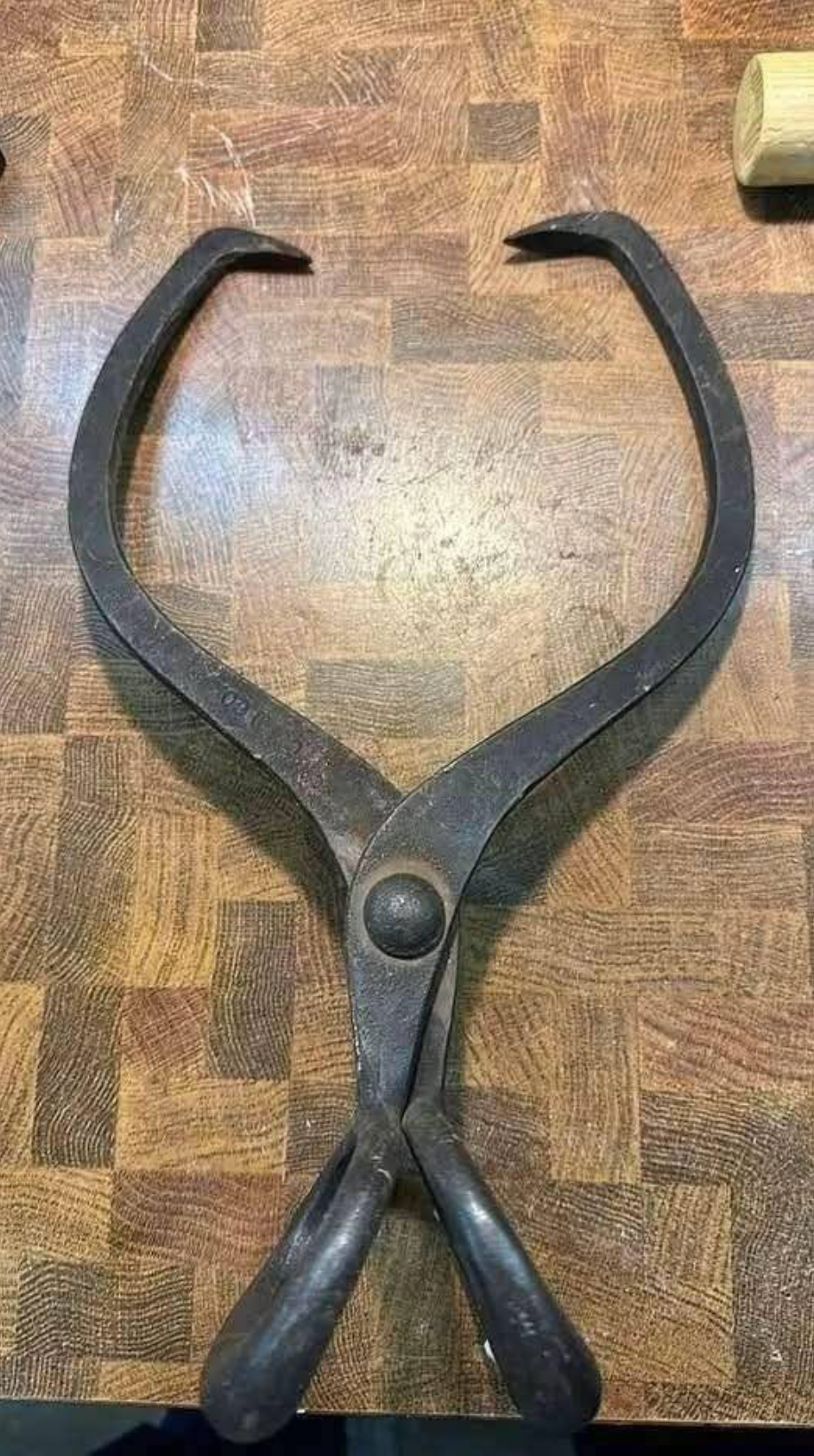
The object in focus—vintage ice tongs—is more than just a simple metal tool. It is a quiet reminder of a time when daily life required physical effort, clever mechanical design, and practical solutions to challenges that modern technology has long erased. Before refrigerators became common in homes, ice was not produced on demand. It was harvested, stored, transported, and delivered through an entire industry built around preserving coldness itself.
In that world, ice tongs were not optional—they were essential.
A Tool Born from the Ice Age of Industry (Not Nature, but Innovation)
Long before electric refrigeration, ice was collected from frozen lakes and rivers during winter and stored in insulated icehouses. This harvested ice would then be distributed throughout the year to homes, restaurants, hotels, and markets.
But ice was heavy, slippery, and difficult to handle safely with bare hands or simple tools. That is where ice tongs came into play.
They were designed to solve a very specific problem:
How do you grip and carry large, melting blocks of ice without dropping them or injuring yourself?
The answer was a tool that combined strength, leverage, and simplicity in one elegant form.
Design and Structure – Simple but Highly Effective
At first glance, vintage ice tongs appear straightforward, but their design is the result of careful mechanical thinking.
1. The Arms
The tongs consist of two long, curved metal arms. These arms are usually made from forged steel or iron, chosen for durability and resistance to cold temperatures.
Their curvature was not decorative—it allowed the tool to naturally open and close with controlled tension.
2. The Pivot Joint
At the center, a riveted pivot connects both arms. This hinge is the heart of the mechanism, allowing the tongs to function like a pair of controlled claws.
When pressure is applied to the handles, the gripping ends open. When released, the tension closes them firmly around an object.
3. The Gripping Teeth
At the end of each arm are sharp, pointed teeth or hooks. These were designed to dig into the surface of ice blocks.
Ice, especially in large chunks, can be extremely heavy and slippery. The teeth ensured a secure hold, preventing sudden drops during transport.
4. The Handles
The upper ends of the tongs form rounded or slightly flattened handles. These were designed for comfort and grip, allowing workers to carry heavy ice for extended periods without losing control.
In many versions, the handles were reinforced to withstand repeated daily use in harsh conditions.
How Ice Tongs Were Used in Everyday Life
Ice tongs were a common sight in several environments:
1. Ice Delivery Services
Before refrigeration, ice delivery was a daily or weekly service. Workers would:
- Break large ice blocks into manageable pieces
- Use tongs to lift and load them onto wagons
- Deliver them door-to-door
The tongs were essential for speed, safety, and efficiency.
2. Household Use
Inside homes, ice was stored in insulated iceboxes. Families would use ice tongs to:
- Place ice into storage compartments
- Handle melting blocks without direct contact
- Avoid contamination and slipping
Even simple household routines required this tool.
3. Restaurants and Hotels
In commercial kitchens, ice was used for:
- Food preservation
- Cooling drinks
- Displaying fresh goods
Ice tongs allowed staff to handle ice hygienically and quickly, especially during busy service hours.
Why Ice Tongs Were So Important
What makes ice tongs remarkable is not their complexity, but their necessity.
They solved multiple problems at once:
- Prevented frostbite from direct ice contact
- Reduced slipping accidents
- Improved speed in ice handling
- Provided sanitary handling before modern hygiene standards existed
In many ways, they were an early example of ergonomic design—tools shaped around human limitation and environmental challenge.
The Shift to Modern Refrigeration
The decline of ice tongs began with the rise of electric refrigerators in the early to mid-20th century. As homes gained the ability to produce cold internally, the entire ice delivery industry gradually disappeared.
With it, tools like ice tongs became obsolete.
What was once a daily necessity slowly transformed into a forgotten artifact.
Vintage Ice Tongs Today – From Utility to Symbol
Today, vintage ice tongs are rarely used for their original purpose. Instead, they exist as:
1. Collectible Antiques
Collectors value them for their craftsmanship, industrial history, and mechanical simplicity.
2. Decorative Objects
They are often displayed in kitchens, restaurants, or rustic-themed interiors as reminders of older ways of living.
3. Historical Artifacts
Museums and historical exhibitions use them to illustrate how people managed food preservation before modern appliances.
A Symbol of Practical Ingenuity
What makes ice tongs fascinating is not just what they did, but what they represent.
They symbolize a time when:
- Tools were built to last for decades
- Everyday life required physical skill
- Innovation was driven by necessity, not convenience
There is a quiet elegance in their design—a reminder that even the simplest objects can reflect deep human intelligence.

Welcome to my kitchen!
I’m a passionate home cook and recipe creator who loves turning simple ingredients into delicious, comforting meals that everyone can enjoy. Through this website, I share carefully prepared recipes, practical cooking tips, and easy-to-understand food education to help you feel more confident in the kitchen.
My goal is to make cooking simple, enjoyable, and accessible. Whether you are looking for a quick family dinner, a delicious dessert, healthy meal ideas, or traditional recipes with a modern touch, you’ll find inspiration here.
More Than Just Recipes
I believe that cooking is also a way to learn. That’s why this website is not only about recipes. I also create educational articles about ingredients, cooking techniques, kitchen tips, food preparation, and the stories behind different dishes.
Each article is designed to give you useful knowledge that you can apply in your own kitchen. From understanding how ingredients work together to learning better cooking methods, my aim is to help you become a more confident and creative cook.
My Philosophy
Good food doesn’t always require complicated ingredients or professional equipment. With a little knowledge, patience, and creativity, simple ingredients can become something truly special.
I believe in sharing recipes that are practical, clearly explained, and enjoyable to make. I also love exploring new flavors while appreciating traditional cooking and the recipes passed down through generations.
Thank you for visiting my kitchen and being part of this food-loving community. I hope my recipes and articles inspire you to cook, learn, experiment, and most importantly, enjoy every bite!
Happy cooking!