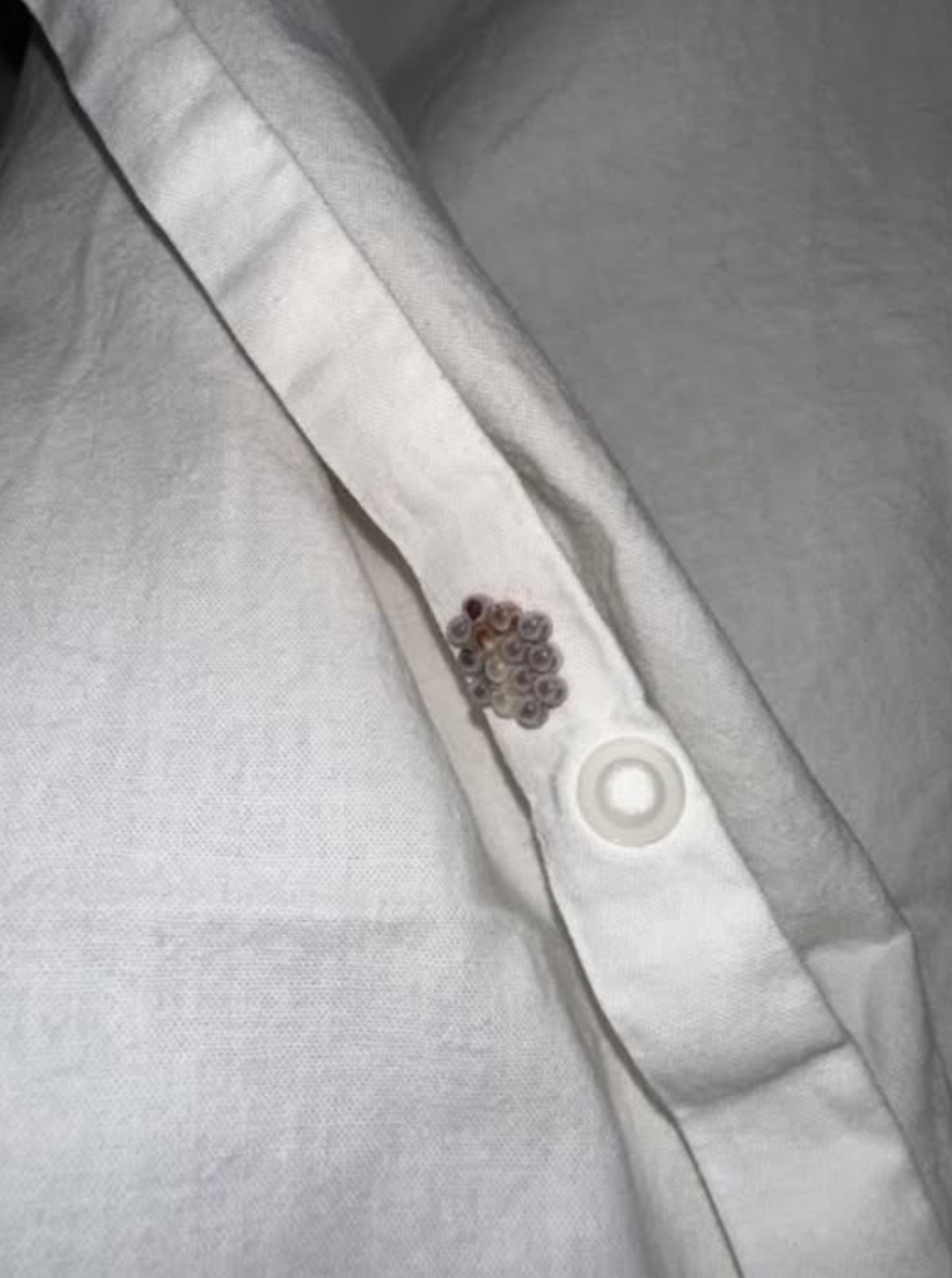
Tiny Eggs on Your Sheets?
Here’s What You’re Actually Dealing With
It starts with a flicker of unease.
A glance at your pillowcase.
A pause.
A closer look.
There they are—tiny, pale specks, scattered near the seams of your sheets or clustered along the edge of a pillow. They’re small. Almost grain-like. Easy to miss unless you’re looking directly at them.
Your mind jumps immediately to the worst conclusion.
Eggs.
But whose?
Before panic sets in, take a breath. Finding tiny egg-like particles on bedding is surprisingly common—and not every speck means an infestation. Let’s break down what these “eggs” usually are, how to tell the difference, and what actually deserves concern.
First Things First: What Do “Eggs” Look Like?
Real insect eggs share a few traits:
- Very small (often the size of a pinhead or smaller)
- Oval or elongated, not perfectly round
- Usually firm, not crumbly
- Often glued or stuck to fabric, seams, or surfaces
If the specks fall apart when touched, dissolve in water, or feel sandy, they’re probably not eggs at all.
The Most Common Possibilities (From Least to Most Concerning)
1. Lint, Fabric Pills, or Detergent Residue
(Most common — and harmless)
What it looks like:
- Tiny white or off-white dots
- Irregular shapes
- Often scattered randomly
- Comes off easily when brushed
What’s really happening:
- Pillowcases and sheets shed fibers over time
- Detergent residue can clump into grain-like specks
- Towels or blankets washed together can leave lint behind
Quick test:
- Rub between fingers → does it crumble?
- Dab with water → does it dissolve or smear?
If yes, you’re dealing with laundry residue—not insects.
2. Salt, Skin, or Cosmetic Debris
What it looks like:
- Tiny white grains near where your head rests
- Concentrated on pillows
- Slightly shiny or flaky
Possible sources:
- Dried sweat (salt crystals)
- Dead skin flakes
- Residue from face products or hair sprays
These often collect overnight and look alarming in morning light.
3. Dust Mites (Not Their Eggs—Their Traces)
Important clarification:
You cannot see dust mite eggs with the naked eye.
What people actually see:
- Fine white dust
- Tiny clumps in bedding
- Accumulated debris in seams
Dust mites are microscopic. If you can clearly see it, it’s not the mite or its eggs—but regular washing still helps reduce allergens.
4. Head Lice Eggs (Nits)
(Only if they’re on hair—not sheets)
What they look like:
- Tiny, oval, pale yellow or white
- Firmly attached to hair strands
- Do not fall off easily
Key detail:
Lice eggs stay glued to hair near the scalp. They do not get laid on sheets. You might find a few that fall off—but sheets full of them is extremely unlikely.
If the specks are loose on fabric, lice are probably not the cause.
5. Flea Eggs
(Possible, but uncommon in beds)
What they look like:
- Tiny, smooth, oval, white
- About the size of salt grains
- Not sticky—roll easily
Clue:
Flea eggs usually come from pets. They tend to fall into carpets, pet bedding, or floor cracks—not stay on sheets unless a pet sleeps there.
If you also notice:
- Pets scratching constantly
- Small black dots (flea dirt)
Then fleas are worth investigating.
6. Bed Bug Eggs
(The most feared—and thankfully not the most common)
What bed bug eggs look like:
- Pearl-white
- About 1 mm long (very tiny)
- Oval, slightly curved
- Cemented tightly into seams or cracks
Where they’re usually found:
- Mattress seams
- Bed frame joints
- Headboards
- Not usually scattered loosely on top of sheets
Important signs that must appear alongside eggs:
- Itchy bites in clusters or lines
- Rust-colored stains (crushed bugs or droppings)
- A faint musty smell
- Live bugs (flat, apple-seed shaped)
Eggs alone, especially loose ones, are rarely bed bugs.
Why Your Brain Jumps to the Worst Case
Humans are wired to notice threats in places we’re vulnerable—like our beds. Finding something unfamiliar where you sleep triggers anxiety fast.
But most cases turn out to be:
- Laundry residue
- Fabric fibers
- Skin or cosmetic debris
Real infestations leave multiple signs, not just a few mystery specks.
What You Should Do Right Now (Calm, Practical Steps)
- Remove the sheets and pillowcases
- Wash in warm or hot water
- Dry completely
- Inspect seams and corners
- Mattress edges
- Pillow seams
- Bed frame joints
- Vacuum the mattress surface
- Focus on seams
- Dispose of vacuum contents afterward
- Monitor—not panic
- Check again in 2–3 days
- See if anything reappears
If nothing returns, it was debris—not eggs.
When to Take It Seriously
You should investigate further only if:
- You find live insects
- You notice repeated unexplained bites
- Eggs are firmly glued into seams
- New specks appear daily despite washing
At that point, involving a trusted adult or professional is the right move—not guesswork or extreme measures.
The Bottom Line
Finding tiny white specks on your sheets feels alarming—but in most cases, they are not insect eggs at all.
Beds collect:
- Fibers
- Skin
- Dust
- Residue
True infestations announce themselves loudly and clearly, with multiple signs—not subtle mystery grains.
So pause. Look closely. Rule out the simple explanations first.
Most of the time, the answer is far less scary than it seems at first glance.