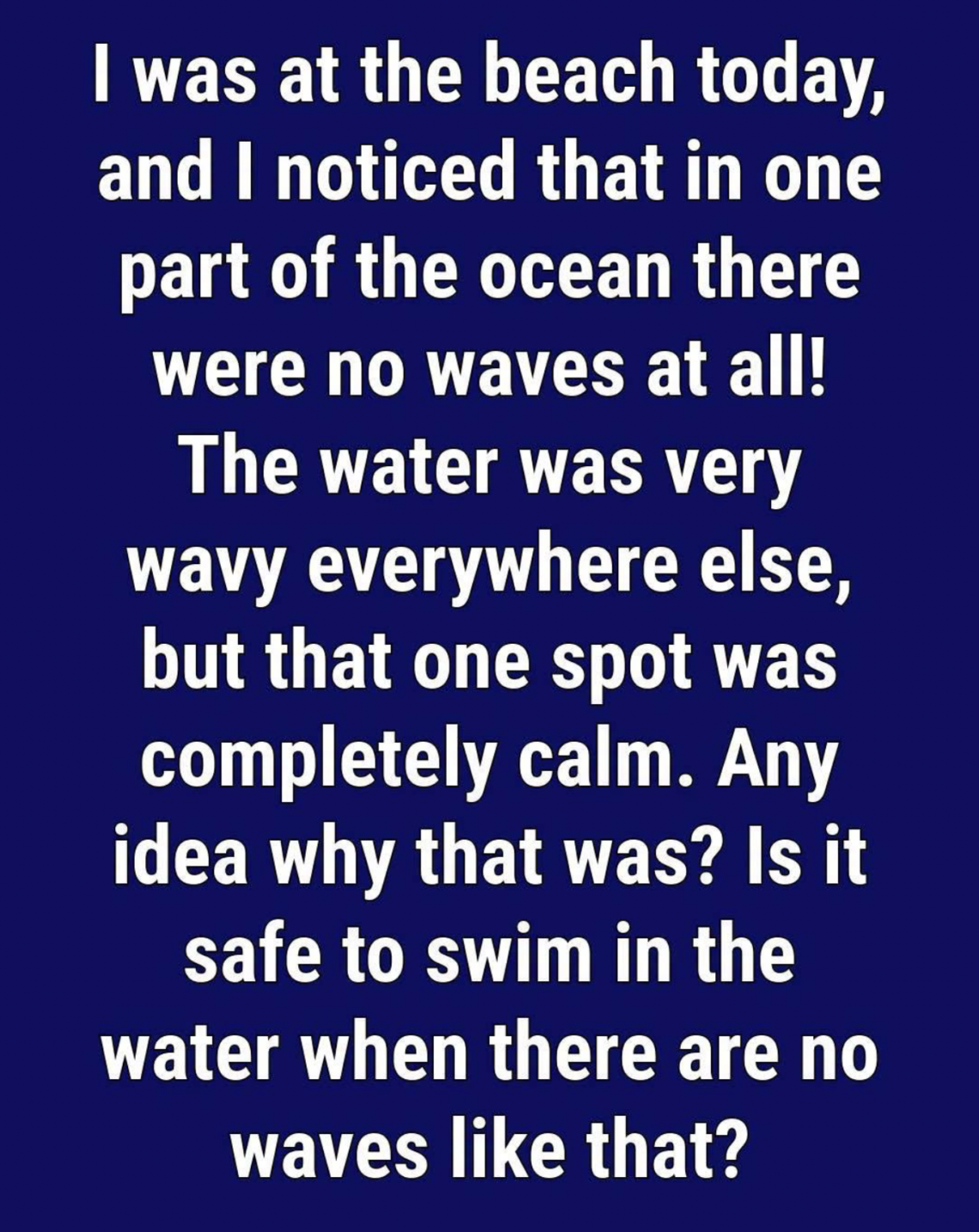
For many people, spending a day at the beach is one of life’s simplest pleasures. The sound of the waves, the fresh ocean air, the warmth of the sun, and the feeling of sand beneath your feet create a relaxing escape from everyday life. Yet beneath this peaceful setting, the ocean is constantly changing. Tides rise and fall, waves shift, underwater sandbars move, and powerful currents flow in ways that are often invisible to the human eye. One of the most dangerous misconceptions among beach visitors is believing that the calmest-looking section of water is automatically the safest place to swim. In reality, an area where there are noticeably fewer breaking waves can sometimes indicate the presence of a rip current—a fast-moving channel of water flowing away from the shore. Although rip currents are not present in every calm-looking area, they are one of the leading hazards at many surf beaches and can catch even experienced swimmers by surprise.
Understanding how rip currents form, how to recognize them, and how to respond safely if caught in one can significantly improve beach safety. Whether you are an experienced swimmer or someone who is simply enjoying the shoreline, this knowledge may one day help protect you or someone else.
What Is a Rip Current?
A rip current is a narrow, fast-moving channel of water that flows from the shoreline back toward deeper water.
When waves continually push water toward the beach, that water must eventually return to the ocean.
Instead of flowing evenly across the shoreline, it sometimes concentrates into a narrow path that moves seaward.
This concentrated flow is called a rip current.
Rip currents can develop:
- Along ocean beaches.
- Near sandbars.
- Beside piers.
- Near jetties.
- Around natural breaks in underwater terrain.
Why Do Some Areas Have Fewer Waves?
Many people naturally assume that calmer water is safer.
However, rip currents often form in areas where breaking waves are less visible.
This happens because the outward-flowing current can disrupt the formation of normal breaking waves.
As a result, you may notice:
- A gap in the line of breaking waves.
- Smoother-looking water.
- A darker channel of water.
- Water that appears unusually calm compared with nearby surf.
Not every calm-looking area contains a rip current, but such areas deserve extra caution.
How Rip Currents Form
Several natural processes work together.
- Waves continuously push water toward the shore.
- Water accumulates near the beach.
- The water seeks the easiest path back to the ocean.
- It flows rapidly through a deeper gap between sandbars or around structures.
The result is a concentrated current moving away from land.
Why Rip Currents Are Dangerous
The danger is not that they pull swimmers underwater.
Instead, rip currents can carry people away from shore much faster than expected.
The greatest risk often comes from panic and exhaustion.
Many swimmers instinctively try to swim directly back toward the beach against the current.
Because rip currents can move surprisingly quickly, even strong swimmers may become exhausted if they continuously fight the flow.
Signs That May Indicate a Rip Current
Although rip currents are not always easy to identify, possible warning signs include:
- A narrow gap where waves are not breaking.
- Water with a darker appearance.
- A channel of choppy or rippled water.
- Foam, seaweed, or floating debris moving steadily away from shore.
- A noticeable difference in water color.
- An area where surrounding waves break but one section remains relatively calm.
Learning to recognize these signs can improve beach awareness.
Beaches Are Constantly Changing
Ocean conditions change throughout the day.
Factors influencing rip currents include:
- Tide levels.
- Wave height.
- Wind direction.
- Sandbar movement.
- Coastal geography.
- Weather conditions.
An area that appears safe in the morning may become more hazardous later in the day.
If You Are Caught in a Rip Current
The most important step is to avoid panic.
A rip current does not usually pull swimmers beneath the water, but it can carry them away from shore.
General water safety guidance recommends:
- Stay as calm as possible.
- Conserve your energy.
- Signal for help if needed.
- If you are able, swim parallel to the shoreline until you move out of the strongest part of the current, then return toward the beach at an angle.
- If you cannot swim out of the current, float or tread water while attracting attention until assistance arrives.
Every situation is different, and local conditions may vary, but conserving energy is often far safer than repeatedly struggling directly against the current.
Why Panic Makes the Situation Worse
Fear naturally causes people to:
- Breathe rapidly.
- Use energy inefficiently.
- Make rushed decisions.
- Fight the current continuously.
These reactions increase fatigue.
Remaining as calm as circumstances allow improves the chances of making effective decisions.
Safety Tips Before Entering the Ocean
Always:
- Swim at beaches monitored by lifeguards whenever possible.
- Observe warning flags and posted signs.
- Check local surf conditions.
- Watch the water for several minutes before entering.
- Avoid swimming alone.
- Stay within your swimming ability.
- Keep children under close supervision.
Preparation is one of the best forms of protection.
Extra Caution for Inexperienced Swimmers
People who cannot swim confidently should be especially careful around natural bodies of water.
Even shallow water can become hazardous under certain conditions.
If you are not a strong swimmer:
- Stay in designated shallow areas.
- Remain close to shore.
- Never rely solely on inflatable toys for flotation.
- Consider wearing an appropriately fitted life jacket in suitable recreational settings where recommended.
- Avoid rough surf.
Knowing your limits is an important part of water safety.
The Role of Lifeguards
Professional lifeguards:
- Monitor changing conditions.
- Identify dangerous currents.
- Assist distressed swimmers.
- Provide emergency care.
- Close unsafe swimming areas when necessary.
Swimming at beaches with trained lifeguards significantly improves safety.
Common Myths About Rip Currents
Myth 1: Calm Water Is Always Safe
False.
Some calm-looking areas may contain rip currents.
Myth 2: Rip Currents Pull People Underwater
Generally, no.
They primarily carry water away from the shore rather than downward.
Myth 3: Only Weak Swimmers Are at Risk
False.
Even experienced swimmers can become caught in powerful rip currents.
Myth 4: You Should Always Swim Straight Back to Shore
Swimming directly against a strong rip current can quickly lead to exhaustion.
General water safety advice recommends conserving energy and avoiding unnecessary struggle.
Understanding Beach Warning Flags
Many beaches use flag systems to communicate water conditions.
Depending on local regulations, flags may indicate:
- Safe or relatively calm conditions.
- Strong surf.
- Dangerous currents.
- Water closures.
- Marine hazards.
Always learn the meaning of local beach warning flags before entering the water.
Frequently Asked Questions
Can rip currents occur on every beach?
No.
They are most common on surf beaches but depend on local geography and wave conditions.
Can children be caught in rip currents?
Yes.
Children should always be closely supervised near the water.
Are rip currents visible?
Sometimes.
Certain surface patterns may provide clues, but they are not always obvious.
Is calm water always dangerous?
No.
Many calm areas are perfectly safe.
However, an unusually calm gap between breaking waves deserves caution and careful observation.
What is the safest place to swim?
Whenever possible, swim at beaches supervised by qualified lifeguards and within designated swimming areas.
Respecting the Power of the Ocean
The ocean is one of nature’s most beautiful environments, but it is also dynamic and powerful. Even experienced swimmers cannot control changing tides, waves, or currents. Respecting these natural forces does not mean fearing them—it means understanding them. Learning basic beach safety, recognizing potential hazards, and making thoughtful decisions before entering the water can help prevent emergencies and make every visit to the coast more enjoyable.

Welcome to my kitchen!
I’m a passionate home cook and recipe creator who loves turning simple ingredients into delicious, comforting meals that everyone can enjoy. Through this website, I share carefully prepared recipes, practical cooking tips, and easy-to-understand food education to help you feel more confident in the kitchen.
My goal is to make cooking simple, enjoyable, and accessible. Whether you are looking for a quick family dinner, a delicious dessert, healthy meal ideas, or traditional recipes with a modern touch, you’ll find inspiration here.
More Than Just Recipes
I believe that cooking is also a way to learn. That’s why this website is not only about recipes. I also create educational articles about ingredients, cooking techniques, kitchen tips, food preparation, and the stories behind different dishes.
Each article is designed to give you useful knowledge that you can apply in your own kitchen. From understanding how ingredients work together to learning better cooking methods, my aim is to help you become a more confident and creative cook.
My Philosophy
Good food doesn’t always require complicated ingredients or professional equipment. With a little knowledge, patience, and creativity, simple ingredients can become something truly special.
I believe in sharing recipes that are practical, clearly explained, and enjoyable to make. I also love exploring new flavors while appreciating traditional cooking and the recipes passed down through generations.
Thank you for visiting my kitchen and being part of this food-loving community. I hope my recipes and articles inspire you to cook, learn, experiment, and most importantly, enjoy every bite!
Happy cooking!