We’ve all done it: squeezed a lemon for tea, lemonade, or a recipe, then tossed the peel without a second thought. As if that bright yellow rind, so fragrant and full of life, held no value. But in reality, lemon peel is a treasure trove of flavor, aroma, and nutrients, quietly waiting to be transformed into something remarkable.
One of the simplest and most versatile ways to preserve and amplify this gift is by turning it into lemon powder. A little jar of this sunny, citrusy dust can elevate everything from baked goods to roasted vegetables, from cocktails to teas. It’s the concentrated essence of lemon—bright, slightly bitter, subtly sweet, and infinitely aromatic—all in a form that lasts for months.
Here’s a full, detailed guide on how to make lemon powder at home, with extra care and attention to every step, so you can capture the magic of citrus in your own kitchen.
Why Lemon Powder Matters
Before diving into the process, it’s worth understanding why lemon peel deserves this special treatment.
- Flavor: Lemon zest carries concentrated citrus oils, far more intense than juice alone. Powder preserves this, allowing you to add brightness without liquid.
- Nutrition: Lemon peel contains vitamins, antioxidants, and bioflavonoids that support digestion, immunity, and general wellness.
- Waste reduction: Using the whole fruit is a win for sustainability and the environment.
- Versatility: Lemon powder can season meats, flavor baked goods, or be stirred into teas, salad dressings, or yogurt.
By drying and grinding lemon peel, you’re capturing both the aroma and the essence of the fruit in a form that is shelf-stable and easy to use.
Ingredients and Tools
You need very little in terms of ingredients:
- Lemons: Organic is best, since you’ll be using the peel. Choose firm, brightly colored lemons.
- Optional: a pinch of sugar or salt if you want a lightly flavored powder for specific applications.
Tools:
- Vegetable peeler or microplane grater
- Baking sheet or dehydrator tray
- Parchment paper or silicone mat (if baking)
- Oven or food dehydrator
- Coffee grinder, spice grinder, or high-powered blender
- Airtight container for storage
Step 1: Prepare the Lemons
Wash the lemons thoroughly under warm water to remove any wax or residues. Pat dry with a clean towel.
- Using a vegetable peeler, remove the zest in long, thin strips, avoiding the white pith underneath, which is bitter.
- If you prefer a finer texture, use a microplane grater, scraping only the colored part of the peel.
Take a moment here to inhale the aroma. This is the first whisper of the citrus magic that will be preserved in your powder.
Step 2: Dry the Peel
The goal is to remove moisture slowly without burning the zest. There are two main methods:
A. Oven Method
- Preheat the oven to 90–100°C (200–210°F).
- Line a baking sheet with parchment paper or a silicone mat.
- Spread the zest in a single layer, avoiding overlapping.
- Bake for 1–2 hours, checking every 20 minutes to ensure it’s drying evenly and not browning.
- The peel is ready when it snaps easily and feels dry and crisp to the touch.
B. Dehydrator Method
- Arrange the zest in a single layer on dehydrator trays.
- Set the dehydrator to 95–105°F (35–40°C).
- Dry for 4–6 hours, checking occasionally.
- Zest is done when completely dry, brittle, and easily crumbles.
Drying slowly preserves the essential oils and ensures a bright, potent powder.
Step 3: Grind the Dried Peel
Once the peel is fully dry:
- Break it into smaller pieces by hand.
- Use a coffee grinder, spice grinder, or high-powered blender to grind the peel into a fine powder.
- Optional: sift through a fine mesh sieve to remove any larger pieces.
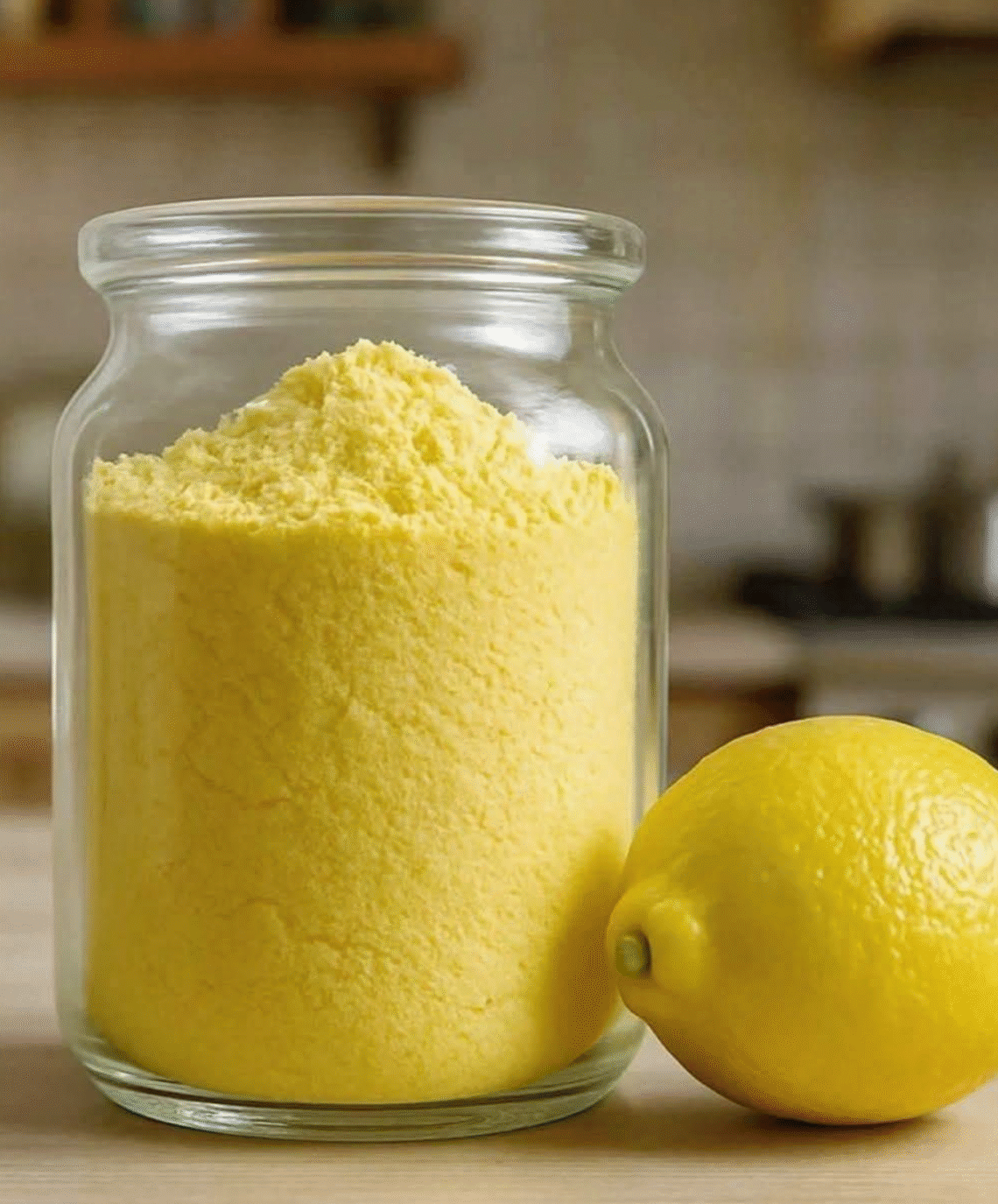
The result should be a sunny, fragrant powder that looks like finely ground sand but carries the aroma of a lemon grove.
Step 4: Store Your Lemon Powder
Store the powder in an airtight container away from light and moisture.
- Properly stored, it can last 6–12 months without losing potency.
- Keep it in a dark cupboard or pantry; avoid the fridge, which can introduce moisture.
Step 5: Using Lemon Powder
The uses are endless. Here are some inspiration ideas:
- Baking: Add to muffins, cakes, cookies, or scones for concentrated citrus flavor.
- Cooking: Sprinkle on roasted vegetables, fish, or chicken.
- Beverages: Stir into teas, lemonade, or cocktails for instant brightness.
- Seasonings: Mix with salt or sugar to create flavored finishing salts or sugars.
The intensity of lemon powder means a little goes a long way. Start with ¼–½ teaspoon per serving, adjusting to taste.
Extra Tips for Perfection
- Use organic lemons to avoid chemicals or wax.
- Avoid the pith; it’s bitter and will alter the flavor.
- Grind only when dry; any residual moisture will reduce shelf life.
- Combine with other dried herbs or spices for custom seasoning blends.
Final Reflection
Transforming lemon peel into powder is more than just a culinary trick—it’s a ritual of respect for the fruit, turning what is often discarded into something concentrated, long-lasting, and magical. Every sprinkle carries brightness, aroma, and a hint of summer, making this powder a quiet treasure in your pantry.
From the careful peeling to the slow drying, to the final grinding, each step allows you to capture and preserve the essence of lemon in its most versatile, powerful form. Once you’ve experienced your first sprinkle of homemade lemon powder in a simple dish, you’ll wonder why you ever tossed a peel without thought.