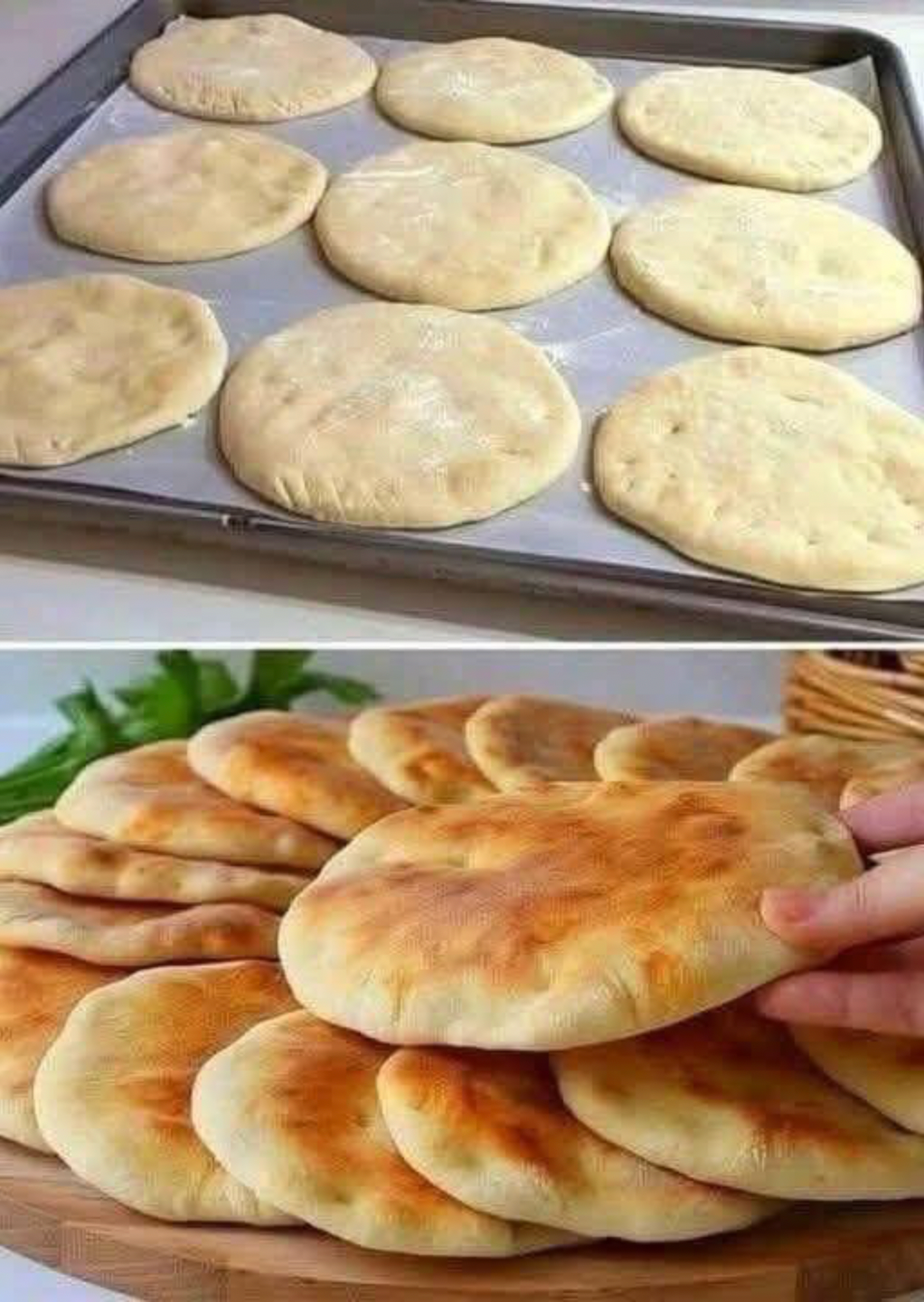
There is a special kind of satisfaction that comes from making bread at home, especially when it requires nothing more than a bowl, a few basic ingredients, and a hot skillet. Soft homemade skillet flatbread, pita-style, is one of those recipes that feels almost magical in its simplicity. You mix, you rest, you roll, and then—within minutes on a hot pan—you watch dough transform into soft, golden pockets of warmth.
Unlike store-bought bread, this flatbread has character. It is slightly chewy, lightly blistered in spots, soft enough to fold, and warm enough to feel comforting in every bite. It is the kind of bread that fits into everything: wraps, dips, sandwiches, or simply eaten on its own while still warm.
Why This Flatbread Works So Well
This recipe is built on a simple but powerful principle: high heat + hydrated dough + proper resting time = soft, airy bread.
- The dough develops elasticity from resting
- Heat creates rapid steam expansion, giving puffiness
- Skillet cooking gives golden spots and slight char
- Minimal ingredients keep the flavor clean and versatile
The result is bread that feels fresh, soft, and deeply satisfying without needing an oven or complex technique.
Ingredients (Makes 6–8 flatbreads)
- 2 ½ cups all-purpose flour
- 1 teaspoon salt
- 1 teaspoon sugar (helps with browning and softness)
- 1 packet (2 ¼ teaspoons) instant yeast
- ¾ cup warm water (adjust as needed)
- 2 tablespoons olive oil (or vegetable oil)
- Optional: 2–3 tablespoons yogurt (for extra softness and tenderness)
Understanding the Ingredients
Each component plays a role in texture and flexibility:
- Flour: Provides structure
- Yeast: Creates lightness and slight puffing
- Warm water: Activates yeast and hydrates dough
- Oil: Keeps bread soft and prevents dryness
- Yogurt (optional): Adds tenderness and a slight richness
- Salt: Balances flavor and strengthens dough
This is not just a basic dough—it is a carefully balanced formula for softness and flexibility.
Step 1: Activate and Mix the Dough
In a large mixing bowl, combine flour, salt, sugar, and yeast.
Add warm water gradually while mixing. Stir until a rough dough begins to form. Then add olive oil (and yogurt if using).
Mix until everything comes together into a slightly sticky, soft dough.
At this stage, the dough should not be dry. A slightly tacky texture helps create softness later.
Step 2: Kneading for Structure
Transfer the dough to a lightly floured surface and knead for about 8–10 minutes.
As you knead, the dough will become smoother, more elastic, and easier to handle. This process develops gluten, which is essential for the bread’s stretch and puff.
When ready, the dough should feel soft, smooth, and slightly springy when pressed.
Step 3: First Rest (The Most Important Step)
Place the dough back into a lightly oiled bowl. Cover it with a cloth or plastic wrap.
Let it rest for 1 to 1.5 hours, or until it doubles in size.
During this time:
- Yeast activates
- Air pockets form
- Dough becomes lighter and more workable
This resting phase is what gives the flatbread its soft, airy structure.
Step 4: Divide and Shape
Once risen, gently punch down the dough to release air.
Divide it into 6–8 equal portions.
Roll each piece into a smooth ball, then let them rest again for 10–15 minutes. This short rest relaxes the gluten, making rolling easier.
Step 5: Roll the Flatbreads
On a lightly floured surface, roll each dough ball into a circle or oval about 3–5 mm thick.
Try to keep the thickness even so they cook uniformly.
If too thick, they may not puff properly. If too thin, they may become crisp instead of soft.
Step 6: Cooking on the Skillet
Heat a heavy skillet or non-stick pan over medium-high heat until very hot.
Place one rolled flatbread onto the dry pan—no oil needed.
Cook for about 1–2 minutes on the first side until bubbles begin to form.
Flip and cook the second side for another 1–2 minutes until golden brown spots appear.
As it cooks, you may notice the bread puffing up like a balloon. This is steam expanding inside the dough—one of the most satisfying parts of the process.
Repeat with remaining dough.
Step 7: Keeping Them Soft
As each flatbread is cooked, place it in a clean kitchen towel and cover it immediately.
This traps steam and keeps them soft, warm, and flexible instead of drying out.
Texture and Flavor Experience
Fresh skillet flatbread offers:
- Soft, pillowy interior
- Light chewiness with gentle elasticity
- Golden, slightly toasted surface
- Mild, comforting flavor that pairs with anything
It is neutral enough to adapt, yet flavorful enough to enjoy on its own.
Serving Ideas
This pita-style flatbread is incredibly versatile:
- Use as wraps for grilled chicken or vegetables
- Serve with hummus, olive oil, or dips
- Pair with soups and stews
- Make quick sandwiches or flatbread pizzas
- Serve warm with butter or honey
It can easily replace store-bought bread in almost any meal.
Tips for Perfect Flatbread
- Keep dough slightly soft, not dry
- Resting time is essential for elasticity
- Cook on a properly heated pan for puffing
- Do not overcook or it may become stiff
- Always cover cooked bread to retain softness
Variations to Try
Garlic Herb Flatbread
Add garlic powder, parsley, or rosemary to the dough.
Whole Wheat Version
Replace half the flour with whole wheat flour for a nuttier flavor.
Yogurt-Rich Soft Version
Increase yogurt for extra tenderness.
Stuffed Flatbread
Fill with cheese, herbs, or spiced meat before rolling.
Olive Oil Finish
Brush with olive oil and sprinkle sea salt after cooking.
Make-Ahead and Storage
- Dough can be refrigerated overnight
- Cooked flatbreads store for 2–3 days
- Reheat on a skillet to restore softness
- Freeze and reheat when needed
Welcome to my kitchen!
I’m a passionate home cook and recipe creator who loves turning simple ingredients into delicious, comforting meals that everyone can enjoy. Through this website, I share carefully prepared recipes, practical cooking tips, and easy-to-understand food education to help you feel more confident in the kitchen.
My goal is to make cooking simple, enjoyable, and accessible. Whether you are looking for a quick family dinner, a delicious dessert, healthy meal ideas, or traditional recipes with a modern touch, you’ll find inspiration here.
More Than Just Recipes
I believe that cooking is also a way to learn. That’s why this website is not only about recipes. I also create educational articles about ingredients, cooking techniques, kitchen tips, food preparation, and the stories behind different dishes.
Each article is designed to give you useful knowledge that you can apply in your own kitchen. From understanding how ingredients work together to learning better cooking methods, my aim is to help you become a more confident and creative cook.
My Philosophy
Good food doesn’t always require complicated ingredients or professional equipment. With a little knowledge, patience, and creativity, simple ingredients can become something truly special.
I believe in sharing recipes that are practical, clearly explained, and enjoyable to make. I also love exploring new flavors while appreciating traditional cooking and the recipes passed down through generations.
Thank you for visiting my kitchen and being part of this food-loving community. I hope my recipes and articles inspire you to cook, learn, experiment, and most importantly, enjoy every bite!
Happy cooking!