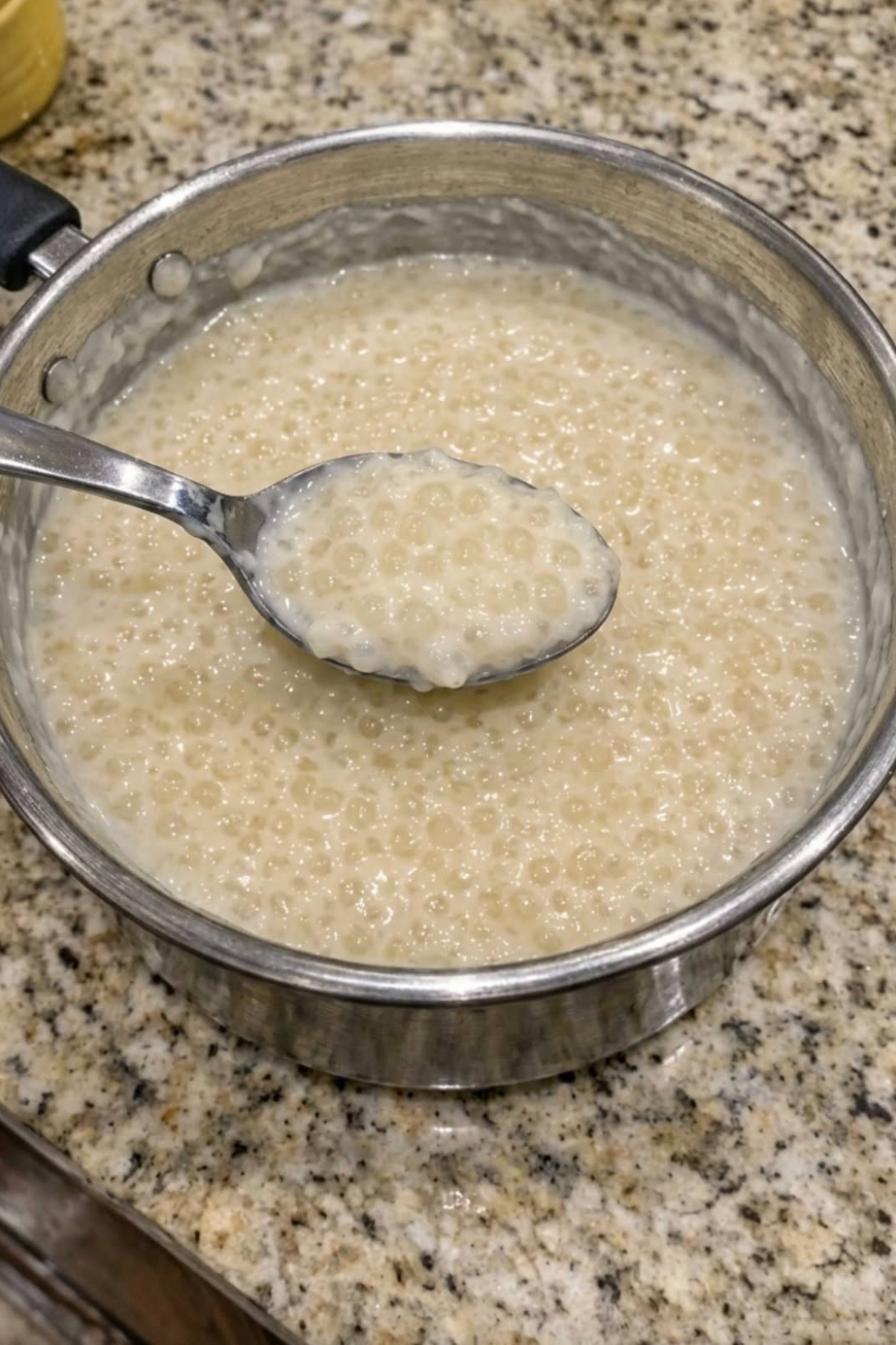
There is something wonderfully comforting about a bowl of homemade tapioca pudding.
For many people, tapioca pudding brings back memories of old-fashioned kitchens, handwritten recipe cards, family dinners, and simple desserts that didn’t need fancy ingredients to feel special. The little pearls of tapioca suspended in a creamy vanilla custard give this dessert its unmistakable appearance and pleasantly chewy texture.
Making it in a slow cooker makes the process even more relaxed. Instead of standing over a saucepan and constantly watching the mixture, you can let the gentle heat gradually soften the tapioca while the milk, eggs, sugar, and vanilla come together into a rich, creamy dessert.
The result is a pudding that feels homemade in the best possible way: soft, comforting, lightly sweet, and full of old-fashioned charm.
Why You’ll Love This Slow Cooker Tapioca Pudding
There are plenty of reasons this recipe deserves a place in your dessert rotation.
It is wonderfully creamy.
Slow, gentle cooking allows the tapioca pearls to soften while the milk mixture gradually thickens.
It has a nostalgic texture.
The tiny tapioca pearls provide little bursts of chewiness throughout the smooth pudding.
It requires very little hands-on work.
The slow cooker does most of the cooking for you.
The ingredients are simple.
You don’t need complicated specialty ingredients to make a satisfying homemade dessert.
It can be served warm or chilled.
Warm tapioca pudding is cozy and comforting, while refrigerated pudding becomes thicker and especially refreshing.
Ingredients
For approximately 6 servings, you’ll need:
- 1/2 cup small pearl tapioca
- 4 cups whole milk
- 1/2 cup granulated sugar
- 2 large eggs
- 1 teaspoon vanilla extract
- 1/4 teaspoon salt
- 1 tablespoon butter, optional
For serving, you can also use:
- Ground cinnamon
- Fresh berries
- Sliced bananas
- A little whipped cream
- A small drizzle of honey
- Extra vanilla
If using tapioca that requires soaking or a particular cooking method, follow the instructions on its package because different varieties can behave differently.
Preparing the Tapioca
Before beginning, check the package directions for your tapioca pearls.
Some tapioca products require soaking before cooking, while quick-cooking varieties may not.
If your tapioca requires soaking, place the pearls in the recommended amount of water or milk and allow them to soften according to the package instructions.
This step is important because it helps ensure that the pearls become tender rather than remaining unpleasantly firm after cooking.
Preparing the Slow Cooker
Lightly grease the inside of the slow cooker with a little butter or cooking spray.
This isn’t absolutely necessary, but it can make cleanup easier and may help prevent some of the milk mixture from sticking to the sides.
Add the tapioca pearls, milk, sugar, and salt.
Stir gently to distribute the ingredients evenly.
Slow Cooking the Pudding
Cover the slow cooker.
Cook the mixture on the appropriate low setting until the tapioca pearls become tender and the milk mixture begins to thicken.
The exact cooking time can vary considerably depending on the slow cooker, the type of tapioca, and the temperature of the appliance.
For that reason, don’t rely only on the clock.
Instead, check the tapioca periodically toward the end of cooking.
The pearls should be tender and translucent rather than hard in the center.
The mixture should also look noticeably thicker.
Adding the Eggs Carefully
The eggs are what help give traditional tapioca pudding its custard-like richness.
However, they need to be handled carefully.
Don’t simply pour cold beaten eggs directly into a very hot mixture.
Instead, beat the eggs separately in a bowl.
Then gradually add a small amount of the hot milk mixture to the eggs while whisking constantly.
This gently raises the temperature of the eggs.
Once the egg mixture has warmed, gradually stir it back into the slow cooker.
This process is called tempering.
It helps prevent the eggs from scrambling.
Continue Cooking Until Creamy
After adding the tempered eggs, continue cooking according to the recipe and appliance instructions until the pudding reaches a creamy, thickened consistency.
Remember that tapioca pudding often continues to thicken as it cools.
So don’t wait for it to become extremely thick while it is still hot.
You want a consistency that is creamy and spoonable.
Add the Vanilla at the End
Vanilla extract is best added toward the end of cooking.
Stir it gently into the finished pudding.
If you’re using butter, you can add a small amount at this stage as well.
The butter isn’t essential, but it can give the pudding a slightly richer and smoother finish.
Don’t Worry If It Looks Loose at First
Freshly cooked tapioca pudding may look somewhat thinner than you expect.
That’s normal.
As it cools, the tapioca absorbs additional liquid and the custard becomes thicker.
Allow the pudding to rest for several minutes before deciding whether its consistency is right.
If you prefer chilled tapioca pudding, transfer it to individual serving dishes or a covered container and refrigerate it.
Warm or Cold?
This is one of the best things about tapioca pudding: there isn’t a wrong answer.
Warm Tapioca Pudding
Serve it shortly after cooking for a particularly cozy dessert.
The pudding will be soft, creamy, and comforting.
A small sprinkle of cinnamon can add a lovely finishing touch.
Chilled Tapioca Pudding
Refrigerating the pudding produces a firmer, thicker texture.
Cold tapioca pudding is especially enjoyable on warm days.
Top it with fresh berries or sliced fruit for a simple dessert.
How to Prevent a Skin From Forming
If you’re storing the pudding in one large container, place plastic wrap directly against the surface of the pudding before refrigerating.
This minimizes air contact and can help prevent a thick skin from forming on top.
Alternatively, divide the pudding into individual serving containers and cover them.
Delicious Topping Ideas
Tapioca pudding is delicious on its own, but toppings can make it even more interesting.
Try:
Cinnamon
A light dusting of cinnamon adds warmth and makes the pudding taste especially nostalgic.
Fresh Berries
Strawberries, blueberries, raspberries, or blackberries provide color and a little natural tartness.
Banana
Thinly sliced banana pairs beautifully with vanilla tapioca pudding.
Whipped Cream
A small spoonful of whipped cream creates an extra creamy dessert.
Toasted Coconut
For a tropical variation, sprinkle a little toasted coconut over the top.
Chopped Nuts
A small amount of finely chopped pecans or walnuts provides a pleasant contrast to the soft pudding.
Tips for the Best Texture
Use the correct tapioca.
Different tapioca pearls require different preparation methods.
Don’t rush the cooking process.
The slow cooker is designed for gradual cooking, so give the tapioca time to become tender.
Temper the eggs.
This is one of the most important steps when making a custard-style pudding.
Don’t overcook it.
Remember that the pudding will continue thickening as it cools.
Stir gently.
Aggressive stirring can break apart delicate tapioca pearls and make the texture less appealing.
What If the Pudding Becomes Too Thick?
If the pudding becomes thicker than you’d like, don’t panic.
Stir in a small amount of warm milk until you reach your preferred consistency.
Add the milk gradually rather than all at once.
This gives you better control over the final texture.
What If It Is Too Thin?
First, allow it to cool.
Tapioca pudding naturally thickens as it cools, so what looks too loose while hot may become perfect after resting.
If it remains unusually thin after cooling, the tapioca may not have been cooked sufficiently or the proportions may have been different from those in the recipe.
Avoid simply adding large amounts of starch without understanding the cause, because this can change the texture considerably.
Make It Ahead
Tapioca pudding is an excellent make-ahead dessert.
Prepare it earlier in the day, allow it to cool, cover it, and refrigerate it until you’re ready to serve.
This makes it especially convenient when you’re preparing several dishes for a family meal.
Just remember that the pudding will become thicker as it sits in the refrigerator.
A Simple Serving Presentation
For a charming old-fashioned presentation, spoon the pudding into small glass dessert dishes.
Add a few fresh berries on top.
Finish with a tiny sprinkle of cinnamon.
You can also place a small vanilla wafer or another simple cookie alongside each serving.
There’s no need to make the presentation complicated.
The pudding itself is the star.
Why This Dessert Feels So Nostalgic
Tapioca pudding belongs to a category of desserts that many people associate with an earlier style of home cooking.
These were recipes built around basic ingredients rather than elaborate decorations.
Milk.
Eggs.
Sugar.
Vanilla.
Tapioca.
Nothing particularly extravagant.
Yet when those ingredients are cooked slowly and carefully, they become something much more memorable.
That’s part of the charm of old-fashioned cooking.
A simple recipe can become a family favorite not because it is complicated, but because people remember eating it together.