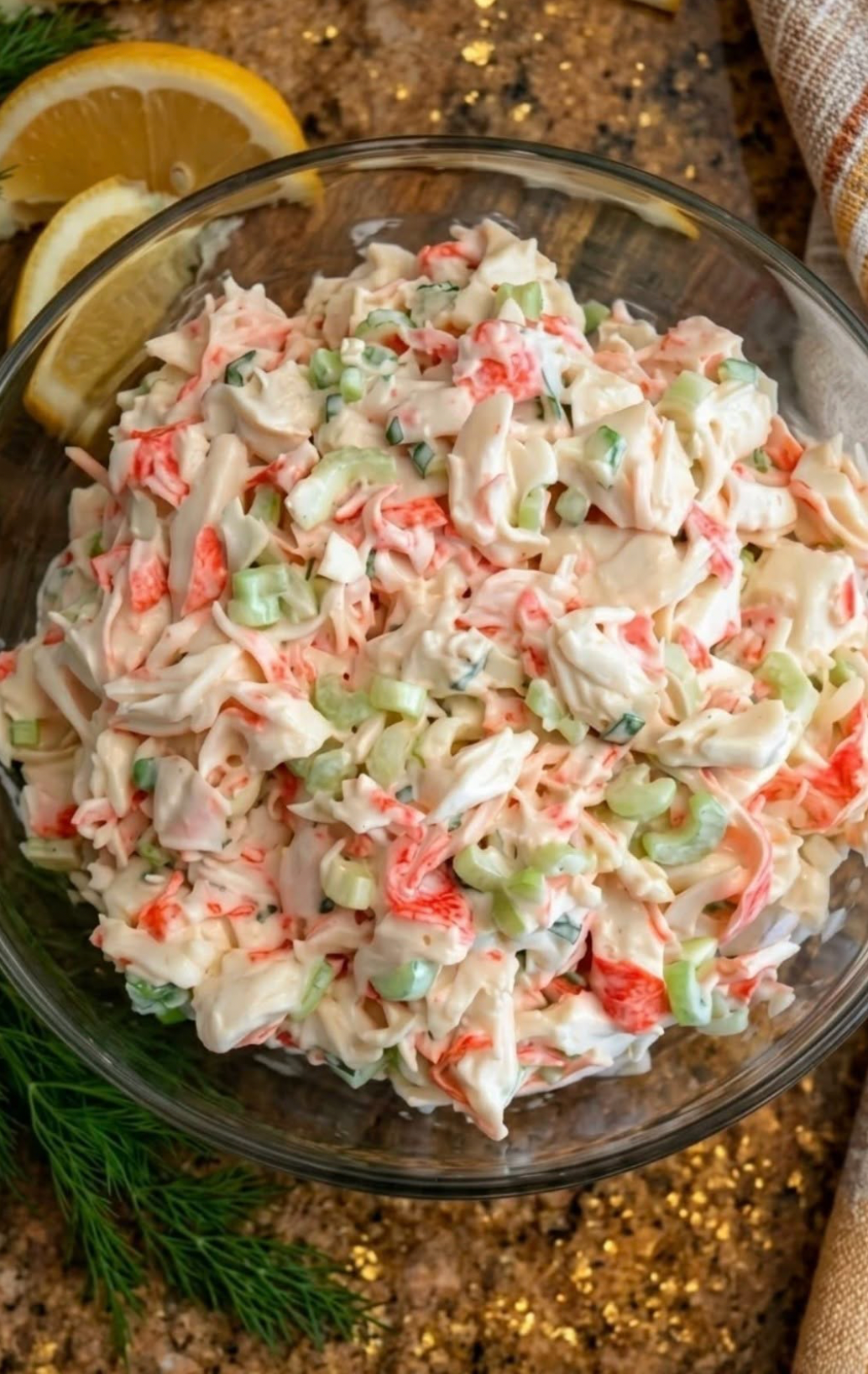
Seafood salad is one of those wonderfully versatile dishes that can feel both refreshing and satisfying at the same time. It combines tender seafood with crisp vegetables and a creamy, flavorful dressing, creating a dish that works beautifully as a light lunch, a side dish, a sandwich filling, or part of a larger cold-food spread.
Whether you’re preparing it for a family meal, a picnic, a weekend gathering, or simply looking for something different to keep in the refrigerator, seafood salad is an easy recipe to customize.
The best part is that you don’t need a complicated list of ingredients. With a few simple components and a little preparation, you can create a colorful salad with plenty of texture and flavor.
What Makes Seafood Salad So Good?
A good seafood salad is all about balance.
The seafood provides a tender, savory base. Crisp vegetables add freshness and crunch, while the dressing brings everything together with creaminess and acidity.
A little lemon juice can brighten the entire dish, while herbs such as parsley or dill provide a fresh finishing note.
The result should taste rich enough to be satisfying without becoming overwhelmingly heavy.
Ingredients
For approximately 4 to 6 servings, you can use:
- 1 pound cooked seafood, such as shrimp, crab meat, imitation crab, or a combination
- 1/2 cup mayonnaise
- 2 tablespoons plain Greek yogurt or sour cream
- 1 tablespoon fresh lemon juice
- 1 teaspoon Dijon mustard
- 1/2 cup finely chopped celery
- 1/4 cup finely chopped red onion
- 1/4 cup finely chopped cucumber or bell pepper
- 1 tablespoon chopped fresh parsley or dill
- 1/4 teaspoon garlic powder
- Salt, to taste
- Black pepper, to taste
Optional additions include:
- chopped green onions
- a small amount of sweet pickle relish
- diced avocado
- chopped boiled egg
- a little Old Bay-style seafood seasoning
- finely chopped apple for a subtle sweet contrast
Choosing the Seafood
The seafood you choose will determine much of the character of the finished salad.
Shrimp
Cooked shrimp make an excellent choice because they have a firm texture and mild flavor.
Small shrimp can be left whole, while larger shrimp should be chopped into bite-sized pieces.
Crab
Crab meat creates a delicate and slightly sweet seafood salad.
If using fresh crab, carefully check for shell fragments before adding it to the bowl.
Imitation crab can also be used and is often convenient and economical.
A Seafood Combination
For a more varied salad, combine two or more types of seafood.
Shrimp and crab are particularly good together.
You can also use cooked flaked fish, provided it has been properly cooked, cooled, and handled safely.
Preparing the Seafood
If you’re starting with raw seafood, cook it thoroughly before making the salad.
Once cooked, allow the seafood to cool promptly.
Pat it dry if it contains excess moisture.
This step matters because watery seafood can make the finished dressing thin and dilute the flavor.
Chop the seafood into comfortable bite-sized pieces.
Try not to chop it too finely.
Leaving some larger pieces creates a much more satisfying texture.
Preparing the Vegetables
Wash the vegetables thoroughly before cutting them.
Finely dice the celery, onion, and cucumber or bell pepper.
The goal is to create small pieces that distribute evenly throughout the salad.
Celery is particularly useful because it contributes a pleasant crunch against the soft seafood.
Red onion adds a little sharpness and color.
Cucumber provides freshness, while bell pepper contributes sweetness and additional crunch.
Making the Creamy Dressing
In a separate bowl, combine the mayonnaise, Greek yogurt or sour cream, lemon juice, Dijon mustard, garlic powder, salt, and black pepper.
Stir until smooth.
Taste the dressing before combining it with the seafood.
If it tastes too rich, add another small squeeze of lemon.
If it needs more savory flavor, add a little seasoning.
If you prefer a creamier salad, add a little more mayonnaise.
The dressing should be flavorful enough to complement the seafood without completely overpowering it.
Combining Everything
Place the cooled seafood in a large mixing bowl.
Add the chopped celery, onion, cucumber or bell pepper, and fresh herbs.
Pour the dressing over the mixture.
Using a large spoon or spatula, gently fold everything together.
Avoid vigorous stirring, especially if you’re using delicate crab meat.
You want to coat the ingredients while keeping the seafood in recognizable pieces.
Let It Rest
One of the easiest ways to improve seafood salad is to give it time to rest.
Cover the bowl and refrigerate it for about 30 minutes before serving.
This allows the flavors to blend.
The vegetables become lightly seasoned, the seafood absorbs some of the dressing, and the lemon and herbs become more noticeable.
If you have time, you can prepare it several hours ahead.
Keep it refrigerated while it rests.
Don’t Leave Seafood Salad Sitting Out
Because seafood and mayonnaise-based dressings are perishable, proper food handling is important.
Keep the salad refrigerated until you’re ready to serve it.
When serving it outdoors or at a gathering, use a chilled serving dish or another appropriate method of keeping perishable food cold.
Don’t leave seafood salad sitting at room temperature for extended periods.
If you’re unsure whether leftovers have been kept safely cold, it’s better not to risk eating them.
How to Serve Seafood Salad
There are countless ways to enjoy this salad.
Serve It Over Lettuce
For a simple lunch, spoon the seafood salad over crisp lettuce leaves.
Add tomato, cucumber, or other fresh vegetables for extra color.
Make a Sandwich
Spoon the mixture onto toasted bread or a soft roll.
A little lettuce adds crunch, while tomato slices provide freshness.
Serve It With Crackers
Seafood salad makes an easy appetizer or snack when served with crackers.
Choose a mild cracker so the seafood remains the main flavor.
Make Lettuce Cups
For a lighter presentation, spoon individual portions into sturdy lettuce leaves.
This is especially attractive when serving guests.
Serve It Alongside Other Foods
Seafood salad works well as part of a cold lunch or picnic spread.
You can serve it alongside:
- fresh fruit
- green salad
- cucumber slices
- roasted vegetables
- crusty bread
- crackers
- potato salad
A Lighter Version
If you prefer a lighter dressing, replace some of the mayonnaise with plain Greek yogurt.
You don’t have to eliminate mayonnaise completely.
Even replacing part of it can create a lighter, tangier dressing while maintaining the creamy texture people expect from seafood salad.
You can also increase the amount of celery, cucumber, or other vegetables for additional crunch.
A Tangy Lemon-Herb Version
For a brighter flavor, increase the lemon juice slightly and add fresh dill and parsley.
A small amount of finely grated lemon zest can provide even more citrus aroma.
This version is particularly refreshing during warmer weather.
A Slightly Sweet Version
Some seafood salads pair beautifully with a subtle sweet element.
Try adding a small amount of finely diced apple or a little sweet relish.
Don’t add too much.
The goal is simply to create a contrast with the savory seafood and tangy dressing.
Common Mistakes to Avoid
Using Warm Seafood
Warm seafood can make the dressing less appealing and can create food-safety concerns.
Allow cooked seafood to cool appropriately before assembling the salad.
Adding Too Much Dressing
It’s easy to pour in too much dressing at once.
Start with a smaller amount.
You can always add more.
Chopping Everything Too Finely
Over-chopping can turn the salad into a soft mixture with very little texture.
Leave some seafood pieces larger.
Skipping the Lemon
Even a creamy dressing benefits from acidity.
Lemon juice helps brighten the flavors and keeps the salad from tasting excessively rich.
Forgetting to Taste
Before serving, taste a small spoonful.
You may discover that it needs a little more lemon, pepper, herbs, or seasoning.
Small adjustments can make a significant difference.
How to Make It Ahead
Seafood salad is convenient because you can prepare it in advance.
Prepare the seafood and vegetables, make the dressing, and combine everything in a covered container.
Refrigerate it until you’re ready to serve.
If you’re preparing it significantly ahead of time, consider keeping particularly watery vegetables separate until closer to serving so they don’t release excess moisture into the salad.
Storage
Store leftovers promptly in a clean, covered container in the refrigerator.
Because seafood is perishable, don’t rely on smell or appearance alone to determine whether leftovers are safe.
When in doubt about how long a perishable food has been sitting out or whether it has been stored properly, discard it rather than taking a chance.
A Simple Serving Idea
For an attractive lunch plate, place a bed of crisp lettuce on a plate.
Add a generous scoop of seafood salad in the center.
Arrange cucumber slices and tomato wedges around it.
Finish with a little chopped parsley and a lemon wedge.
Serve with crackers or a slice of toasted bread.
It takes only a few extra minutes, but the presentation makes the meal feel much more special.
Why This Recipe Is So Versatile
The beauty of seafood salad is that there isn’t just one correct version.
You can make it creamy or lighter.
You can use shrimp, crab, imitation crab, or a combination.
You can emphasize lemon and herbs or add a slightly sweeter flavor.
You can serve it in a sandwich, over lettuce, with crackers, or as part of a larger meal.
Once you understand the basic formula—seafood + crunchy vegetables + creamy dressing + acidity + seasoning—you can adapt it to suit your preferences.