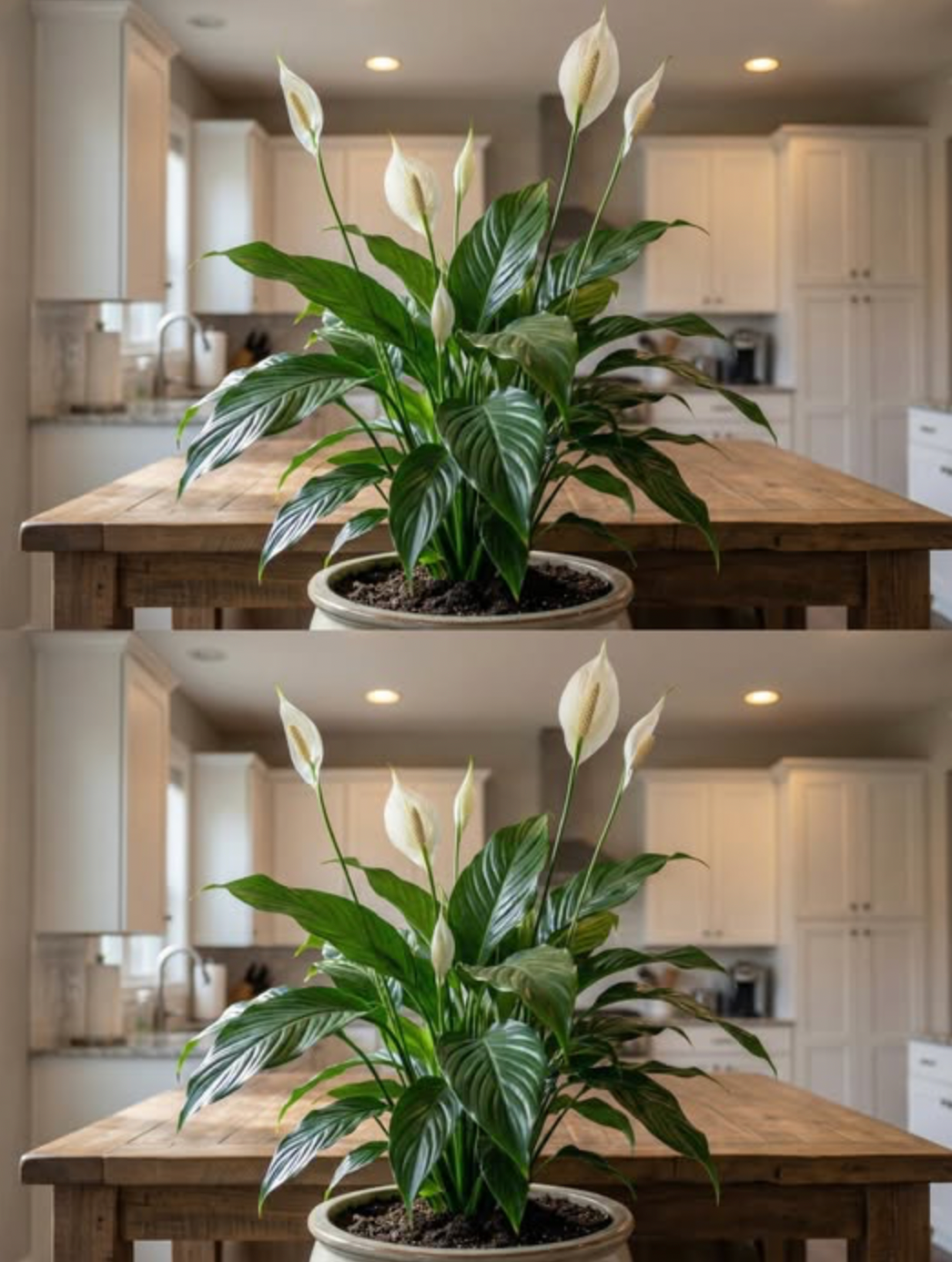
For years, the beloved Peace Lily—botanically known as Spathiphyllum—has been labeled as “easy.” Water it when it droops, place it in indirect light, and hope for blooms. But many plant owners notice something frustrating: the leaves survive, yet flowering becomes rare. The plant looks healthy enough, but it lacks vigor, shine, and consistent spathes.
The truth is simple: Peace Lilies don’t just need water—they need nourishment that supports root strength, microbial health, and nutrient absorption. One gentle, natural method gaining popularity among plant enthusiasts is using diluted aloe vera as a bi-weekly soil tonic.
This isn’t magic. It’s plant science.
Why Aloe Vera Works for Peace Lilies
Aloe vera contains:
- Natural enzymes
- Amino acids
- Trace minerals (calcium, magnesium, zinc)
- Natural sugars
- Plant growth hormones
These compounds can:
- Stimulate root development
- Improve nutrient uptake
- Support beneficial soil microbes
- Reduce transplant stress
- Enhance leaf gloss and resilience
Unlike synthetic fertilizers, aloe vera works gently. It doesn’t overload the soil with salts, which Peace Lilies are sensitive to.
The Aloe Vera Tonic Recipe (Bi-Weekly Root Booster)
This is not a replacement for proper watering—it is a supplement to improve plant vitality.
Ingredients
- 1 large fresh aloe vera leaf (or 2 tablespoons pure aloe gel without additives)
- 1 liter (4 cups) room-temperature filtered water
- Blender or mixing jar
- Fine strainer (optional)
Step-by-Step Preparation
1. Extract the Gel
- Cut the aloe leaf.
- Scoop out the clear inner gel.
- Avoid the yellow latex layer (it can be too strong for plants).
2. Blend
- Add gel to 1 liter of water.
- Blend until fully dissolved.
3. Strain (Optional)
Straining removes pulp particles that could sit on soil surface.
4. Use Immediately
Fresh aloe solution is best used within 24 hours.
How to Apply Correctly
- First, check that the soil is slightly dry—not soggy.
- Pour the aloe solution evenly around the base.
- Allow excess water to drain fully.
- Do not leave the pot sitting in water.
Use every 2 weeks during growing season (spring and summer).
Reduce to once monthly during fall and winter.
What to Expect Over Time
Within 3–6 weeks, many growers report:
- Stronger, more upright leaves
- Deeper green coloration
- Improved resistance to drooping
- Increased bloom frequency
While results vary depending on light and overall care, aloe supports the root system—the foundation of flowering.
Important Care Reminders
Even with aloe, these fundamentals matter:
1. Light
Peace Lilies prefer:
- Bright, indirect light
- Avoid direct harsh sun
Too little light reduces blooming.
2. Watering Balance
Water when the top 2–3 cm of soil feels dry.
Overwatering remains the #1 cause of decline.
3. Drainage
Always use a pot with drainage holes.
Root rot cannot be fixed by fertilizer.
4. Wipe Leaves
Dust blocks photosynthesis.
Gently wipe leaves with a damp cloth monthly.
Optional Natural Add-Ons
If you want to enhance care further:
- A teaspoon of diluted rice water (occasionally)
- Worm castings mixed lightly into topsoil (every 3 months)
- Cinnamon sprinkled lightly on soil to discourage fungus
But keep it simple—overfeeding harms more than it helps.
Why This Method Is Gentler Than Chemical Fertilizers
Commercial fertilizers often contain concentrated salts. Over time, these can:
- Burn roots
- Accumulate in soil
- Reduce microbial activity
Aloe works differently. It stimulates rather than forces growth. It encourages the plant’s natural processes instead of overwhelming them.
For sensitive tropical houseplants like Peace Lilies, that subtle support makes a difference.
Final Thoughts
The Peace Lily has long symbolized tranquility and purity. Yet its care is often misunderstood. It does not thrive on neglect alone—it thrives on balance.
By replacing excess watering with mindful nourishment, such as a diluted aloe vera tonic, you support the roots, encourage resilience, and create the conditions for lasting beauty—even during darker winter months.

Welcome to my kitchen!
I’m a passionate home cook and recipe creator who loves turning simple ingredients into delicious, comforting meals that everyone can enjoy. Through this website, I share carefully prepared recipes, practical cooking tips, and easy-to-understand food education to help you feel more confident in the kitchen.
My goal is to make cooking simple, enjoyable, and accessible. Whether you are looking for a quick family dinner, a delicious dessert, healthy meal ideas, or traditional recipes with a modern touch, you’ll find inspiration here.
More Than Just Recipes
I believe that cooking is also a way to learn. That’s why this website is not only about recipes. I also create educational articles about ingredients, cooking techniques, kitchen tips, food preparation, and the stories behind different dishes.
Each article is designed to give you useful knowledge that you can apply in your own kitchen. From understanding how ingredients work together to learning better cooking methods, my aim is to help you become a more confident and creative cook.
My Philosophy
Good food doesn’t always require complicated ingredients or professional equipment. With a little knowledge, patience, and creativity, simple ingredients can become something truly special.
I believe in sharing recipes that are practical, clearly explained, and enjoyable to make. I also love exploring new flavors while appreciating traditional cooking and the recipes passed down through generations.
Thank you for visiting my kitchen and being part of this food-loving community. I hope my recipes and articles inspire you to cook, learn, experiment, and most importantly, enjoy every bite!
Happy cooking!