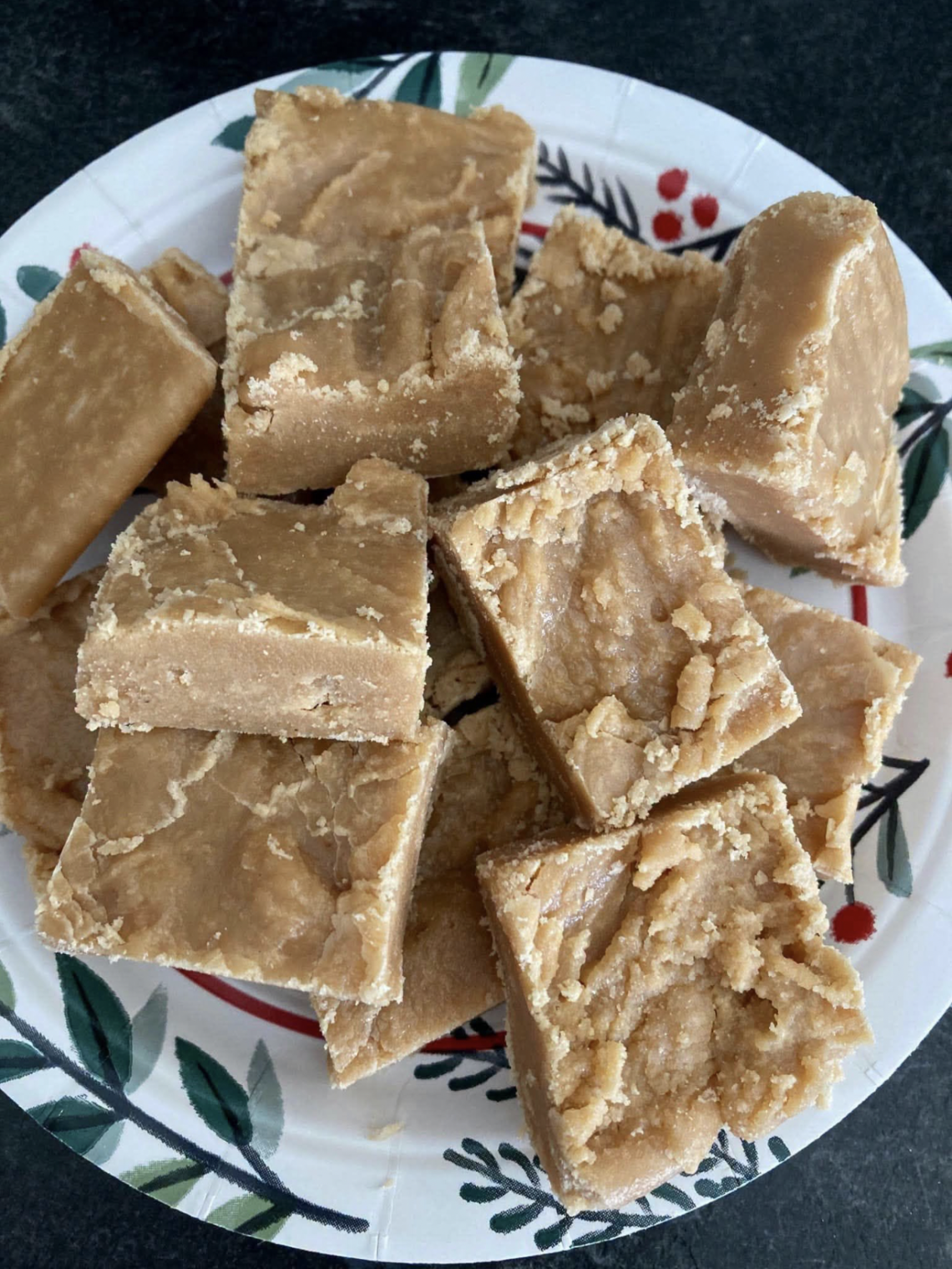


Scottish Tablet is one of Scotland’s most treasured traditional sweets, loved for generations and often enjoyed during holidays, family gatherings, afternoon tea, and special celebrations. Although it may look similar to fudge at first glance, true Scottish Tablet has its own unique identity. It is firmer, crumblier, and slightly grainy, with a delicate texture that slowly melts in your mouth while delivering an intensely rich combination of butter, sugar, and creamy caramel flavor.
For many Scottish families, tablet is much more than a dessert—it is part of family tradition. Recipes are often passed down from grandparents to children and grandchildren, carefully handwritten on recipe cards that have been used for decades. It is commonly prepared for Christmas, weddings, birthdays, Hogmanay celebrations, bake sales, and community gatherings, where small squares of tablet quickly disappear from serving trays.
Although the ingredient list is surprisingly simple, making authentic Scottish Tablet requires patience, attention to detail, and careful timing. The characteristic crumbly texture is achieved through controlled cooking and vigorous beating, which encourages tiny sugar crystals to form throughout the mixture. This process gives tablet its famous “snap” when broken and its delicate melt-in-your-mouth finish.
If prepared correctly, the result is a luxurious confection that strikes the perfect balance between buttery richness, caramel sweetness, and satisfying texture.
What Is Scottish Tablet?
Scottish Tablet is a traditional sugar confection made by slowly cooking sugar, butter, milk, and sweetened condensed milk until the mixture reaches the proper temperature before being beaten until thick and partially crystallized.
Unlike soft fudge, tablet is intentionally slightly grainy.
This texture is not considered a flaw.
Instead, it is one of the defining characteristics that distinguish authentic Scottish Tablet from other candy.
The finished confection is:
- Firm.
- Rich.
- Buttery.
- Slightly crumbly.
- Smoothly melting.
- Intensely sweet.
- Delicately caramelized.
Why You’ll Love This Recipe
There are many reasons why Scottish Tablet has remained popular for centuries.
It is:
- Made from simple pantry ingredients.
- Rich and buttery.
- Perfect for gifting.
- Beautiful on dessert platters.
- Long-lasting.
- Easy to prepare once the technique is mastered.
- Wonderful with coffee or tea.
- Great for holidays and celebrations.
- Naturally portioned into bite-sized pieces.
- A true taste of Scottish tradition.
Ingredients
- 4½ cups (900 g) granulated sugar
- ½ cup (115 g) unsalted butter
- 1 cup (240 ml) whole milk
- 1 can (14 ounces / 397 g) sweetened condensed milk
- 1 teaspoon vanilla extract
- Pinch of salt
Optional Flavor Variations
- Scotch whisky
- Espresso powder
- Sea salt flakes
- Orange zest
- Cinnamon
- Nutmeg
- Toasted pecans
- Toasted walnuts
- Dark chocolate pieces
Equipment Needed
- Heavy-bottomed saucepan
- Wooden spoon
- Silicone spatula
- Candy thermometer
- 8 × 8-inch (20 × 20 cm) square baking pan
- Parchment paper
- Heatproof bowl
Why a Heavy Saucepan Matters
Because the mixture contains a large amount of sugar and dairy, it can scorch easily.
A heavy-bottomed saucepan distributes heat more evenly and reduces the risk of burning.
Slow, even heating is one of the keys to successful tablet.
Step 1: Prepare the Pan
Line the baking pan with parchment paper.
Lightly butter the paper if desired.
Set aside.
Once the tablet is ready, it must be poured immediately before it begins to set.
Step 2: Melt the Ingredients
Place into the saucepan:
- Butter
- Whole milk
- Sweetened condensed milk
Heat gently over medium-low heat.
Stir continuously until the butter melts completely.
Do not allow the mixture to boil yet.
Step 3: Add the Sugar
Gradually add the granulated sugar while stirring continuously.
Continue stirring until every sugar crystal has dissolved.
This step is extremely important.
Undissolved sugar can cause unwanted crystallization later.
The mixture should appear smooth before increasing the heat.
Step 4: Bring to a Boil
Increase the heat slightly.
Bring the mixture to a steady boil.
Continue stirring regularly.
The mixture will begin to thicken and gradually deepen in color.
Use a candy thermometer.
Cook until the temperature reaches approximately 240°F (115°C), known as the soft-ball stage.
This usually takes 15 to 20 minutes, depending on your stove and saucepan.
Avoid rushing this stage.
Proper temperature determines the final texture.
Step 5: Remove from the Heat
Once the correct temperature has been reached, remove the saucepan from the heat.
Add:
- Vanilla extract
- Salt
Allow the mixture to cool for about 5 minutes.
Do not stir during this brief cooling period.
Step 6: Beat the Mixture
This is the defining step that creates authentic Scottish Tablet.
Using a sturdy wooden spoon or an electric mixer on low speed, beat the mixture continuously.
As you beat, several changes occur.
The mixture gradually becomes:
- Thicker.
- Lighter in color.
- Less glossy.
- Slightly grainy.
- More resistant to stirring.
This process may take between 5 and 15 minutes.
Tiny sugar crystals begin forming throughout the mixture, producing the characteristic texture.
Stop beating when the mixture becomes thick enough to leave visible trails as you stir.
Step 7: Pour into the Pan
Immediately pour the thickened mixture into the prepared baking pan.
Spread evenly using a spatula.
Work quickly because the tablet begins setting almost immediately.
Step 8: Score the Surface
After about 5 to 10 minutes, when the tablet has partially firmed but is still soft enough to cut, lightly score the surface into squares.
This makes it much easier to break into neat portions after it has completely cooled.
Step 9: Cool Completely
Allow the tablet to cool at room temperature for several hours.
Do not refrigerate during cooling.
Once firm, remove from the pan and break or cut along the scored lines.
Understanding the Texture
One of the most common misconceptions is that tablet should be smooth like fudge.
In reality, authentic Scottish Tablet has a deliberately fine, crystalline texture.
It should:
- Break cleanly.
- Feel firm.
- Crumble gently.
- Melt quickly in the mouth.
That slightly grainy texture is what makes tablet unique.
Serving Suggestions
Scottish Tablet pairs wonderfully with:
- Black tea
- Earl Grey tea
- Coffee
- Espresso
- Hot chocolate
- Scotch whisky
- Fresh berries
- Vanilla ice cream
Because it is very rich, small portions are usually sufficient.
Flavor Variations
Whisky Tablet
Add one tablespoon of Scotch whisky after removing the mixture from the heat.
Chocolate Tablet
Fold in finely chopped dark chocolate before beating.
Salted Caramel Tablet
Sprinkle flaky sea salt over the top before the tablet sets.
Coffee Tablet
Dissolve one teaspoon of espresso powder into the milk before cooking.
Orange Tablet
Add finely grated orange zest with the vanilla.
Tips for Perfect Tablet
- Use a heavy saucepan.
- Stir gently but consistently.
- Monitor the temperature carefully.
- Avoid rushing the cooking process.
- Beat thoroughly.
- Work quickly when pouring into the pan.
- Score before fully hardened.
Common Mistakes
Tablet Too Soft
Usually caused by undercooking.
The mixture did not reach the proper temperature.
Tablet Too Hard
Usually caused by overheating.
Grainy Texture Too Coarse
The sugar may not have dissolved completely before boiling.
Tablet Doesn’t Set
The mixture likely did not cook long enough or was not beaten sufficiently.
Storage
Store in an airtight container at room temperature.
Properly stored, Scottish Tablet remains fresh for approximately two weeks.
Separate layers with parchment paper to prevent sticking.
Freezing
Tablet freezes very well.
Wrap tightly and store for up to three months.
Thaw at room temperature before serving.
Nutritional Information (Approximate Per Piece)
- Calories: 130
- Protein: 1 g
- Fat: 4 g
- Carbohydrates: 23 g
- Sugar: 22 g
- Sodium: 20 mg
Values are approximate.
Frequently Asked Questions
Is tablet the same as fudge?
No. Although similar ingredients are used, tablet is firmer, more brittle, and intentionally slightly grainy, while fudge is softer and creamier.
Why do I need a candy thermometer?
A thermometer helps ensure the sugar reaches the correct stage, producing the proper texture.
Can I make tablet without condensed milk?
Traditional modern recipes usually include sweetened condensed milk, although older historical versions often relied solely on milk and sugar.
Why does the beating step matter?
Beating encourages controlled crystallization, giving tablet its signature crumbly texture and clean snap.
Can I add nuts?
Yes. Toasted pecans, walnuts, or almonds add excellent flavor and crunch.
Welcome to my kitchen!
I’m a passionate home cook and recipe creator who loves turning simple ingredients into delicious, comforting meals that everyone can enjoy. Through this website, I share carefully prepared recipes, practical cooking tips, and easy-to-understand food education to help you feel more confident in the kitchen.
My goal is to make cooking simple, enjoyable, and accessible. Whether you are looking for a quick family dinner, a delicious dessert, healthy meal ideas, or traditional recipes with a modern touch, you’ll find inspiration here.
More Than Just Recipes
I believe that cooking is also a way to learn. That’s why this website is not only about recipes. I also create educational articles about ingredients, cooking techniques, kitchen tips, food preparation, and the stories behind different dishes.
Each article is designed to give you useful knowledge that you can apply in your own kitchen. From understanding how ingredients work together to learning better cooking methods, my aim is to help you become a more confident and creative cook.
My Philosophy
Good food doesn’t always require complicated ingredients or professional equipment. With a little knowledge, patience, and creativity, simple ingredients can become something truly special.
I believe in sharing recipes that are practical, clearly explained, and enjoyable to make. I also love exploring new flavors while appreciating traditional cooking and the recipes passed down through generations.
Thank you for visiting my kitchen and being part of this food-loving community. I hope my recipes and articles inspire you to cook, learn, experiment, and most importantly, enjoy every bite!
Happy cooking!