Weddings have always carried deep emotional meaning. They are more than formal events or elaborate parties—they represent commitment, family connection, tradition, celebration, and the beginning of a new chapter in life. Across cultures and generations, weddings have also brought together communities through shared meals, music, storytelling, rituals, and gift-giving.
But modern weddings have changed dramatically over the years.
What was once often a relatively modest gathering has, in many cases, evolved into a highly curated and expensive production involving:
- Luxury venues
- Professional photography teams
- Destination travel
- Designer clothing
- Multi-day events
- Personalized décor
- Social media expectations
- Elaborate entertainment
As costs have risen, so has the financial pressure surrounding weddings—not only for couples, but sometimes for guests as well.
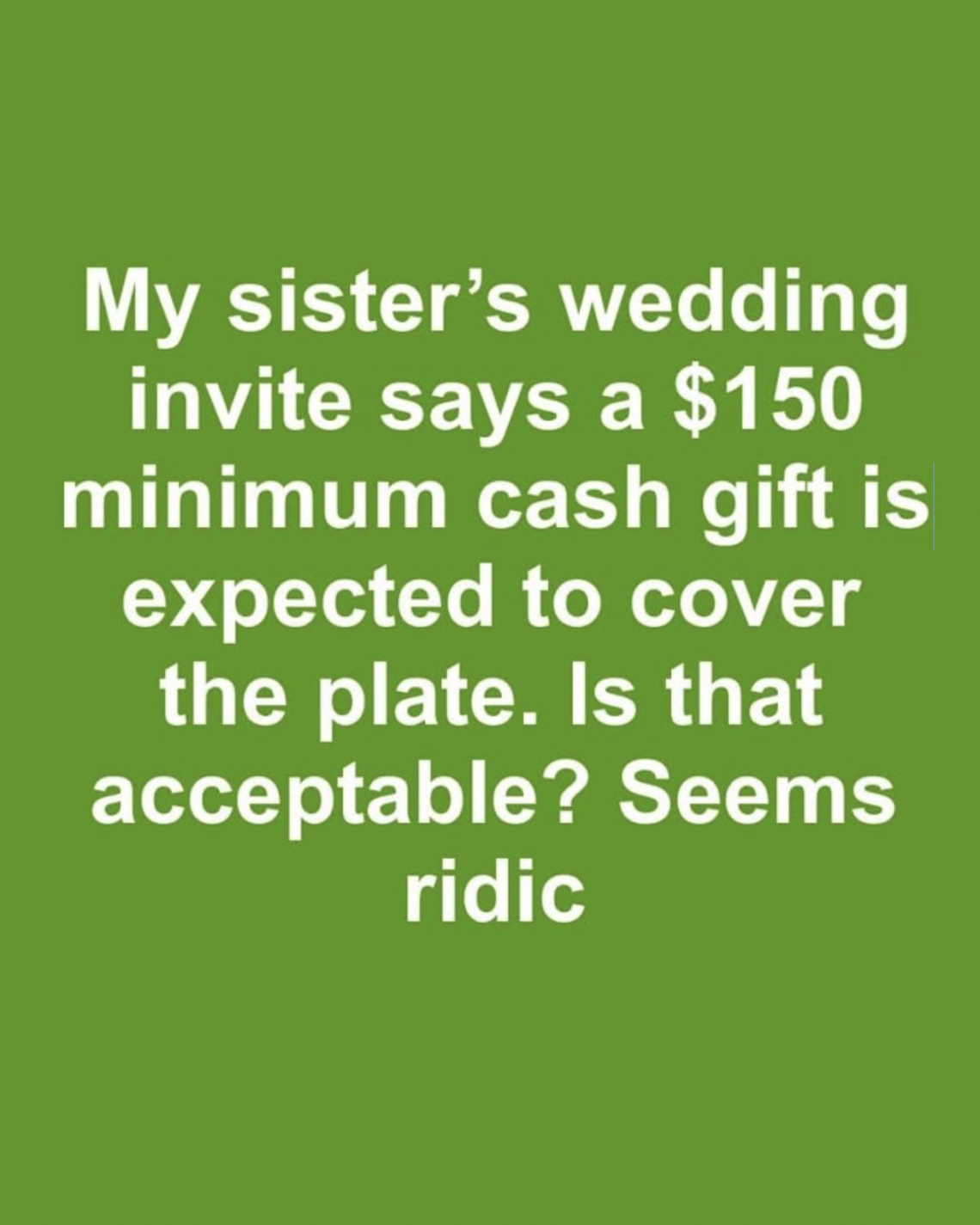
One increasingly controversial trend involves couples requesting cash gifts instead of traditional presents. In some situations, couples go even further by specifying a minimum dollar amount guests are expected to give.
And that is where emotions, etiquette, family expectations, and financial realities often collide.
Imagine opening a wedding invitation from someone close to you—a sibling, cousin, or longtime friend—and seeing wording that strongly suggests or directly states:
“Minimum cash gift: $150.”
For many people, this immediately raises uncomfortable questions:
- Is this normal now?
- Is it rude?
- Is it practical honesty?
- Is it entitled behavior?
- Are guests being treated like loved ones or financial contributors?
The answer depends heavily on:
- Cultural norms
- Family traditions
- Economic expectations
- Tone and wording
- Personal values
But one thing is certain:
The topic touches a nerve because weddings are deeply emotional events where money and relationships intersect.
The Tradition of Wedding Gifts
Wedding gifts have existed in many cultures for centuries.
Historically, gifts served practical purposes:
- Helping couples establish a home
- Providing household essentials
- Offering financial support at the start of married life
In earlier generations, couples often married younger and owned very little. Guests contributed useful items such as:
- Cookware
- Bedding
- Furniture
- Tools
- Money
The gesture symbolized community support and goodwill.
At its core, gift-giving was traditionally viewed as:
- Voluntary
- Generous
- Personal
not mandatory or transactional.
Why Cash Gifts Became More Common
Over time, especially in modern urban societies, cash gifts became increasingly popular.
Several factors contributed to this shift:
- Couples marrying later in life
- Couples already owning household items
- Increased mobility and smaller living spaces
- Rising wedding and housing costs
Many couples today genuinely prefer money because it:
- Helps pay for the honeymoon
- Supports housing expenses
- Reduces debt
- Provides flexibility
In many cultures, cash gifts are already a long-established tradition and are considered perfectly appropriate.
The Difference Between Preferring Cash and Requiring It
Most people do not object to couples politely expressing a preference for cash gifts.
The controversy usually begins when:
- Expectations become demands
- Suggested amounts feel obligatory
- Invitations sound transactional
There is an important emotional difference between:
“Your presence is the greatest gift, but if you wish to contribute, we would appreciate cash toward our future.”
and:
“Minimum gift: $150.”
One feels welcoming.
The other can feel like an invoice.
Why Minimum Gift Requests Feel Uncomfortable to Many People
Weddings are fundamentally social and emotional occasions.
Guests are invited because they are supposedly valued relationships—not customers purchasing admission.
When a mandatory amount appears attached to attendance, some guests may feel:
- Financially pressured
- Embarrassed
- Judged
- Excluded
- Reduced to monetary value
This discomfort becomes stronger when guests already face wedding-related expenses such as:
- Travel
- Hotels
- Childcare
- Clothing
- Time off work
For some families, even attending a wedding can already be financially challenging.
The Rising Cost of Modern Weddings
Part of the issue comes from how expensive weddings have become.
Many couples today spend enormous amounts on:
- Venues
- Catering
- Photography
- Flowers
- Entertainment
- Custom décor
In some cases, couples may subconsciously hope guest gifts will offset these costs.
This creates an uncomfortable shift where guests may feel less like participants in a celebration and more like financial contributors helping cover the event budget.
The “Cover Your Plate” Mentality
In some social circles, there is an unwritten expectation that wedding guests should give enough money to “cover the cost” of their meal.
For example:
- If the dinner costs $150 per person, guests may feel pressure to give at least that amount.
This mindset has become increasingly common in some regions and cultures.
However, critics argue this transforms hospitality into accounting.
Traditionally, hosting meant:
- Offering food and celebration freely
without expecting reimbursement.
Cultural Differences Matter
It is important to recognize that wedding gift customs vary widely across cultures.
In some communities:
- Large cash gifts are standard
- Specific amounts are socially expected
- Families openly discuss money
In others, discussing gift amounts openly may feel deeply inappropriate.
What feels offensive in one culture may feel completely normal in another.
Context matters enormously.
Why Tone Matters So Much
Even when couples have understandable financial reasons, wording can dramatically affect how requests are perceived.
Gentle phrasing often feels more respectful than rigid instructions.
For example:
- “We appreciate any contribution toward our future together”
feels very different from: - “Cash gifts under $150 are discouraged.”
The first invites generosity.
The second may create resentment.
The Emotional Side of Wedding Invitations
Wedding invitations carry symbolic meaning.
They communicate:
- Inclusion
- Relationship value
- Celebration
- Hospitality
When financial conditions appear attached to attendance, some people experience emotional conflict:
“Am I invited because I’m loved—or because my gift matters?”
This question can quietly damage relationships.
Financial Pressure on Guests
Not every guest has the same financial situation.
A mandatory minimum can place pressure on:
- Young adults
- Students
- Single parents
- Elderly relatives
- Friends struggling financially
Some people may:
- Decline attendance out of embarrassment
- Go into debt to avoid social shame
- Feel anxious rather than excited about attending
Weddings ideally strengthen relationships—not create hidden financial stress.
Social Media and Wedding Expectations
Modern wedding culture has been heavily influenced by:
- TikTok
- Luxury wedding marketing
Couples are constantly exposed to extravagant celebrations online.
This can unintentionally create pressure to:
- Host larger events
- Spend more money
- Expect higher guest contributions
Sometimes financial expectations reflect broader cultural shifts toward performative celebration.
Is It Ever Acceptable to Suggest an Amount?
Some people argue that suggested gift ranges can help guests understand expectations, especially in cultures where cash gifting norms are unclear.
For example:
- Close family may traditionally give more than acquaintances.
However, many etiquette experts still recommend avoiding explicit minimums because they risk sounding coercive.
Etiquette Experts Often Emphasize Choice
Traditional etiquette generally frames gifts as:
- Optional gestures of generosity
rather than - Admission requirements
Most etiquette guidance suggests:
- Guests should give what they comfortably can
- Couples should avoid attaching financial obligations to invitations
The spirit of hospitality matters deeply.
Why Some Guests Defend Minimum Gift Requests
Not everyone sees the practice negatively.
Supporters argue:
- Weddings are expensive
- Guests understand cultural expectations
- Cash requests are more honest than hidden expectations
- Some guests spend less than the event costs otherwise
They may view explicit communication as practical rather than rude.
Why Others Strongly Oppose It
Critics believe minimum gift requirements:
- Commercialize relationships
- Create class pressure
- Undermine generosity
- Turn weddings into transactions
For them, mandatory gift amounts fundamentally conflict with the emotional purpose of weddings.
The Deeper Issue: Hospitality vs Transaction
At the heart of the debate is a philosophical question:
What is a wedding invitation supposed to represent?
Is it:
- A celebration shared freely with loved ones?
Or:
- A social exchange with financial obligations attached?
Different people answer that question differently.
How Family Relationships Complicate Things
When the invitation comes from a sibling or close relative, emotions intensify.
Family members may feel:
- Guilty declining
- Pressured to comply
- Afraid of causing conflict
Money issues inside families often carry emotional weight far beyond the actual dollar amount.
What Guests Can Do
If someone feels uncomfortable with a minimum gift request, options may include:
- Giving what feels manageable
- Politely declining attendance
- Having an honest conversation if appropriate
No one should feel forced into financial hardship over social expectations.
What Couples Can Consider
Couples planning weddings may benefit from remembering:
- Guests are not funding sources
- Relationships matter more than aesthetics
- Hospitality leaves lasting impressions
Most guests care far more about:
- Warmth
- Joy
- Genuine connection
than expensive decorations or luxury details.

Welcome to my kitchen!
I’m a passionate home cook and recipe creator who loves turning simple ingredients into delicious, comforting meals that everyone can enjoy. Through this website, I share carefully prepared recipes, practical cooking tips, and easy-to-understand food education to help you feel more confident in the kitchen.
My goal is to make cooking simple, enjoyable, and accessible. Whether you are looking for a quick family dinner, a delicious dessert, healthy meal ideas, or traditional recipes with a modern touch, you’ll find inspiration here.
More Than Just Recipes
I believe that cooking is also a way to learn. That’s why this website is not only about recipes. I also create educational articles about ingredients, cooking techniques, kitchen tips, food preparation, and the stories behind different dishes.
Each article is designed to give you useful knowledge that you can apply in your own kitchen. From understanding how ingredients work together to learning better cooking methods, my aim is to help you become a more confident and creative cook.
My Philosophy
Good food doesn’t always require complicated ingredients or professional equipment. With a little knowledge, patience, and creativity, simple ingredients can become something truly special.
I believe in sharing recipes that are practical, clearly explained, and enjoyable to make. I also love exploring new flavors while appreciating traditional cooking and the recipes passed down through generations.
Thank you for visiting my kitchen and being part of this food-loving community. I hope my recipes and articles inspire you to cook, learn, experiment, and most importantly, enjoy every bite!
Happy cooking!