How to Recreate It at Home
Few foods in the world carry as much mystery and cultural impact as the famous fried chicken created by Colonel Harland Sanders. The story of the “11 herbs and spices” has become one of the most talked-about culinary secrets ever—guarded, debated, and endlessly recreated by home cooks and food enthusiasts.
While the exact original formula remains a closely protected trade secret of KFC, decades of research, taste testing, and culinary experimentation have brought us surprisingly close to understanding what makes this chicken so unique.
This guide goes far beyond a simple recipe. It explores the history, technique, flavor structure, and step-by-step method to recreate a version that captures the spirit—and much of the taste—of the original.
The Story Behind the Recipe
The original fried chicken was developed in the 1930s by Colonel Sanders in a small roadside restaurant. His goal was simple:
Create fried chicken that was fast, flavorful, and consistent.
The Breakthrough
- He used a pressure fryer to speed up cooking
- He created a seasoning blend that delivered bold flavor in every bite
The result was a chicken that was:
- Crispy on the outside
- Juicy on the inside
- Deeply seasoned—not just on the surface, but throughout
What Makes the Flavor So Unique?
The magic is not just in the spices—it’s in how everything works together.
1. The Spice Blend
The famous “11 herbs and spices” concept is central to the flavor.
Commonly Identified Components
While not officially confirmed, many recreations include:
- Salt
- Black pepper
- White pepper
- Paprika
- Garlic powder
- Onion powder
- Dried herbs like thyme and oregano
- Mustard powder
- Ginger powder
Why It Works
- Layered seasoning creates depth
- Combination of sharp, warm, and earthy notes
- Balanced saltiness enhances everything
2. The Buttermilk Effect
Many recreations use buttermilk or a similar marinade.
What It Does
- Tenderizes the chicken
- Adds subtle tanginess
- Helps seasoning stick
3. The Coating
The coating is just as important as the seasoning.
Characteristics
- Light but crispy
- Slightly craggy texture
- Even coverage
Key Ingredient
- Flour (often with added seasoning)
4. The Cooking Method
Traditionally, pressure frying was used.
Why It Matters
- Seals in moisture
- Cooks chicken evenly
- Creates a crisp exterior without drying the inside
At home, deep frying is the closest alternative.
Step-by-Step Homemade Version
Ingredients
Chicken
- Bone-in chicken pieces (for best flavor and moisture)
Marinade
- Buttermilk (or milk with a little acid like lemon)
- Salt and pepper
Seasoned Flour Mix
- All-purpose flour
- Salt
- Black pepper
- White pepper
- Paprika
- Garlic powder
- Onion powder
- Dried herbs (thyme, oregano)
- Optional: mustard powder, ginger powder
Oil
- Neutral oil suitable for frying
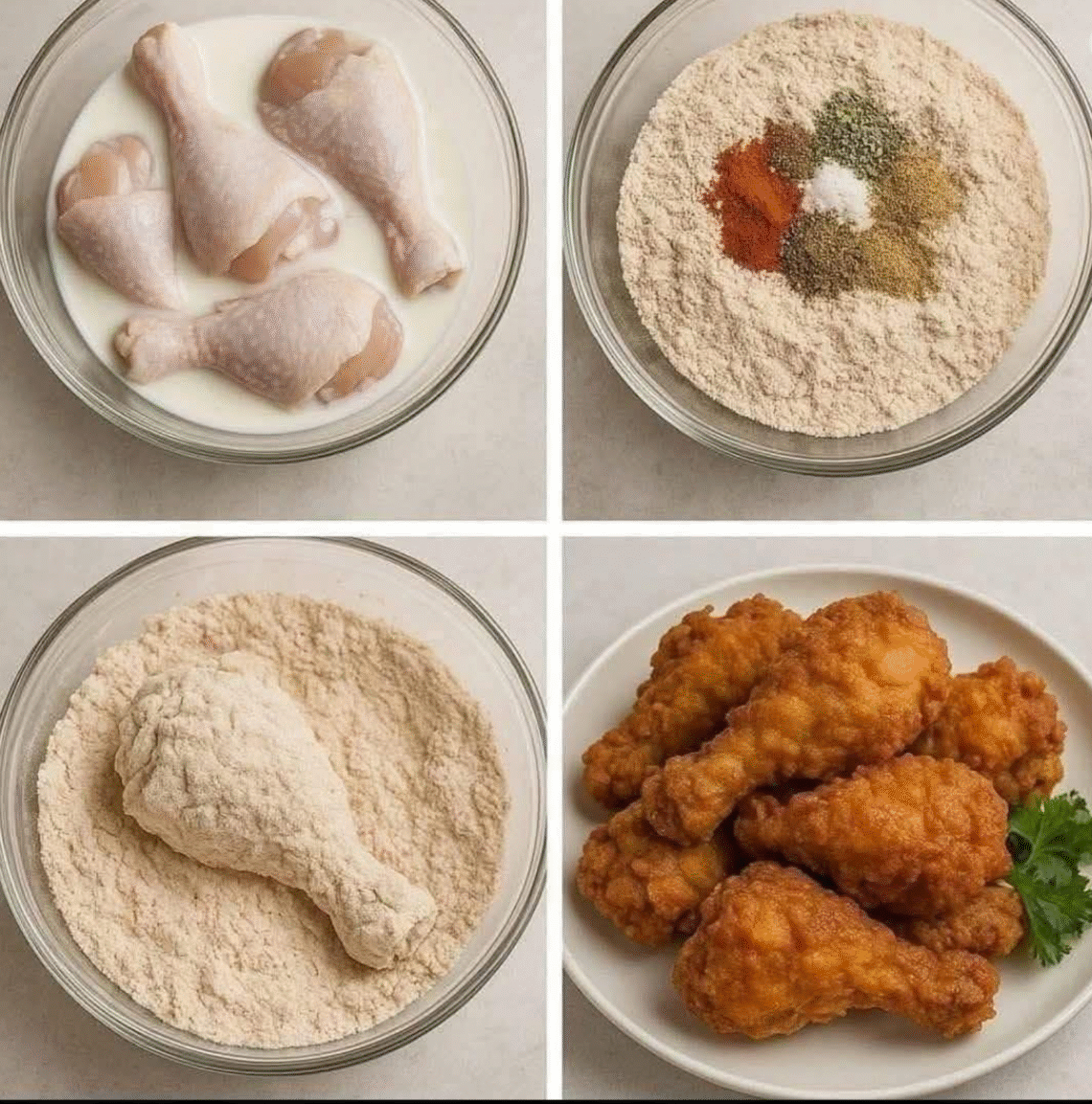
Step 1: Marinate the Chicken
- Soak chicken in buttermilk mixture
- Let it rest for several hours (or overnight if possible)
Result
- More tender meat
- Better flavor absorption
Step 2: Prepare the Coating
- Mix flour with all spices thoroughly
- Ensure even distribution
Step 3: Coat the Chicken
- Remove chicken from marinade
- Dredge in seasoned flour
- Press coating firmly onto the surface
Tip
Double-coating can increase crispiness.
Step 4: Frying
- Heat oil to a steady temperature
- Fry chicken until golden brown and cooked through
What Happens During Frying
- Coating crisps and expands
- Moisture inside turns to steam, keeping meat juicy
Step 5: Resting
- Let chicken rest briefly after frying
This allows:
- Juices to redistribute
- Coating to set
Texture and Flavor Breakdown
Exterior
- Crisp
- Lightly crunchy
- Well-seasoned
Interior
- Juicy
- Tender
- Flavorful
Overall Taste
- Savory
- Slightly peppery
- Mild herbal notes
- Balanced saltiness
Why Homemade Versions Taste Different
Even great recreations may differ slightly.
Reasons
- No pressure fryer
- Ingredient variations
- Oil temperature differences
However, with the right technique, you can get very close.
Tips for Best Results
Maintain Oil Temperature
- Too hot: outside burns, inside undercooks
- Too low: greasy coating
Use Bone-In Chicken
- Better flavor
- Retains moisture
Season Generously
- Flavor should be present in every layer
Don’t Overcrowd the Pan
- Keeps frying consistent
- Prevents temperature drops
Common Mistakes
Skipping the Marinade
- Results in less tender chicken
Weak Seasoning
- Leads to bland flavor
Incorrect Oil Temperature
- Affects both texture and taste
The Cultural Impact
The recipe is more than just food—it is a global symbol of:
- Comfort food
- Fast-food innovation
- Culinary branding
It represents how a simple idea—fried chicken—can become iconic through technique and consistency.