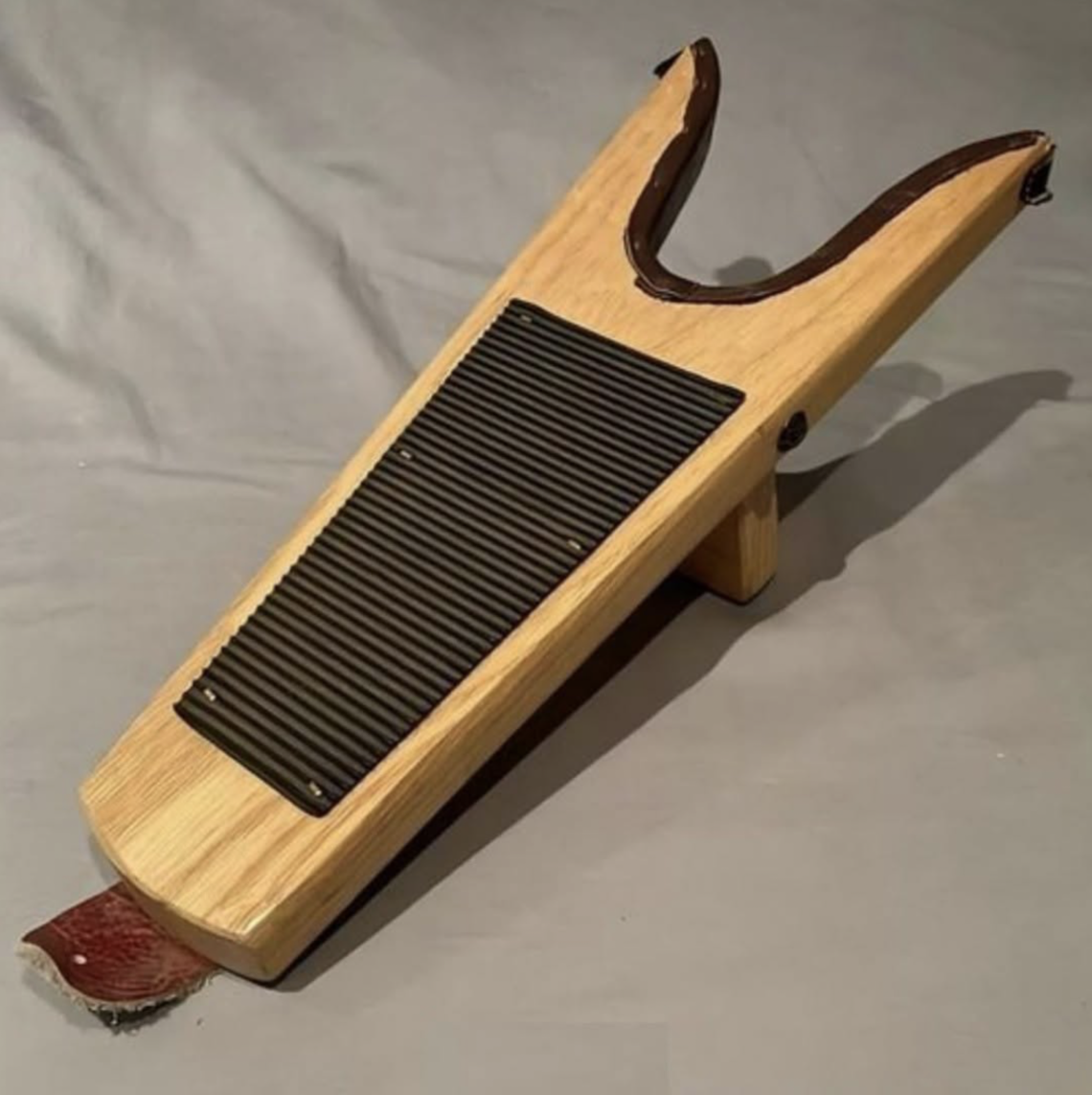
Discovering an unfamiliar wooden object tucked away in an attic, an old barn, a workshop, or a grandparent’s storage room often sparks curiosity. Many vintage household tools appear mysterious today because the everyday tasks they once simplified have largely disappeared from modern life. One such object is the wooden boot remover, also known as a boot jack or boot puller. At first glance, it may look like nothing more than a small wooden board with a forked or U-shaped opening at one end. Without knowing its purpose, many people mistake it for a decorative piece, a woodworking project, or even part of an old piece of furniture.
In reality, this humble device was once an indispensable household tool in rural homes, farms, workshops, and entryways. Long before lightweight sneakers, slip-on shoes, and flexible rubber footwear became common, people frequently wore sturdy leather boots designed for hard work. These boots offered excellent protection and durability, but removing them at the end of a long day could be surprisingly difficult.
The wooden boot remover provided an elegant, simple solution to this everyday challenge. Using nothing more than leverage and a carefully designed shape, it allowed people to remove tight-fitting boots quickly, comfortably, and without unnecessary strain.
What Is a Wooden Boot Remover?
A wooden boot remover is a manually operated tool designed to help remove boots without requiring excessive bending, pulling, or twisting.
The device usually consists of a flat wooden platform with a distinctive U-shaped or V-shaped notch cut into one end. Some versions feature decorative carvings, while others are purely functional. Although styles vary by region and period, the basic design has remained remarkably consistent for generations because of its effectiveness.
The narrow opening is carefully shaped to fit around the heel of a boot while allowing the sole to rest against the edge of the notch.
This simple design creates a secure point from which the boot can be gently pulled off using the wearer’s own body weight.
Why Was It Needed?
Modern footwear is often designed with flexible materials, convenient zippers, elastic panels, or lightweight construction that makes removal relatively easy.
Historically, however, boots served a very different purpose.
Workers relied on heavy leather boots for:
- Farming.
- Horse riding.
- Logging.
- Mining.
- Construction.
- Blacksmithing.
- Military service.
- Hunting.
- Factory work.
These boots were intentionally made to fit snugly in order to provide ankle support, protect against injuries, and withstand harsh working conditions.
After hours of physical labor, feet often swelled slightly, making already tight boots even more difficult to remove.
Without assistance, taking them off sometimes required considerable force.
How Does a Boot Remover Work?
The boot remover operates using a simple mechanical principle known as leverage.
To use it, the wearer places one boot heel into the U-shaped opening while standing with the opposite foot firmly on the flat portion of the device.
Stepping on the platform prevents the tool from moving.
The heel of the boot becomes securely positioned inside the notch.
The wearer then gently pulls the foot upward while keeping the boot held in place by the wooden opening.
As the foot lifts, the boot slides off naturally.
This clever design eliminates the need to tug forcefully with both hands or ask another person for assistance.
Why It Was So Popular
Although simple, the boot remover solved several common problems.
It allowed people to:
- Remove muddy boots without touching them.
- Avoid bending repeatedly after physically demanding work.
- Reduce strain on the lower back.
- Protect hands from dirt, manure, snow, or grease.
- Remove boots independently.
- Save time at the end of a long workday.
Its practicality made it a standard feature in countless homes for generations.
A Cleaner Home
Before paved roads became widespread, boots frequently accumulated thick layers of mud, clay, manure, snow, or dust.
Entering the home while struggling to remove dirty footwear often resulted in floors becoming messy.
Many families therefore placed boot removers just outside the entrance, on porches, in mudrooms, or near stable doors.
Workers could remove dirty boots before stepping inside, helping keep living spaces much cleaner.
Protecting the Body
One of the greatest advantages of the boot remover was its ergonomic design.
Repeatedly bending over to pull off tight boots can place stress on:
- The lower back.
- Knees.
- Hips.
- Shoulders.
- Wrists.
For older adults, farmers, and laborers who already performed physically demanding work, avoiding unnecessary strain was especially valuable.
The boot remover allowed users to remain largely upright while removing their boots.
Materials and Construction
Traditional boot removers were usually crafted from hardwoods chosen for their strength and durability.
Common woods included:
- Oak.
- Maple.
- Ash.
- Beech.
- Walnut.
Many were handmade by local carpenters or even by the owners themselves using simple woodworking tools.
Because the design required relatively little material, it was affordable and easy to repair if damaged.
Decorative Designs
Although many boot removers were purely functional, others became surprisingly decorative.
Skilled woodworkers often added:
- Hand carvings.
- Engraved initials.
- Floral patterns.
- Animal motifs.
- Geometric borders.
- Decorative finishes.
These personalized touches transformed an everyday household tool into an attractive object that reflected regional craftsmanship.
Some antique boot removers are now appreciated as examples of traditional folk art.
Different Styles
Boot removers evolved into many different forms.
Examples include:
Classic Flat Boot Jack
The simplest design featuring a flat board with a forked opening.
Raised Platform Models
Some versions elevated the standing platform slightly for improved leverage.
Cast Iron Boot Jacks
Metal models became popular during the nineteenth century because of their durability.
Decorative Estate Versions
Large country homes sometimes displayed ornate boot removers featuring elaborate carvings or family crests.
Where They Were Commonly Found
Boot removers appeared in many settings.
Typical locations included:
- Farmhouses.
- Barn entrances.
- Stables.
- Hunting lodges.
- Country cottages.
- Workshops.
- Military barracks.
- Fishing cabins.
- Ranches.
In each location, they served the same practical purpose of simplifying boot removal after a long day.
Are They Still Used Today?
Despite modern footwear, boot removers remain surprisingly useful.
Many people continue using them for:
- Cowboy boots.
- Riding boots.
- Work boots.
- Hiking boots.
- Rubber rain boots.
- Gardening boots.
- Winter snow boots.
Outdoor enthusiasts, farmers, equestrians, and gardeners often appreciate how quickly they remove muddy footwear without dirtying their hands.
Collecting Antique Boot Removers
Collectors of antique household tools frequently seek vintage boot removers because they represent everyday craftsmanship from earlier generations.
Factors influencing collectible value include:
- Age.
- Wood species.
- Hand-carved details.
- Original condition.
- Historical significance.
- Maker’s marks.
- Regional design.
Some examples displayed in museums illustrate how ordinary household tools evolved over time while reflecting local woodworking traditions.
Caring for an Antique Boot Remover
If you discover an old wooden boot remover, proper care helps preserve its character.
Avoid excessive sanding, which can remove historical tool marks and original finishes.
Instead:
- Dust gently.
- Clean with a soft cloth.
- Apply an appropriate wood conditioner if necessary.
- Store in a dry environment.
- Protect from prolonged moisture.
Maintaining the original patina often preserves both its historical appearance and collectible value.
Common Misconceptions
Because boot removers are uncommon today, people often mistake them for other objects.
Some assume they are:
- Shoe stretchers.
- Firewood holders.
- Furniture parts.
- Kitchen tools.
- Garden accessories.
The distinctive U-shaped notch is actually the defining feature that identifies the object as a boot remover.
Why Simple Tools Endure
The wooden boot remover demonstrates an important principle of traditional craftsmanship: a thoughtfully designed tool does not need complexity to be effective.
Without electricity, moving parts, or expensive materials, this simple device solved a daily problem efficiently for generations.
Its continued use today highlights the lasting value of practical design.
Frequently Asked Questions
Does it work with all boots?
It works best with boots that have a defined heel. Very flat-soled footwear may not fit securely in every design.
Can it damage leather boots?
When used correctly, a smooth wooden boot remover is generally gentle on leather because it grips only the heel while allowing the foot to slide out naturally.
Why is it made from wood?
Wood is durable, widely available, easy to shape, and less likely than rough metal to scratch or damage leather footwear.
Is it still worth owning?
For anyone who regularly wears tall or snug-fitting boots, a boot remover remains a practical household tool that can save effort and reduce strain.

Welcome to my kitchen!
I’m a passionate home cook and recipe creator who loves turning simple ingredients into delicious, comforting meals that everyone can enjoy. Through this website, I share carefully prepared recipes, practical cooking tips, and easy-to-understand food education to help you feel more confident in the kitchen.
My goal is to make cooking simple, enjoyable, and accessible. Whether you are looking for a quick family dinner, a delicious dessert, healthy meal ideas, or traditional recipes with a modern touch, you’ll find inspiration here.
More Than Just Recipes
I believe that cooking is also a way to learn. That’s why this website is not only about recipes. I also create educational articles about ingredients, cooking techniques, kitchen tips, food preparation, and the stories behind different dishes.
Each article is designed to give you useful knowledge that you can apply in your own kitchen. From understanding how ingredients work together to learning better cooking methods, my aim is to help you become a more confident and creative cook.
My Philosophy
Good food doesn’t always require complicated ingredients or professional equipment. With a little knowledge, patience, and creativity, simple ingredients can become something truly special.
I believe in sharing recipes that are practical, clearly explained, and enjoyable to make. I also love exploring new flavors while appreciating traditional cooking and the recipes passed down through generations.
Thank you for visiting my kitchen and being part of this food-loving community. I hope my recipes and articles inspire you to cook, learn, experiment, and most importantly, enjoy every bite!
Happy cooking!