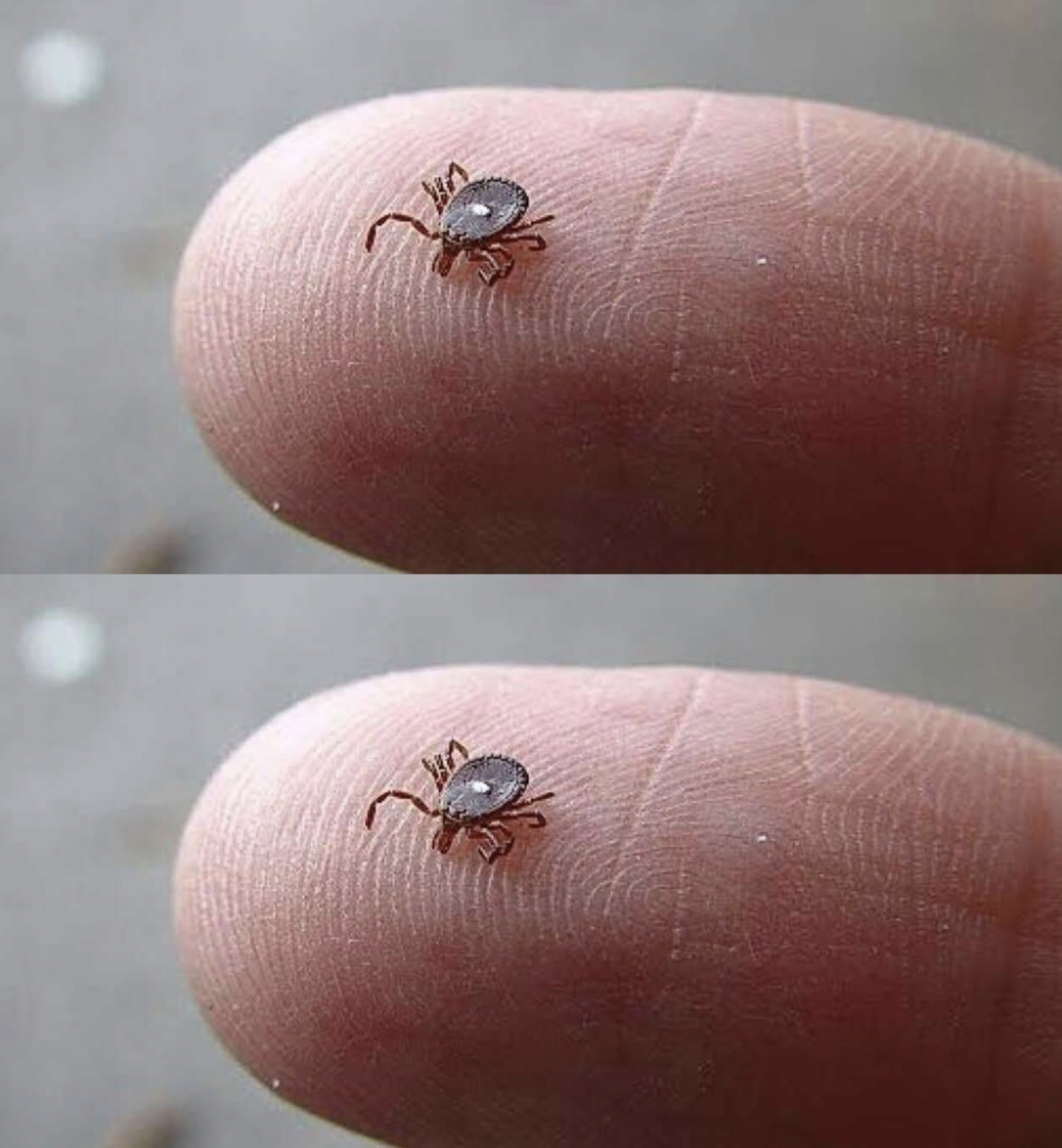
Finding a tick crawling on your skin can be an unpleasant surprise, especially after spending time outdoors. The sight of a tiny tick can immediately raise questions: How long has it been there? Does it carry a disease? Should I try to remove it immediately? Do I need to see a doctor?
The good news is that staying calm and taking the right steps can make the situation much easier to handle.
The Lone Star tick is a species found primarily in parts of the United States. It gets its common name from the distinctive white spot or “lone star” that adult females often have on their backs. Adult males have different markings, and younger ticks can look quite different, so identification from appearance alone is not always reliable.
Most importantly, finding a Lone Star tick does not automatically mean that you have contracted an illness.
The sensible approach is simple: remove an attached tick promptly, clean the area, record useful information, and pay attention to how you feel afterward.
What Is a Lone Star Tick?
The Lone Star tick is scientifically known as Amblyomma americanum.
It can occur in wooded areas, brush, tall grass, gardens, and other places where people and animals may encounter vegetation.
Unlike some ticks that are associated primarily with cooler northern regions, Lone Star ticks are particularly common across much of the southern and eastern United States, although their range can change over time.
They can attach to humans as well as animals.
Ticks don’t jump or fly.
Instead, they commonly wait on vegetation and attach when a person or animal brushes past.
That means you don’t necessarily have to walk deep into a forest to encounter one.
A backyard, hiking trail, park, or grassy area can sometimes provide an opportunity for contact.
What Does a Lone Star Tick Look Like?
Identification can be tricky because ticks change considerably as they develop.
An adult female Lone Star tick is often recognized by a conspicuous pale spot near the center of her back.
Adult males don’t have the same single white spot and can have more complicated pale markings.
Nymphs are much smaller and can be difficult to identify without magnification.
Because several tick species can look similar, it is best not to rely entirely on a quick visual identification.
If you are uncertain about the species, you can still follow the same basic tick-removal procedure.
The priority is removing an attached tick safely.
The First Rule: Don’t Panic
A tick on your skin can look alarming, but panic doesn’t improve the situation.
If you find one, take a moment to assess what you’re seeing.
Is the tick merely crawling on the skin?
Or has it actually attached itself?
This distinction matters.
A tick that is simply crawling can generally be removed from clothing or skin without the same concerns associated with an attached tick.
If it is attached, the goal is to remove it as soon as reasonably possible.
How to Remove an Attached Tick
The standard approach is straightforward.
Use fine-tipped tweezers if they are available.
Position the tweezers as close to the skin as possible and grasp the tick firmly near its mouthparts.
Then pull upward with steady, even pressure.
Try not to twist, jerk, crush, or squeeze the tick unnecessarily.
The goal is to remove the entire tick while minimizing additional irritation to the skin.
What If Part of the Tick Remains?
Sometimes a small portion of the mouthparts can remain in the skin.
If this happens and you can easily remove the material with clean tweezers, you may do so.
If it cannot be removed easily, don’t repeatedly dig into the skin.
The remaining material may eventually work its way out as the skin heals.
If the area becomes increasingly painful, swollen, warm, or develops other concerning changes, seek medical advice.
What You Shouldn’t Put on the Tick
You may encounter old-fashioned advice suggesting that you should cover an attached tick with petroleum jelly, oil, alcohol, nail polish, or another substance.
These methods are not recommended.
Similarly, don’t try to burn an attached tick or use another heat source.
The safest approach is mechanical removal with fine-tipped tweezers.
Simple is better.
Clean the Bite Area
After removing the tick, wash the area and your hands with soap and water.
If soap and water aren’t immediately available, an appropriate hand sanitizer can be used on the hands until you can wash properly.
Cleaning the skin helps reduce the chance of ordinary skin infection.
You can then keep an eye on the area over the following days.
A small amount of redness or irritation can occur after a tick bite and does not necessarily mean that an infection has developed.
Take a Picture of the Tick
If you can do so safely, taking a clear photograph of the tick before disposing of it can be useful.
A photograph may help a healthcare professional identify it later.
Some people also choose to keep the tick in a sealed container for possible identification, depending on local medical or public-health guidance.
However, routine laboratory testing of individual ticks is not generally a substitute for monitoring your own health.
The important information is that you were bitten by a tick and approximately when the exposure occurred.
Write Down the Date
This simple step can be surprisingly helpful.
Record:
- the date you found the tick,
- approximately where you encountered it,
- whether it appeared attached,
- how you removed it,
- and whether you noticed any unusual symptoms afterward.
You don’t need to create a complicated medical diary.
A simple note on your phone or calendar can be enough.
If you later develop symptoms, having a clear timeline can make it easier to explain the situation to a healthcare professional.
Does Every Lone Star Tick Carry Disease?
No.
Finding a Lone Star tick does not automatically mean that it transmitted a disease.
Ticks can carry different microorganisms, and the risks vary depending on geographic location, tick species, and other factors.
One condition that is particularly associated with Lone Star ticks is ehrlichiosis, which is caused by bacteria in the Ehrlichia genus.
Symptoms can include fever, chills, headache, muscle aches, fatigue, and other flu-like symptoms.
However, there are multiple possible causes of these symptoms, so you should not attempt to diagnose yourself based solely on a tick bite.
What About Lyme Disease?
This is an important point because Lone Star ticks are sometimes blamed for Lyme disease.
The primary vector associated with Lyme disease in the United States is the blacklegged tick, not the Lone Star tick.
Lone Star ticks are not considered established vectors for Lyme disease.
That does not mean a person who finds a Lone Star tick can ignore all symptoms.
It simply means that the species itself should not automatically be interpreted as evidence of Lyme disease.
The Lone Star Tick and Red Meat Allergy
Lone Star ticks are also associated with a fascinating condition called alpha-gal syndrome.
Alpha-gal is a sugar molecule found in most mammals other than humans and certain other primates.
In some people, a tick bite can trigger an immune response to alpha-gal.
This can result in an allergy to certain mammalian products.
Symptoms can vary considerably and may include hives, stomach problems, swelling, breathing difficulties, or other allergic reactions.
Importantly, reactions can occur hours after eating certain foods or products, rather than immediately after a bite.
Not everyone bitten by a Lone Star tick develops alpha-gal syndrome.
If someone experiences possible allergic reactions after eating mammalian meat or other products, they should discuss the symptoms with a healthcare professional rather than trying to diagnose the condition themselves.
What Symptoms Should You Watch For?
After a tick bite, pay attention to your general health.
Depending on the infection involved, symptoms can include:
- fever,
- chills,
- headache,
- unusual tiredness,
- muscle aches,
- joint discomfort,
- swollen lymph nodes,
- nausea,
- or a new rash.
These symptoms can have many causes, so their presence does not prove that a tick-borne infection is responsible.
However, if you develop concerning symptoms after a tick bite, tell a healthcare professional that you recently had a tick exposure.
That piece of information can be important.
When Should You Seek Medical Care?
Contact a healthcare professional if you become ill after a tick bite, particularly if you develop fever, significant headache, widespread rash, severe weakness, breathing problems, or other unusual symptoms.
Seek urgent medical attention for signs of a severe allergic reaction, such as difficulty breathing, swelling of the face or throat, fainting, or rapidly worsening symptoms.
Don’t wait for symptoms to become severe before mentioning the tick exposure.
Do You Need Preventive Medication?
Not every tick bite requires medication.
Whether preventive treatment is appropriate depends on factors such as the tick species, geographic location, how long the tick was attached, and the specific disease being considered.
This is one reason it is better not to automatically take medication based on an internet article.
A healthcare professional can assess the circumstances and determine whether any treatment or monitoring is appropriate.
Prevention Is Easier Than Removal
Although knowing how to remove a tick is important, preventing bites in the first place is even better.
When spending time in areas where ticks are common, consider wearing long sleeves and long pants and using an appropriate insect repellent according to its label.
Light-colored clothing can also make ticks easier to spot.
If practical, tuck pants into socks when walking through areas with heavy vegetation.
After spending time outdoors, check your clothing and exposed skin.
Don’t forget areas that are easy to overlook, such as behind the knees, around the waist, near the hairline, and behind the ears.
Children and pets should also be checked after outdoor activities.
Don’t Forget Your Clothes
Ticks can sometimes hitch a ride on clothing before reaching the skin.
After outdoor activities, inspect clothing carefully.
Following the care instructions for the garment, using a dryer on an appropriate setting can help kill ticks that remain on clothing.
You should also check bags, outdoor equipment, and other items that may have been in vegetation.
What About Pets?
Dogs and other animals can also pick up ticks.
If you have pets, regularly inspect them and use tick-prevention products recommended by a veterinarian.
A tick that enters your home on a pet can potentially create another opportunity for human exposure.
Veterinary guidance is especially important because not every tick-control product is appropriate for every animal.
Never use a product on a pet unless it is specifically intended for that species and used according to its directions.
The Most Important Thing to Remember
A tick bite is a reason to pay attention—not a reason to panic.
If you discover a Lone Star tick:
Remove it promptly with fine-tipped tweezers.
Clean the bite area and your hands.
Record when and where the exposure occurred.
Consider taking a photograph for identification.
Watch for unusual symptoms.
Tell a healthcare professional about the tick exposure if you become ill.
And remember that a tick bite does not automatically mean that you will become sick