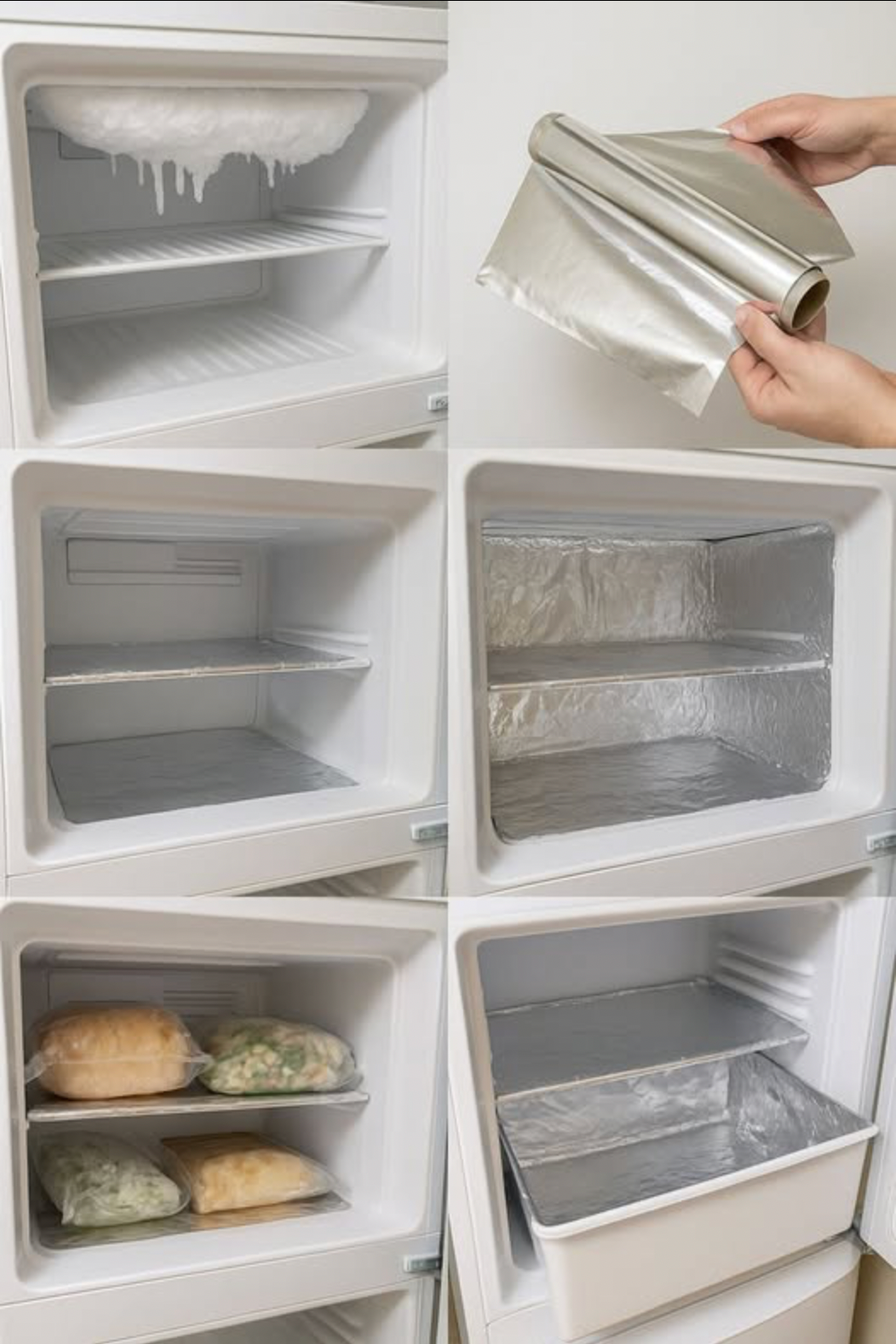
Freezer frost is the silent invader almost every kitchen eventually battles. At first, it appears harmless—a thin white film clinging to the walls or the edges of drawers. Over time, though, it thickens into stubborn ice. Drawers become difficult to open, food packages freeze together, and usable storage space slowly disappears.
What should be a quick grab for frozen vegetables or leftovers turns into a frustrating struggle. Manual defrosting is inconvenient, messy, and time-consuming, so it often gets postponed until the frost becomes nearly unmanageable. Meanwhile, your freezer works harder than necessary, quietly increasing energy use and costs.
But there is a surprisingly simple trick—one that uses something most people already keep in their kitchen drawer—that can help reduce frost buildup and make freezer maintenance easier: aluminum foil.
Why Freezer Frost Costs You More Than You Think
Before understanding the trick, it helps to know why frost is a problem in the first place. Frost forms when warm, moist air enters the freezer and condenses, then freezes on cold surfaces. Each layer of ice reduces efficiency.
Doctors don’t weigh in on this, but appliance technicians and energy experts consistently note that heavy frost:
- Reduces usable freezer space
- Forces the freezer motor to run longer
- Increases electricity consumption
- Shortens the lifespan of the appliance
Even a thin buildup of ice can make your freezer less efficient over time.
The Aluminum Foil Trick Explained
The aluminum foil trick involves lining certain freezer surfaces with foil, particularly:
- Flat shelves
- The inner walls where frost accumulates most
- The bottom surface beneath drawers
The foil is placed smoothly against the surface, with the shiny side facing outward, and lightly pressed into place. It should not block vents or airflow.
This method does not eliminate frost entirely, but it helps manage it in two important ways.
How Aluminum Foil Helps Reduce Frost Problems
1. Slows Ice Adhesion
Frost tends to cling more aggressively to textured plastic surfaces. Aluminum foil creates a smoother barrier, making ice less likely to bond strongly. When frost does form, it often flakes off more easily instead of building into thick layers.
This makes routine cleaning faster and prevents ice from becoming deeply embedded in freezer walls or shelves.
2. Makes Defrosting Faster and Easier
Aluminum conducts heat far better than plastic. During defrosting, this property becomes especially useful.
When you unplug the freezer or switch it off:
- The foil absorbs ambient warmth
- Ice melts more evenly and more quickly
- Large sheets of frost often slide off the foil instead of needing to be scraped
This can significantly reduce defrosting time and eliminate the need for aggressive scraping that risks damaging freezer surfaces.
Why This Can Help Lower Energy Costs
While the foil itself does not “save energy” directly, it supports better freezer performance indirectly. By preventing excessive frost buildup:
- Air circulates more efficiently
- The compressor doesn’t need to run as long
- The freezer maintains temperature more easily
Over time, this can help reduce unnecessary energy use, especially in older or frost-prone freezers.
An Extra Benefit: Cleaner, Odor-Free Surfaces
Another overlooked advantage of the foil trick is cleanliness. Freezers are prone to spills from thawing food, leaking packages, or ice crystals melting and refreezing.
Foil-lined surfaces:
- Catch drips and crumbs
- Can be removed and replaced easily
- Reduce lingering odors that seep into plastic
Instead of scrubbing freezer walls, you simply replace the foil.
How to Use the Foil Safely and Correctly
To get the most benefit:
- Use regular household aluminum foil
- Press it flat without crumpling
- Avoid covering vents or fans
- Replace foil if it tears or becomes heavily frosted
The foil should sit loosely enough to be removed easily but securely enough to stay in place during regular use.
What This Trick Does Not Do
It’s important to be realistic. Aluminum foil:
- Will not stop frost entirely
- Will not fix faulty door seals
- Will not replace proper freezer maintenance
If frost builds up rapidly, the real issue may be a worn gasket, frequent door opening, or warm food being placed inside.
The foil trick works best as a preventive and maintenance aid, not a cure-all.
Small Habits That Multiply the Effect
Pairing the foil trick with good freezer habits makes it even more effective:
- Allow hot food to cool before freezing
- Close the door quickly and firmly
- Keep the freezer reasonably full (but not overcrowded)
- Check door seals regularly
These habits reduce moisture intrusion—the main cause of frost.
The Takeaway
That roll of aluminum foil in your kitchen drawer is more versatile than it looks. When used thoughtfully in the freezer, it can make frost easier to manage, defrosting quicker, and cleaning far less annoying. Over time, it can help your freezer work more efficiently, saving you effort and potentially lowering energy costs.
It’s a small, low-cost adjustment—but one that turns an everyday frustration into a far more manageable problem.