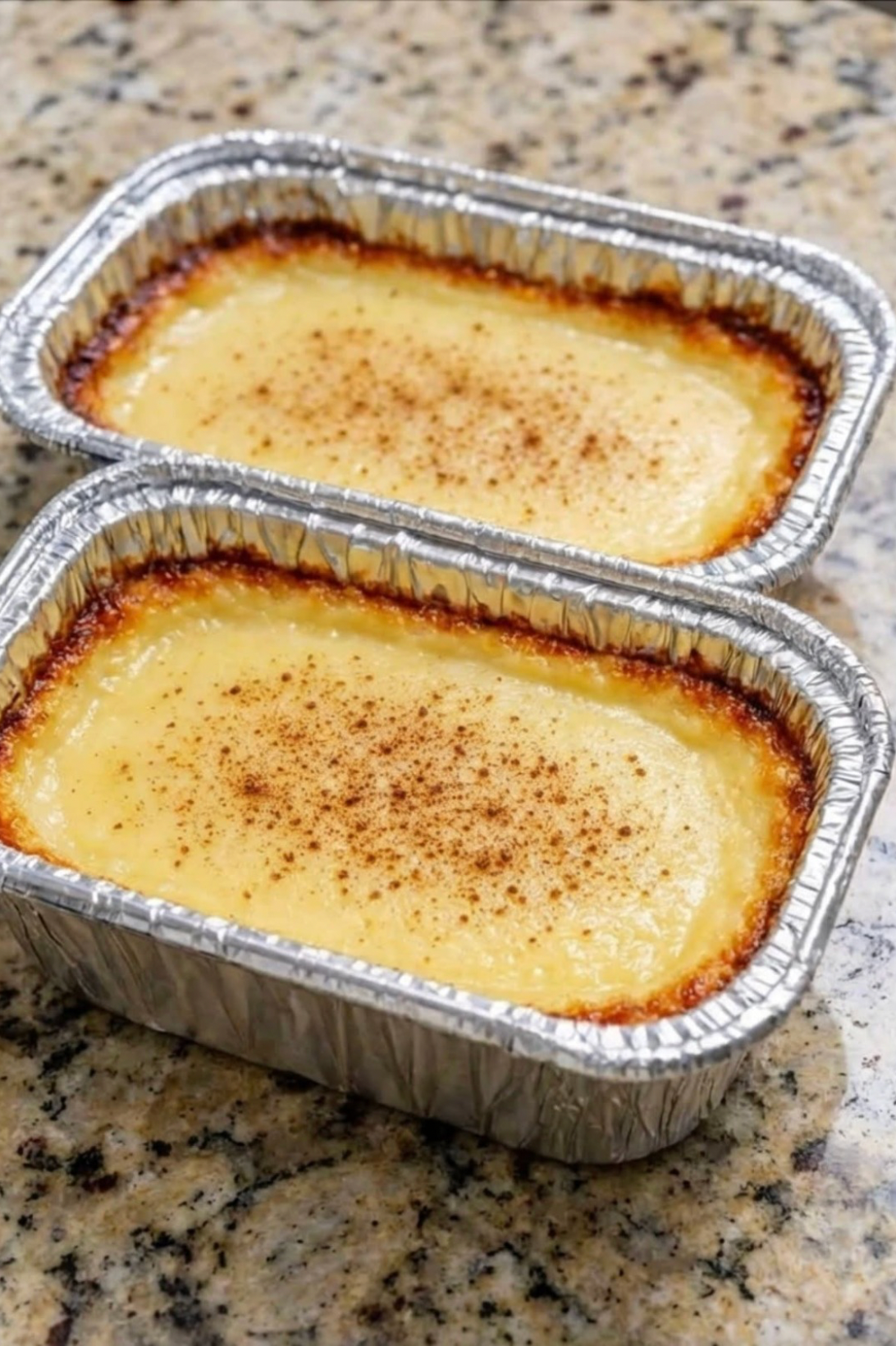
3-Ingredient Baked Egg Custard is one of those quietly magical desserts that proves you don’t need fancy ingredients to create something elegant.
With just:
- eggs
- milk
- sugar
you get a dessert that is:
- smooth
- creamy
- gently sweet
- softly set like silk
It’s the kind of recipe passed down through generations—made in quiet kitchens where simplicity mattered more than presentation, but flavor still meant everything.
Why This Dessert Still Feels Special Today
Even though it uses only basic ingredients, baked egg custard remains popular because:
1. It transforms simple ingredients
Eggs and milk become something completely different when baked slowly.
2. It’s naturally comforting
The texture is soft, warm, and soothing.
3. It’s extremely affordable
No cream, no flavorings, no extras needed.
4. It feels nostalgic
It reminds many people of:
- school desserts
- grandmother’s cooking
- old-fashioned home baking
3-Ingredient Baked Egg Custard Recipe
Ingredients
- 4 large eggs
- 2 cups whole milk
- ½ cup sugar
Optional (not required but commonly added in modern versions):
- pinch of salt
- vanilla extract (for flavor)
But traditionally, the beauty of this recipe is its simplicity.
Step 1: Warm the Milk
Gently heat the milk until it is warm but not boiling.
Why this matters:
- helps sugar dissolve easily
- creates smoother texture
- prevents egg curdling later
Do not overheat—just warm enough to feel steamy.
Step 2: Beat Eggs and Sugar
In a bowl, whisk together:
- eggs
- sugar
Mix until:
- smooth
- slightly pale
- well combined
This forms the base of the custard structure.
Step 3: Combine Milk and Egg Mixture
Slowly pour warm milk into the egg mixture while whisking continuously.
This step is important because it:
- prevents scrambled eggs
- creates a smooth custard base
- evenly distributes heat
This process is called tempering.
Step 4: Strain for Smoothness
Pour the mixture through a fine strainer.
Why this matters:
- removes egg solids
- ensures silky texture
- prevents lumps in baked custard
This step is key for that “restaurant smooth” finish.
Step 5: Pour into Baking Dish
Transfer the mixture into:
- ramekins
or - a baking dish
Place them inside a larger tray for the water bath.
Step 6: Bake in a Water Bath
Add hot water around the custard dish until it reaches halfway up the sides.
Bake at:
- 160°C (325°F) for 40–60 minutes
Why the Water Bath Is Important
The water bath (bain-marie) ensures:
- gentle, even cooking
- no curdling
- smooth texture
- delicate set instead of rubbery eggs
Without it, the custard can become grainy or overcooked.
Step 7: Check for Doneness
The custard is ready when:
- edges are set
- center still slightly jiggles
- surface looks smooth and pale
It will continue to set as it cools.
Texture and Flavor Profile
Proper baked egg custard should be:
- silky and soft
- lightly sweet
- smooth like pudding
- delicate, not heavy
- gently eggy in flavor
The texture should “wobble” slightly when moved.
What Makes It “Old-Fashioned”
This dessert reflects a time when:
- ingredients were limited
- desserts were simple and filling
- nothing was wasted in the kitchen
It was often made because:
- milk and eggs were always available
- sugar was enough to turn basics into dessert
- baking required minimal tools
Serving Ideas
Even though it’s simple, baked custard can be served in different ways:
Classic
- chilled or slightly warm
- plain, straight from the dish
Modern toppings
- cinnamon dusting
- caramel drizzle
- fresh fruit
- honey
Comfort pairing
- tea or coffee
- biscuits or plain cookies
Variations
1. Vanilla Custard
Add vanilla extract for aroma and sweetness.
2. Caramel Custard
Add caramel layer at the bottom of the dish before baking.
3. Spiced Custard
Add:
- cinnamon
- nutmeg
4. Lemon Custard
Add lemon zest for freshness.
Tips for Perfect Custard
1. Don’t overbake
Overbaking makes it rubbery.
2. Always use water bath
This is essential for smooth texture.
3. Strain the mixture
Removes lumps and improves silkiness.
4. Let it cool slowly
Sudden temperature changes can cause cracks.
Common Mistakes
- baking at too high temperature
- skipping water bath
- not tempering eggs properly
- overmixing (creates bubbles)
- serving too early before setting
Why People Love This Dessert
Baked egg custard is loved because it is:
- simple yet elegant
- light but satisfying
- made from pantry basics
- naturally gluten-free
- comforting and nostalgic
It feels like a dessert that doesn’t try too hard—but still delivers something deeply satisfying.
Welcome to my kitchen!
I’m a passionate home cook and recipe creator who loves turning simple ingredients into delicious, comforting meals that everyone can enjoy. Through this website, I share carefully prepared recipes, practical cooking tips, and easy-to-understand food education to help you feel more confident in the kitchen.
My goal is to make cooking simple, enjoyable, and accessible. Whether you are looking for a quick family dinner, a delicious dessert, healthy meal ideas, or traditional recipes with a modern touch, you’ll find inspiration here.
More Than Just Recipes
I believe that cooking is also a way to learn. That’s why this website is not only about recipes. I also create educational articles about ingredients, cooking techniques, kitchen tips, food preparation, and the stories behind different dishes.
Each article is designed to give you useful knowledge that you can apply in your own kitchen. From understanding how ingredients work together to learning better cooking methods, my aim is to help you become a more confident and creative cook.
My Philosophy
Good food doesn’t always require complicated ingredients or professional equipment. With a little knowledge, patience, and creativity, simple ingredients can become something truly special.
I believe in sharing recipes that are practical, clearly explained, and enjoyable to make. I also love exploring new flavors while appreciating traditional cooking and the recipes passed down through generations.
Thank you for visiting my kitchen and being part of this food-loving community. I hope my recipes and articles inspire you to cook, learn, experiment, and most importantly, enjoy every bite!
Happy cooking!