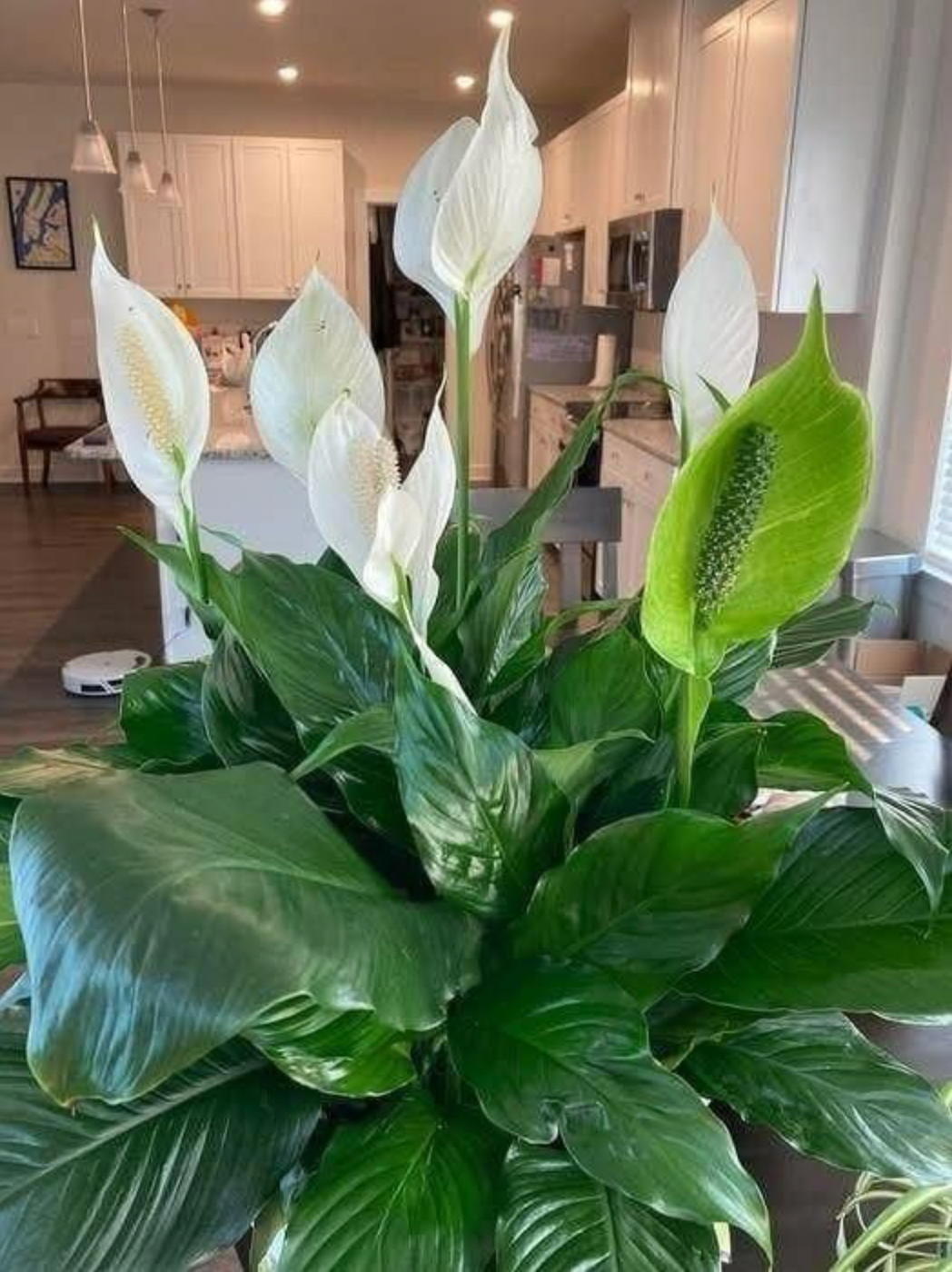
Peace lilies (Spathiphyllum) are among the most beloved indoor plants, and for good reason. With their graceful white spathes (the leaf-like bracts that surround the true flowers) rising above glossy, dark green foliage, peace lilies bring elegance, tranquility, and a sense of calm to any indoor space. Unlike many common houseplants that never flower indoors, peace lilies—and orchids—are prized precisely because they bloom, offering that rare and uplifting floral presence in our homes.
Yet, many plant owners struggle with a common issue: lush green leaves, but no flowers. If you’re wondering why your peace lily isn’t producing blooms, you’re not alone. Fortunately, the solution is often simpler than you think.
Understanding How Peace Lilies Bloom
Before solving the problem, it’s helpful to understand how peace lilies bloom:
- The white spathe is what most people think of as the flower. The true flowers are the small yellowish spadix inside the spathe.
- Peace lilies are photoperiod-sensitive, meaning the amount and quality of light they receive affects whether they bloom.
- They require maturity: young plants, or recently repotted ones, may focus energy on growing foliage rather than flowers.
- Flowering is a sign of a healthy, well-cared-for plant, but it doesn’t happen constantly—it’s seasonal.
Common Reasons Peace Lilies Don’t Bloom
1. Insufficient Light
- Peace lilies are tolerant of low light, but blooming requires bright, indirect light.
- If your plant is in a dark corner or far from a window, it may produce healthy green leaves but never bloom.
Solution: Move your peace lily to a spot with bright, indirect light, such as near a north or east-facing window. Avoid harsh direct sunlight, which can scorch the leaves.
2. Overfertilization—or the Wrong Fertilizer
- Too much nitrogen encourages leaf growth but suppresses flowering.
- Peace lilies need balanced fertilizer, preferably 20-20-20 or one labeled for flowering plants, applied sparingly during the growing season.
Solution: Fertilize every 6–8 weeks during spring and summer. Reduce or stop fertilizing in fall and winter when the plant naturally slows down.
3. Incorrect Watering
- Peace lilies prefer evenly moist soil, but not soggy.
- Overwatering can lead to root rot, while underwatering can stress the plant. Either can prevent blooming.
Solution: Check the soil regularly. Water when the top 1–2 inches of soil feel dry, and make sure the pot drains well. Avoid letting the plant sit in water.
4. Pot Bound or Recently Repotted
- Peace lilies that are too small for their pot or just recently repotted may focus on growing roots and leaves instead of flowers.
- Conversely, a plant that is very root-bound may also struggle to bloom.
Solution:
- If root-bound, repot into a slightly larger pot with fresh, well-draining potting mix.
- Avoid fertilizing a newly repotted plant until it settles.
5. Temperature Stress
- Peace lilies prefer temperatures between 65–80°F (18–27°C).
- Drafts, sudden temperature changes, or cold spots can prevent blooming.
Solution: Keep your peace lily in a stable, warm environment away from vents, air conditioners, or drafty windows.
6. Too Much or Too Little Pruning
- Pruning helps redirect energy to flowers, but cutting too much foliage can stress the plant.
- Conversely, leaving dead leaves or spent blooms can slow new growth and flowering.
Solution: Regularly remove yellowing leaves and old flowers at the base of the stem. Use clean scissors to prevent disease.
Tips to Encourage Your Peace Lily to Bloom
- Increase Indirect Light: Move your plant closer to a bright window or rotate it periodically so all sides get light.
- Use Bloom-Friendly Fertilizer: Switch to a fertilizer formulated for flowering houseplants in the spring and summer.
- Maintain Proper Moisture: Water consistently, and ensure the pot has good drainage.
- Keep it Warm and Draft-Free: Avoid cold or overly hot spots.
- Repot if Necessary: If your plant is root-bound or in old soil, repot to refresh nutrients.
- Be Patient: Mature plants bloom more reliably. It can take 1–2 years for a young peace lily to flower indoors.
Bonus Trick: Triggering a Bloom
Some plant enthusiasts use a simple trick to encourage blooming:
- Reduce watering slightly for 1–2 weeks during the growing season to mimic a mild stress condition, then resume normal watering.
- This can signal the plant to produce flowers as a survival mechanism, though it’s optional and should be done carefully to avoid damage.
When Your Peace Lily Does Bloom
- Flowers can last up to 6–8 weeks indoors.
- After blooms fade, remove the spathes and spadices to encourage new growth.
- Peace lilies are resilient—they often rebloom in spring or early summer with proper care.
Final Thoughts
Peace lilies are a rewarding indoor plant because their blooms are both rare and elegant. If your plant isn’t flowering, it’s almost always a care issue, usually related to light, fertilizer, or pot conditions. By adjusting these factors and being patient, you can enjoy those striking white spathes rising above lush green foliage, bringing serenity and beauty to your home.
Remember: even if your peace lily isn’t blooming yet, healthy, glossy leaves are a sign that your plant is thriving—flowers will come with the right care and timing.