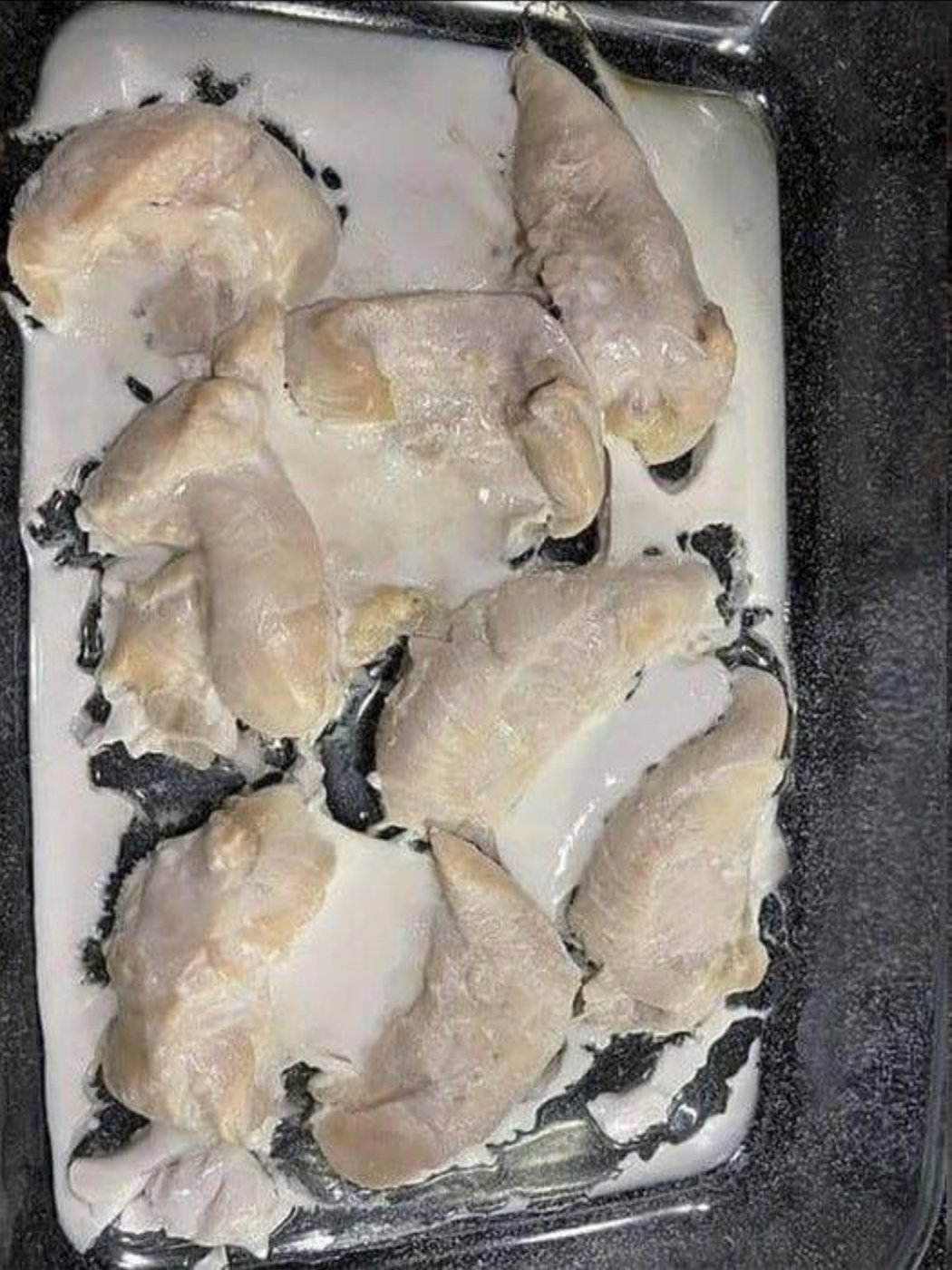
If you’ve ever been cooking chicken—whether a juicy breast on the stovetop, a roasted whole bird, or a simple baked thigh—you may have noticed white, cloudy, or foamy substances seeping out of the meat. At first glance, it can look alarming, almost like the chicken is “bleeding something” or has gone bad. But rest assured: in most cases, this white substance is completely normal and nothing to worry about. Understanding what it is, why it appears, and how to minimize it can help you cook chicken more confidently and get a perfect texture every time.
What the White Stuff Actually Is
The white liquid that often appears on chicken during cooking is primarily protein, water, and a little fat. Specifically, it consists of:
- Albumin:
- Albumin is a water-soluble protein found in muscle fibers. It’s similar to the protein in egg whites.
- When chicken is raw, these proteins are tightly bound inside the muscle fibers. As the chicken cooks, the heat causes the proteins to denature—that is, unfold and recombine—which forces water out of the fibers. This results in the white, opaque liquid you see on the surface.
- Water:
- Chicken naturally contains a lot of water—sometimes up to 75% of its weight. As the proteins coagulate with heat, they squeeze out water along with albumin.
- Fat and Collagen:
- Slight amounts of rendered fat and collagen may mix in, giving the liquid a slightly creamy or gelatinous appearance.
- In darker cuts like thighs or legs, this may be more noticeable, especially if the skin is left on.
So, what you’re really seeing is just protein and moisture leaving the chicken as it cooks. It’s entirely natural and safe to eat.
Why the White Stuff Appears
The appearance of white liquid depends on several factors:
- Temperature:
- Cooking chicken at high heat too quickly can cause proteins to coagulate rapidly, forcing water and albumin out in a visible puddle.
- Conversely, slower cooking at moderate temperatures allows the proteins to set gradually, reducing visible leakage.
- Chicken Type and Age:
- Younger, fresher chicken often has firmer muscle fibers that release less liquid.
- Older birds or frozen chicken may have slightly more water content due to natural tissue breakdown or freezing.
- Cooking Method:
- Boiling or poaching chicken in water or broth can cause proteins to leach out, sometimes forming a white foam on the surface of the liquid.
- Baking or pan-frying may leave a thin white residue on the chicken itself.
- Brining or Injected Solutions:
- Some store-bought chicken is injected with a saline or broth solution to improve flavor and moisture. This extra water can make the white substance more pronounced when cooking.
Myths and Misconceptions
- It Doesn’t Mean the Chicken Is Spoiled:
- White albumin is not a sign of bacteria or contamination. If the chicken smells fresh and is stored correctly, it is safe.
- It Doesn’t Affect Taste or Safety:
- The appearance of white protein does not indicate undercooking or overcooking in most cases.
- Properly cooked chicken (165°F or 74°C internal temperature) is safe even if white liquid has appeared.
How to Minimize the White Stuff
While harmless, some people prefer to minimize the white residue for aesthetic or texture reasons. Here’s how:
- Cook at Moderate Heat:
- Avoid extremely high temperatures, which can shock the proteins into releasing water rapidly.
- Baking or roasting at 350–375°F (175–190°C) is usually ideal for even cooking.
- Let Chicken Come to Room Temperature:
- Allowing chicken to sit for 15–20 minutes before cooking reduces the shock from cold meat hitting hot heat, leading to less albumin leakage.
- Use a Gentle Cooking Method:
- Slow roasting, sous vide, or poaching produces juicier, less “weeping” chicken.
- Sous vide, in particular, cooks chicken evenly without forcing proteins to expel moisture.
- Rest After Cooking:
- Allow cooked chicken to rest for 5–10 minutes before slicing. This lets juices redistribute, and the meat appears more moist and less chalky on the surface.
Is It Safe to Eat?
Absolutely. White albumin is entirely edible and nutritious, mostly consisting of protein. There’s no health risk, and removing it is unnecessary. Some people choose to wipe it away for appearance, but doing so is purely cosmetic.
When to Be Cautious
While white liquid is usually harmless, there are rare cases when you should be alert:
- Unpleasant or Sour Smell: This could indicate spoilage.
- Slimy or Sticky Texture Before Cooking: Raw chicken should feel moist but not slimy.
- Color Changes: Gray or greenish tints in raw chicken suggest spoilage, not cooking protein.
If any of these signs appear, it’s safer to discard the chicken rather than risk illness.
Final Thoughts
Seeing white stuff on chicken while cooking is normal, natural, and nothing to panic about. It’s simply proteins and water being released as the meat heats up. Understanding the science behind albumin and how heat interacts with muscle fibers can help home cooks approach chicken with confidence, knowing that:
- It’s a sign the chicken is cooking properly.
- It doesn’t affect safety or flavor.
- Simple adjustments in temperature, cooking method, and resting time can reduce its visibility if desired.
Next time you notice a white, foamy puddle forming on your chicken, take a deep breath, continue cooking, and remember: it’s just nature’s way of showing you that proteins are doing their job. The result? Tender, flavorful chicken that’s safe, nutritious, and delicious.