A deeper look at the chemistry, texture, flavor, and prevention behind this common kitchen mystery
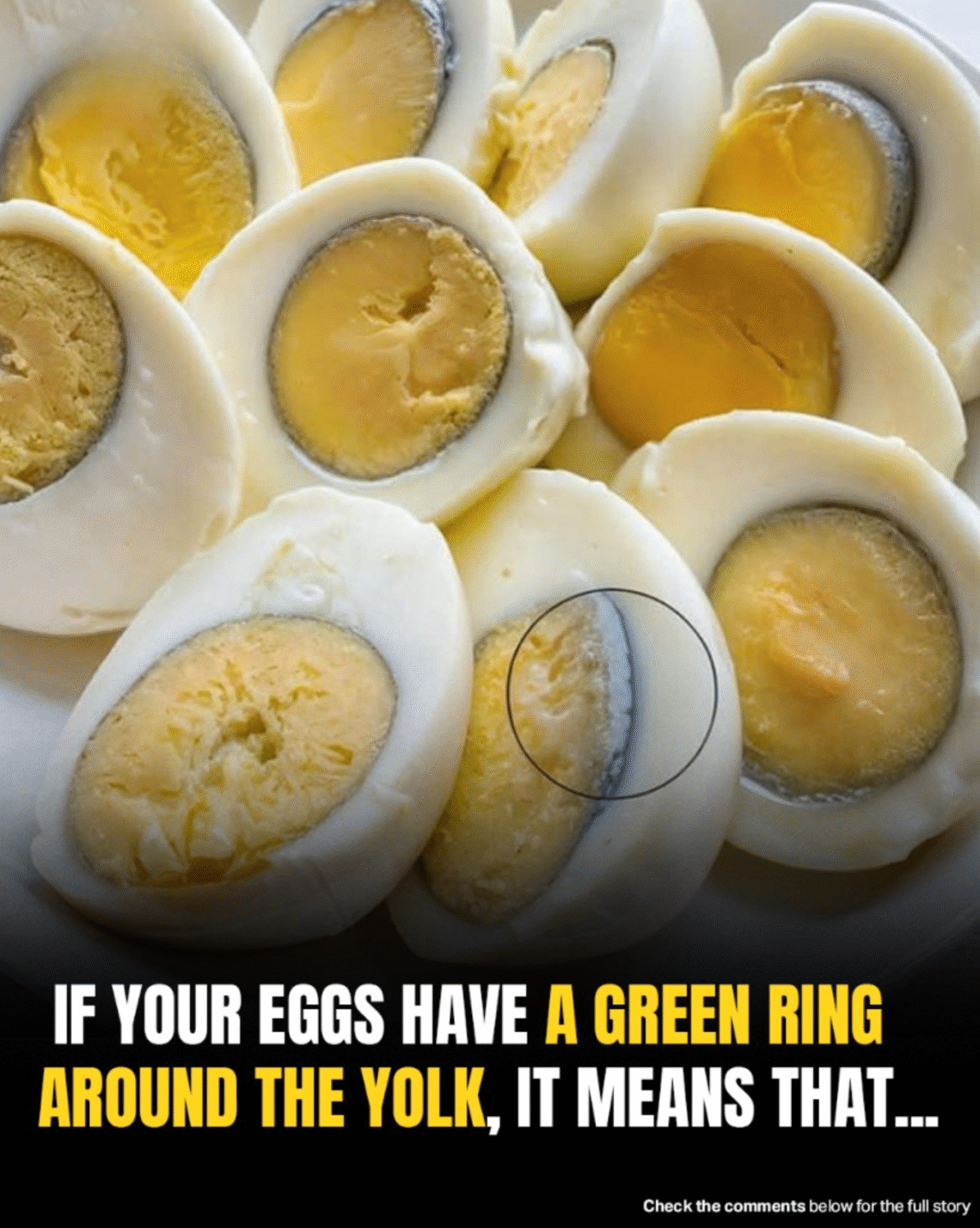
You slice through a hard-boiled egg. The white looks firm and smooth. The yolk holds its shape. But there it is — a faint grayish-green halo tracing the outer edge of the yolk like a shadow.
It’s subtle, yet unmistakable.
For many people, that ring sparks concern. It looks unusual. Slightly metallic. Almost artificial. But the truth is surprisingly simple: this ring is a natural chemical reaction caused by heat.
Let’s explore this fully — not just what causes it, but why it forms, how temperature plays a role, what it means for taste and nutrition, and how to prevent it with precision.
The Chemistry Behind the Green Ring
Eggs are chemically fascinating. Inside that shell is a delicate balance of proteins, minerals, and sulfur compounds.
Here’s what matters:
- The egg white contains sulfur-containing amino acids.
- The egg yolk contains iron.
- When heated, sulfur compounds in the white begin to break down.
- If exposed to prolonged high heat, sulfur is released in the form of hydrogen sulfide gas.
- That sulfur migrates toward the yolk.
- It reacts with the iron in the yolk.
- The result is iron sulfide — a grayish-green compound that forms where the white meets the yolk.
That visible ring is iron sulfide.
It forms at the boundary because that’s where sulfur and iron meet most directly during overcooking.
Why Heat Is the Key Factor
Eggs cook at relatively low temperatures compared to many foods:
- Egg whites begin to firm at about 60–65°C (140–150°F).
- Yolks thicken at around 65–70°C (149–158°F).
Once temperatures climb higher and stay elevated for too long, protein structures tighten excessively and sulfur compounds are released more aggressively.
Boiling eggs hard for 15–20 minutes — especially at a rolling boil — creates the perfect environment for the iron-sulfur reaction to intensify.
In short:
Too much heat + too much time = green ring.
The Role of Cooling
The chemical reaction does not stop the moment you turn off the stove.
If eggs remain sitting in hot water after boiling, internal heat continues cooking them. This is called residual cooking.
Without rapid cooling:
- Sulfur keeps migrating.
- The iron-sulfur reaction continues.
- The ring becomes more pronounced.
That’s why an ice bath is so important. Rapid cooling halts the reaction immediately.
Does Egg Size Matter?
Yes, slightly.
Large and extra-large eggs:
- Contain more yolk mass.
- May require slightly longer cooking times.
- Are more prone to overcooking if timing isn’t adjusted.
However, the green ring is still primarily about heat exposure, not size alone.
What About Freshness?
Freshness plays a minor role.
- Fresh eggs tend to have tighter whites.
- Older eggs have slightly more alkaline whites.
The pH level of the egg white can influence how easily sulfur compounds move, but freshness is not the main cause of the green ring.
Even very fresh eggs will develop a green ring if severely overcooked.
Does It Change the Taste?
Sometimes — slightly.
Eggs with a green ring may taste:
- Slightly more sulfuric
- Mildly metallic
- A bit dry or chalky in texture
The yolk may feel crumbly rather than creamy.
However, the difference is subtle. Most people will notice texture changes more than flavor shifts.
Is It Safe?
Absolutely.
Iron sulfide is harmless in the small quantities formed in eggs. The reaction does not make the egg toxic or spoiled.
The only time you should discard boiled eggs is if you notice:
- A strong rotten smell
- Slimy texture
- Mold
- Cracked shells prior to cooking
The green ring alone is not a safety concern.
Nutritional Impact
The presence of iron sulfide does not significantly alter:
- Protein content
- Vitamin levels
- Overall nutritional value
Eggs remain rich in:
- High-quality protein
- Vitamin B12
- Choline
- Selenium
- Iron
The visual change does not diminish their health benefits.
How to Prevent the Green Ring (Detailed Method)
Here’s a foolproof approach for perfectly cooked hard-boiled eggs:
Step 1: Start with Cold Water
Place eggs in a single layer in a saucepan. Add cold water until eggs are covered by about 1 inch.
Step 2: Gentle Heat
Bring the water to a gentle boil — not a violent rolling boil.
Step 3: Turn Off Heat
Once boiling, immediately turn off the heat. Cover the pot.
Step 4: Controlled Rest Time
Let eggs sit in the hot water for:
- 9 minutes (slightly creamy yolk)
- 10–11 minutes (fully set but tender yolk)
Avoid exceeding 12 minutes.
Step 5: Ice Bath
Transfer eggs immediately to a bowl of ice water. Cool for at least 5–10 minutes.
This stops the cooking process instantly.
Why Restaurants Get It Right
Professional kitchens often:
- Steam eggs instead of boiling.
- Control temperature precisely.
- Use timers strictly.
- Chill eggs immediately.
Steaming is especially effective because it provides gentler heat and reduces temperature shock.
The Psychological Element
The green ring feels wrong because we associate bright yellow yolks with freshness and perfection. The ring suggests something “off” — even when it isn’t.
Humans rely heavily on visual cues to judge food safety. That faint gray-green halo disrupts expectation.
But understanding the science removes the fear.
A Deeper Reflection on Cooking Eggs
Eggs are a study in precision.
They are:
- Delicate yet resilient.
- Simple yet chemically complex.
- Everyday foods that respond dramatically to small changes in heat.
The green ring is not a failure — it’s feedback.
It’s your kitchen quietly telling you that time and temperature matter.
Master those two elements, and your eggs will reward you with:
Smooth whites
Velvety yolks
Bright golden centers