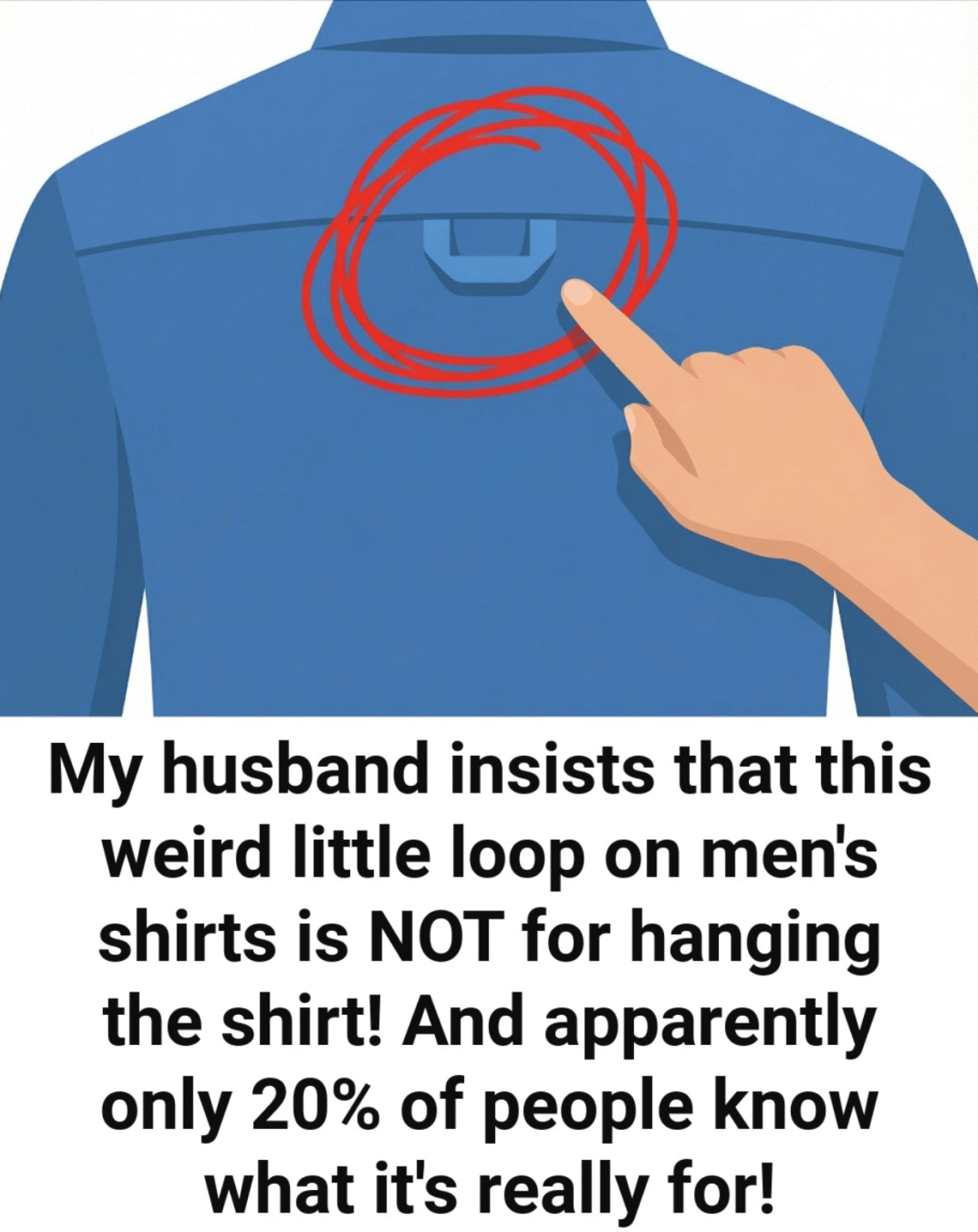
Have you ever looked at the back of a button-down shirt and noticed a small fabric loop sewn just below the collar, running horizontally between the shoulder blades, and wondered, “Why is this even here?” At first glance, it might seem purely decorative, an afterthought by the shirt maker—but the truth is far more interesting. That tiny loop, often called a locker loop, has a rich history, practical functionality, and even a cultural significance that continues to influence fashion today.
A Historical Perspective: From Ivy League Dorms to Global Fashion
The origins of the shirt loop date back to mid-20th century America, particularly in the Ivy League colleges of the Northeastern United States:
- During the 1950s and 1960s, preppy fashion was gaining popularity among students at universities like Harvard, Yale, and Princeton. Young men wanted clothing that was durable, practical, yet stylish. Button-down Oxford shirts became the uniform of choice for campus life.
- Dormitories and gym lockers were small and crowded, making traditional hanging methods impractical. To keep shirts neat without creasing the collar or stretching the shoulders, designers introduced a loop sewn into the back of the shirt—allowing students to hang their shirts directly on locker hooks.
- Iconic American clothing brands, particularly Brooks Brothers, adopted this design element and helped make it a hallmark of classic preppy style. Soon, the loop wasn’t just a practical feature—it became a symbol of Ivy League sophistication.
The Practical Function of the Loop
The locker loop, while simple in design, was extremely functional:
- Convenient Hanging:
- The primary purpose was to allow shirts to be hung on hooks or pegs without the need for a hanger.
- Hanging by the loop minimizes wrinkles, keeping the fabric smooth across the shoulders and back.
- Protecting the Collar and Seams:
- Hanging a shirt by the collar can stretch the neckline, and draping over a hanger can sometimes distort shoulder seams. The loop distributes the weight evenly, preserving the shirt’s shape and prolonging its lifespan.
- Enhancing Mobility:
- For students or professionals moving between lockers, gyms, and classrooms, the loop allowed the shirt to be temporarily hung without interrupting daily routines.
Modern Uses and Fashion Adaptations
Even though we now have closets, hangers, and garment racks everywhere, the loop hasn’t disappeared. It has evolved into both a functional and stylistic feature:
- Smart Hanging Solutions:
- For campers, travelers, and minimalists, the loop can still be used to hang shirts on hooks, backpacks, or tent poles—making it surprisingly useful in modern life.
- Fashion Significance:
- Some brands add contrasting-color loops, embroidered details, or reinforced stitching to make the loop a visual design element. It subtly signals classic style awareness and attention to garment construction.
- Functional Enhancements:
- Certain modern shirts use the loop as a utility hook for sunglasses, pens, or ID badges—an evolution of the original practical concept.
Fun Facts About Locker Loops
- They are sometimes referred to as “preppy loops,” “utility loops,” or “Ivy loops.”
- In traditional Ivy-style Oxford shirts, the loop is usually accompanied by a center back pleat, which allows extra movement and comfort. Shirts missing the pleat may indicate lower-quality construction.
- Cutting the loop is a common mistake for those who think it’s purely decorative, but doing so removes a functional feature that can protect the shoulder seams over time.
- In Japanese and European fashion, the loop has also been incorporated as a subtle luxury detail, giving casual and formal shirts a heritage-inspired flair.
Cultural and Fashion Influence
- The locker loop has become more than a functional design feature—it’s a cultural symbol.
- It evokes classic Ivy League and preppy style, which has influenced global fashion trends, from casual office wear to high-end designer shirts.
- Today, the loop signals attention to detail and respect for traditional tailoring, appealing to people who appreciate heritage fashion and thoughtful garment design.
Bottom Line
The tiny loop on the back of a button-down shirt may seem insignificant, but it carries decades of history, practicality, and style. What started as a simple solution for hanging shirts in crowded lockers has endured as a hallmark of classic design, balancing form and function.
Next time you see a shirt loop, remember: it’s not just a stitch—it’s a nod to Ivy League tradition, smart tailoring, and timeless style, all packed into a small piece of fabric on your back.