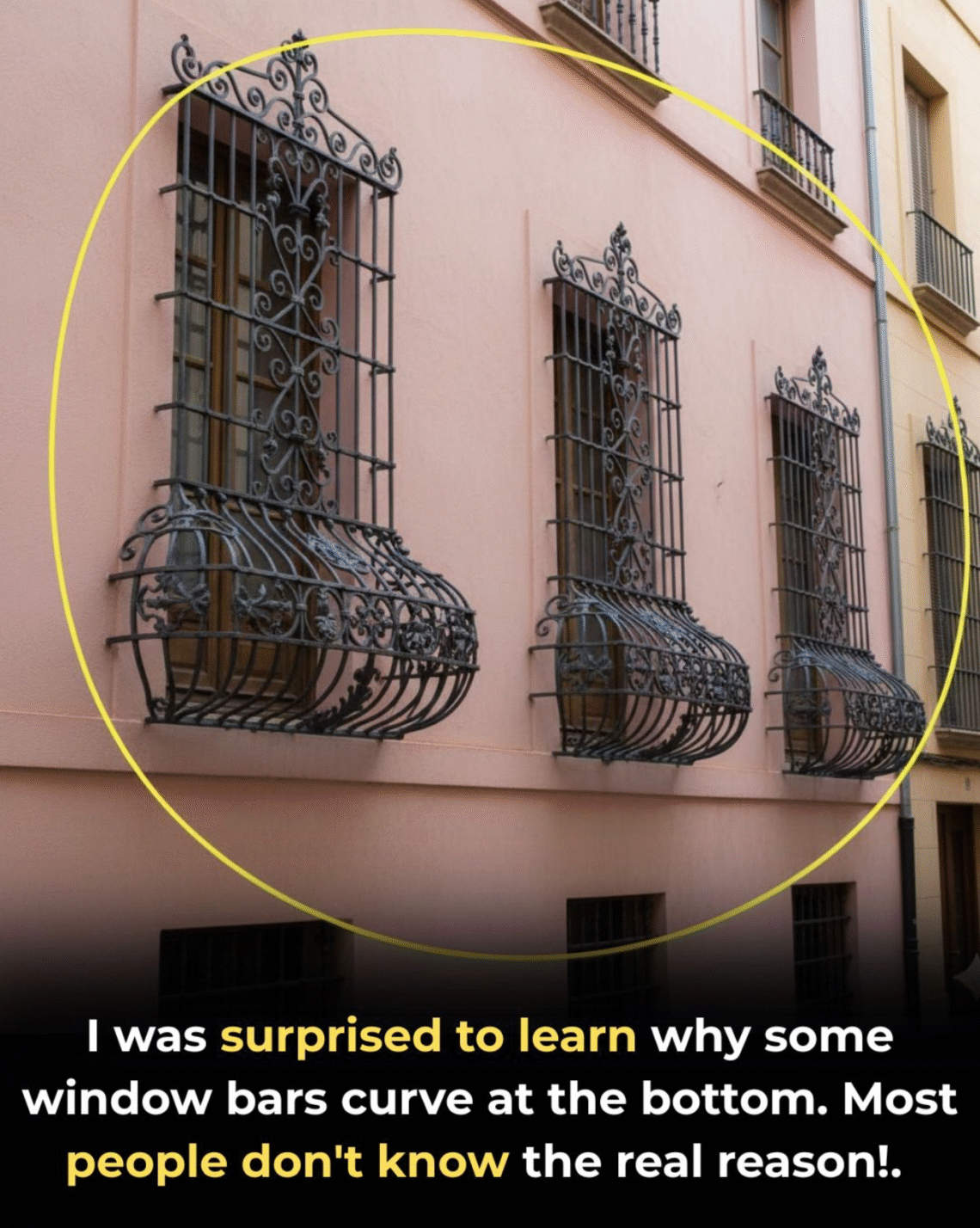
You’ve likely walked past them dozens—maybe hundreds—of times without giving them a second thought. Iron bars across a window. Strong. Vertical. Protective.
And then, at the base, something unexpected: a gentle outward curve. A soft bulge interrupting the straight geometry. Not dramatic. Not flamboyant. Just enough to make you wonder—why?
At first glance, it appears decorative. A stylistic flourish added by a blacksmith with an eye for elegance. But that subtle swell—often called a “potbelly” window guard”—is not merely ornamental. It’s a quiet marriage of security, practicality, and design, where engineering hides behind beauty.
Let’s unfold the full story.
The Primary Purpose: Space Without Sacrificing Safety
The most practical reason for the curved bottom is simple:
It creates usable space between the glass and the bars.
Standard flat security bars sit close to the windowpane. That’s effective for protection—but limiting. A curved bottom extends outward a few inches, creating a small ledge of protected space.
That extra depth allows for:
- Flower pots
- Window boxes
- Decorative plants
- Small herb gardens
- Even slight ventilation adjustments
In urban settings, especially in older European and Latin American cities, outdoor space is precious. A potbelly guard gives residents the ability to grow greenery without removing security.
It turns a barrier into a balcony—just a tiny one.
Protection for Open Windows
There’s another functional advantage.
In warmer climates, people often open their windows for airflow. A curved grille allows:
- Windows to open outward slightly
- Curtains to move freely
- Air circulation without obstruction
The bulge prevents the bars from pressing directly against the glass or frame, reducing wear and allowing better ventilation while still maintaining security.
It’s protection that breathes.
Structural Strength and Engineering
Beyond convenience, the curve also adds structural integrity.
A slight outward bend:
- Distributes force more effectively
- Adds rigidity to the frame
- Makes prying or bending more difficult
In engineering terms, curves often increase strength. Think of arches in bridges or domes in architecture. A curved shape resists pressure better than a completely flat surface.
So what appears soft is, in fact, strategically strong.
Aesthetic Balance: Softening Hard Security
Security bars can feel harsh. They suggest restriction, division, and defensiveness. Straight vertical lines reinforce that rigidity.
The potbelly softens the psychological impact.
It introduces:
- Visual depth
- Movement
- A sense of craft
- A human touch
Especially in wrought iron designs, the curve may be paired with scrollwork or floral motifs. The result feels less like a cage—and more like architectural ornamentation.
In historic neighborhoods, these curved guards became part of the visual identity of the street. Security blended into style so seamlessly that it felt intentional rather than imposed.
Urban Gardening and Everyday Life
In densely populated cities where outdoor space is limited, these curved window bars quietly transformed daily life.
They allowed residents to:
- Grow basil or mint outside the kitchen window
- Place geraniums facing the street
- Keep small potted plants safe from falling
The bars prevented pots from tipping outward, adding a layer of safety for pedestrians below.
In this way, the potbelly became a bridge between private and public space—a way to add beauty without compromising protection.
Historical Roots
Curved window guards became especially common in:
- 19th and early 20th century Europe
- Mediterranean cities
- Colonial-era architecture
- Urban apartment buildings
Blacksmiths crafted them by hand, shaping heated iron into graceful bulges that felt almost organic.
They were practical solutions—but also status symbols. Intricate ironwork signaled craftsmanship and pride of ownership. Even a modest home could carry elegance in its windows.
Safety for Children and Pets
Another understated benefit:
The outward curve creates a slight buffer zone between the bars and the interior.
For families with small children or pets, this design:
- Prevents direct contact with the glass
- Adds depth that discourages climbing
- Reduces risk of accidental impact
It’s a subtle layer of passive safety woven into the design.
Form and Function in Perfect Harmony
What makes the potbelly window guard fascinating is how seamlessly it blends utility and beauty.
It:
- Protects without imprisoning
- Creates space without extending property lines
- Strengthens while appearing delicate
- Adds life to rigid architecture
The curve is not accidental. It is intentional geometry shaped by lived experience—by people who needed both security and sunlight, both safety and softness.
A Quiet Architectural Lesson
The next time you pass a window with bars that swell gently at the bottom, pause for a moment.
That curve represents something larger than iron. It reflects a design philosophy that says:
Security doesn’t have to be harsh.
Strength doesn’t have to be rigid.
Protection can coexist with beauty.