A Winter Secret, Revealed
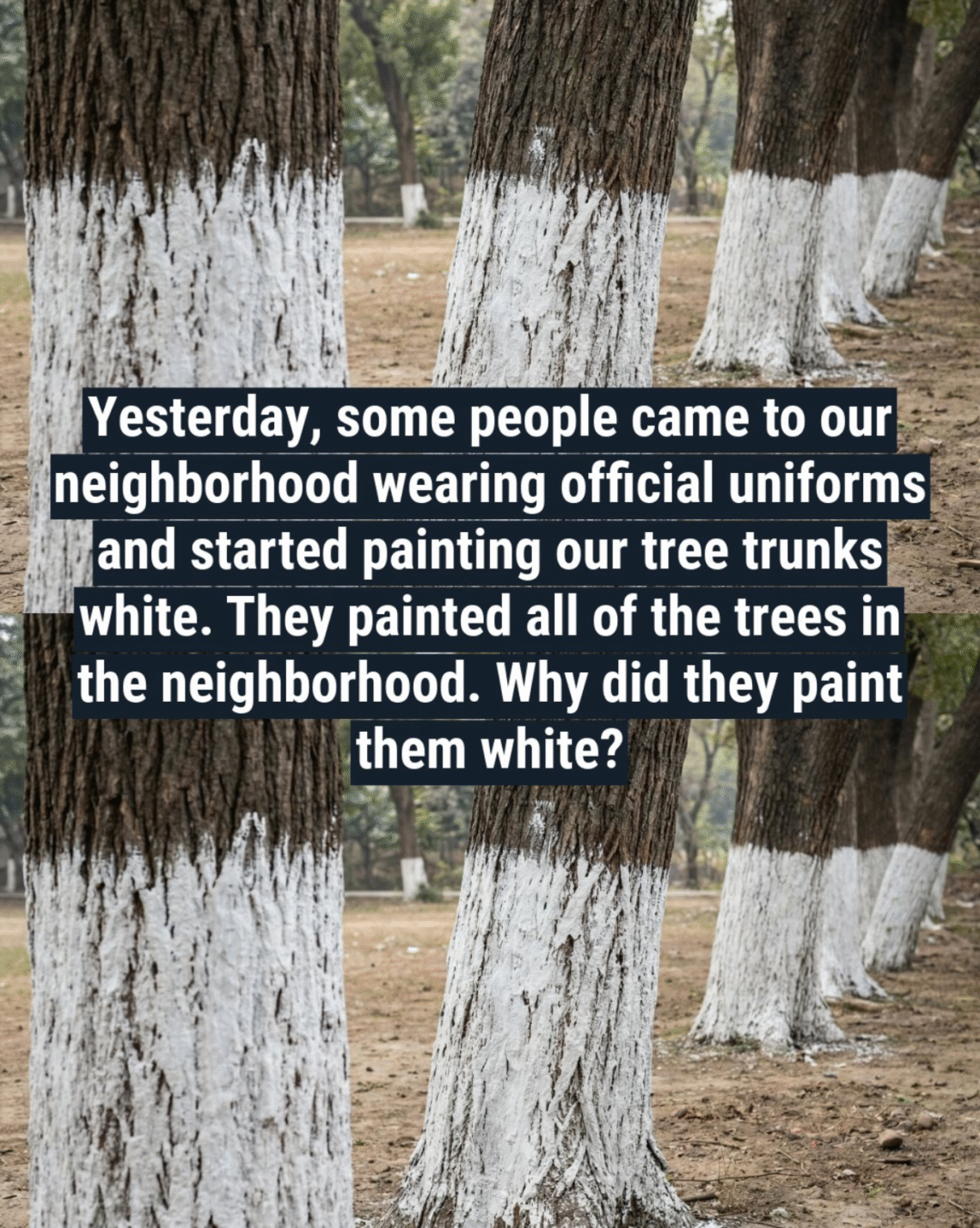
For years, I passed them without stopping—trees lining quiet country roads, standing in neat orchard rows, or scattered across old farmland. In winter’s stillness, when branches are bare and the land feels paused, their trunks stand out in a curious way. Each one is marked with a soft band of white, starting at the base and rising just a few feet up, as if the trees themselves had been brushed by winter’s hand. At a glance, it almost looks decorative, like frost that never melted or snow that clung stubbornly to the bark.
But this white paint is not for beauty. It is practical, protective, and deeply rooted in agricultural tradition.
A Practice Older Than It Looks
Painting tree trunks white is a method that has been used for generations, especially by orchard keepers, farmers, and gardeners who depend on the long-term health of their trees. Long before modern tree wraps, chemical treatments, or synthetic guards, people relied on simple materials—most often lime-based whitewash—to shield their trees from winter’s hidden dangers.
What looks like a quiet countryside custom is actually a carefully considered response to nature’s extremes.
The Winter Threat You Can’t See
Winter is often imagined as a gentle resting season for trees, but it can be surprisingly harsh—especially for the bark.
Sunlight and Sudden Temperature Changes
On clear winter days, sunlight can warm a tree’s dark bark significantly, even when air temperatures remain freezing. This warming causes the bark and underlying tissues to expand slightly. When the sun sets or clouds roll in, temperatures drop rapidly, and the bark contracts again.
This cycle—warming by day, freezing by night—creates stress in the bark.
Over time, it can lead to:
- Cracks known as frost cracks
- Splitting of the bark
- Damage to the tree’s vascular system
- Entry points for pests and disease
This damage is especially common on young trees and thin-barked species such as fruit trees.
How White Paint Protects Trees
Reflecting Sunlight
White surfaces reflect sunlight instead of absorbing it. By painting the trunk white, farmers reduce how much heat the bark absorbs during sunny winter days. This keeps the trunk’s temperature closer to the surrounding air temperature, minimizing the dramatic expansion-and-contraction cycle that causes damage.
In simple terms, the white paint keeps the tree cooler during the day, preventing harmful temperature swings.
Preventing Sunscald
Sunscald is a form of bark injury caused by sudden temperature changes. Despite its name, it often occurs in winter rather than summer.
When bark is warmed by the sun and then rapidly refrozen, cells beneath the surface can die. Over time, these dead areas weaken the tree, leaving it vulnerable.
The white paint acts like a protective shield, significantly reducing the risk of sunscald.
Protection Against Pests and Insects
Whitewashing also plays a role in pest management.
Many insects:
- Lay eggs in bark crevices
- Overwinter in cracks near the base of trees
- Seek dark, sheltered areas
The alkaline nature of traditional lime-based whitewash discourages insects from nesting and can kill eggs and larvae already present. While it is not a complete pest solution, it is a natural deterrent that reduces infestations without chemicals.
Guarding Against Fungal Diseases
Bark cracks are more than cosmetic damage—they are open doors. Once the bark splits, fungi and bacteria can enter the tree’s tissues. White-painted trunks reduce cracking, which in turn reduces the likelihood of infections that can weaken or kill the tree over time.
In this way, the white paint acts as a preventive measure, protecting the tree before problems begin.
A Defense Against Hungry Animals
In some regions, white paint is mixed with natural additives that discourage animals such as rabbits, deer, and rodents from chewing on bark during winter when food is scarce. While not foolproof, it adds another layer of defense during a vulnerable season.
Why Only the Lower Trunk Is Painted
You may notice that the white paint rarely reaches the branches. This is intentional.
The lower trunk:
- Receives the most reflected sunlight from snow
- Is most vulnerable to animal damage
- Is closest to overwintering insects
- Experiences the greatest temperature fluctuations
Painting only this section provides maximum protection while allowing the rest of the tree to breathe naturally.
What Is the White Paint Made Of?
Traditionally, the paint is not modern house paint.
Most often, it is:
- Lime-based whitewash
- Mixed with water
- Sometimes blended with clay or natural binders
This mixture is breathable, allowing moisture to escape while still protecting the bark. Using regular latex or oil-based paint is discouraged, as it can trap moisture and damage the tree.
When and How It Is Applied
Whitewashing is typically done:
- In late fall or early winter
- Before the harshest temperature swings begin
It is applied with a brush or sprayer in a thin, even coat. The goal is protection, not thickness.
A Quiet Symbol of Care
Beyond its practical function, a white-painted tree trunk is also a sign of attention. It tells a quiet story: someone noticed the tree, understood its needs, and took steps to protect it through the hardest season of the year.
In orchards, it reflects long-term thinking. A fruit tree may take years to mature, and protecting it in winter ensures harvests for seasons to come.
Not Decoration, But Preservation
What may appear at first glance to be a decorative winter tradition is, in reality, an elegant solution to a complex problem. Painting trees white is a simple, low-cost, environmentally conscious method of preserving tree health—one that blends observation, experience, and respect for nature.
So the next time you pass those white-banded trees standing quietly in winter fields, you’ll know the truth. They are not dressed for show. They are protected, prepared, and cared for—waiting patiently for spring.