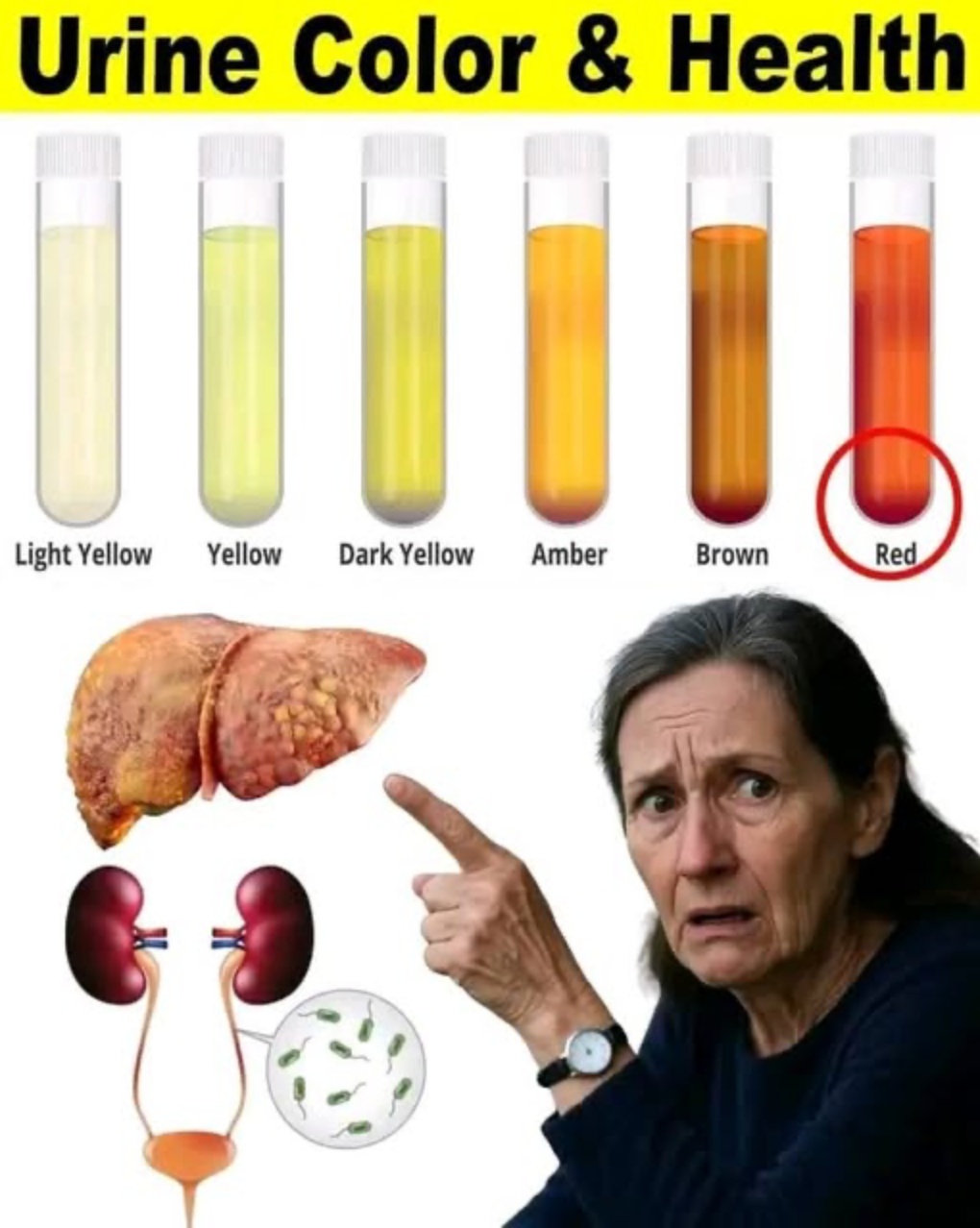
Most people treat urine as something routine and unimportant — a quick glance, a flush, and it is gone. But urine is actually a constantly updated health signal produced by your kidneys, which filter your blood and remove extra water, salts, waste products, and chemicals from the body. Because urine reflects hydration levels, diet, medications, hormones, and even certain illnesses, its color can sometimes provide useful clues about what is happening internally.
Urine color is mostly determined by a natural pigment called urochrome. The more diluted your urine is, the lighter the color appears; the more concentrated it is, the darker it becomes. However, food dyes, vitamins, medications, exercise, and health conditions can also change its appearance. Color changes are not a diagnosis by themselves, but they can serve as signals worth noticing and, in some situations, worth discussing with a doctor.
Understanding the “Normal” Range First
Very Pale or Almost Clear Urine
This usually means you are very well hydrated, or possibly even drinking slightly more water than your body needs. Consistently clear urine may happen if you consume large amounts of fluids, herbal teas, or sports drinks. Rarely, constantly over-hydrating can dilute important electrolytes, but for most people it simply means the kidneys are excreting excess water.
Light Yellow or Straw-Colored Urine
This is considered healthy, typical urine for most people. It reflects a comfortable balance between hydration and kidney concentration. Many doctors describe this shade as the “target zone.”
Medium Yellow or Deep Yellow Urine
This often indicates mild dehydration — especially if you have not been drinking much water, have exercised, or the weather is hot. The darker tone appears because the kidneys conserve water and the pigment becomes more concentrated. Drinking fluids usually brings the color back to a lighter shade.
When Urine Looks Dark, Amber, or Honey-Colored
Darker, amber-like urine can simply suggest strong dehydration, especially in the morning or after sweating. However, if it remains dark even when you are well hydrated, it can occasionally be linked to:
Vigorous exercise leading to muscle breakdown byproducts in the urine
Certain medications or supplements
Problems affecting the liver or bile processing
If dark urine persists for more than a day or two, or appears alongside fatigue, nausea, abdominal pain, or yellowing of the eyes or skin, medical evaluation is important.
Orange-Tinted Urine
Orange urine sometimes results from:
Dehydration
Vitamin supplements (especially B-complex or beta-carotene)
Certain antibiotics or urinary tract medications
Foods such as carrots or colored beverages
More rarely, orange urine may be associated with bile duct or liver issues, especially if stools appear pale or eyes look yellow. In that situation, it should not be ignored.
Pink or Red-Tinted Urine
This color can be alarming, but not all red urine is blood. Common harmless causes include:
Beets, blackberries, rhubarb, or brightly colored foods
Some food dyes
Certain medications
However, red or brownish-red urine can also indicate blood in the urine, which may come from irritation, kidney stones, infection, bladder inflammation, or other conditions requiring medical attention.
Important signals to take seriously include:
Pain or burning when urinating
Lower-back or side pain
Fever or chills
Blood clots in urine
Red urine that does not go away
In these situations, seeking professional medical evaluation is strongly recommended rather than waiting for symptoms to pass.
Brown or Cola-Colored Urine
Brown or “tea-colored” urine may appear after eating fava beans or taking certain medications, but it may also point to:
Significant dehydration
Muscle injury after extreme physical exertion
Liver or bile disorders
Certain metabolic or kidney conditions
This color, especially if persistent, deserves timely attention from a healthcare provider.
Green or Blue Urine
Though unusual, green or blue urine is usually linked to food dyes, energy drinks, medical dyes used in tests, or medications. Certain rare bacterial infections or metabolic conditions may also produce these colors, but in most people the cause is harmless and temporary.
If the color appears suddenly without any clear explanation — and especially if there are symptoms such as fever, pain, or strong odor — it is worth discussing with a clinician.
Cloudy or Milky-Looking Urine
Cloudiness can sometimes be caused by harmless factors such as concentrated minerals after dehydration. However, cloudy urine is also seen in situations such as:
Urinary tract infection
Kidney infection
Excess protein in the urine
Crystallized minerals or kidney stones
If cloudy urine is accompanied by odor, burning, pain, fever, or frequent urination, medical evaluation is important.
Neon Yellow or Bright Fluorescent Urine
This shade almost always comes from vitamin supplements, especially riboflavin (vitamin B2) and multivitamins. The kidneys excrete excess amounts, leading to that vivid color. It is typically harmless.
Why Smell and Frequency Also Matter
Color is only one piece of the picture. Doctors also consider:
Odor (strong, sweet, or ammonia-like smells may reflect hydration, infection, or diet)
Frequency (going far more or far less often than usual)
Pain or burning
Foaminess (occasionally linked to excess protein)
Changes that are sudden, persistent, or combined with symptoms carry more significance than brief, one-time variations.
When You Should Not Ignore Urine Changes
Seek medical care — ideally promptly — if you notice:
Red, brown, or cola-colored urine that does not go away
Pain, fever, back or side discomfort, or burning while urinating
Nausea, vomiting, or unexplained fatigue with dark urine
Yellowing of eyes or skin along with orange or dark urine
Severe lower-abdominal pain with urinary changes
Any urine change after an injury or intense physical exertion
Even if the cause turns out to be minor, evaluation helps rule out conditions that benefit from early treatment.
Practical Habits to Support Healthy Urine and Kidney Function
Drink water regularly throughout the day rather than in large occasional amounts.
Pay attention to how your body responds to exercise, heat, and illness.
Use medications and supplements responsibly and only as intended.
Do not rely on urine color alone as a health diagnosis — treat it as one clue among many.
Bottom Line
Urine color is a visible reflection of what your body is processing at any given moment. Most shifts are temporary, harmless, and related to hydration, diet, or vitamins, but some changes serve as important warning signs that deserve attention rather than dismissal. The key is to notice patterns, consider accompanying symptoms, and seek medical guidance when something feels unusual, persistent, or worrisome.