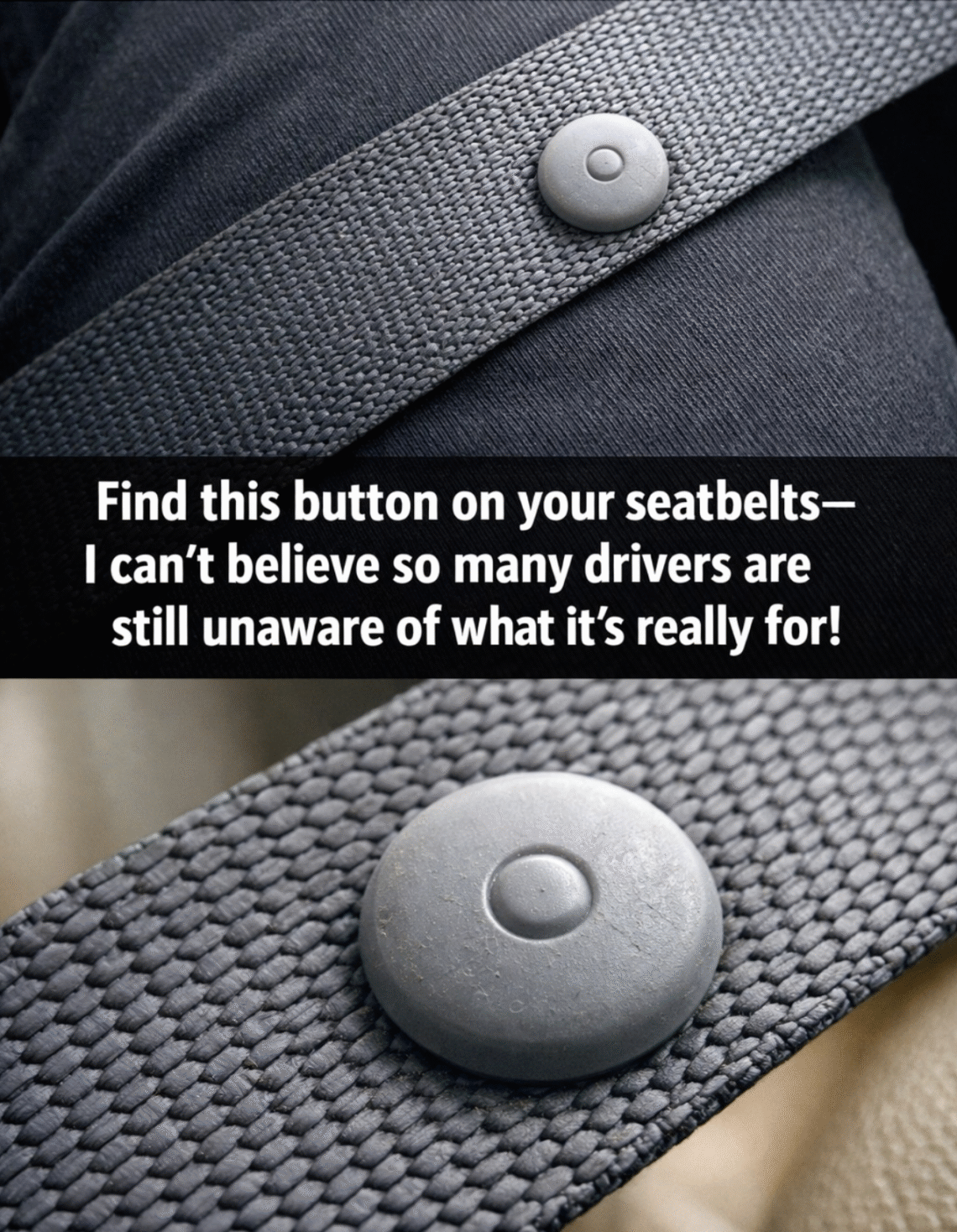
You do it almost automatically. You slide into the driver’s seat, pull the belt across your chest, and click it into place. The motion is so routine that most of us never stop to examine the details of the mechanism in our hands. But just above the metal latch plate—the flat piece of metal that slides into the buckle—there’s a small plastic button.
It looks insignificant. It doesn’t move. It doesn’t light up. It doesn’t click. And yet, that tiny component plays a surprisingly important role in your daily driving experience.
That little plastic piece is officially known as a seat belt stopper (sometimes called a retainer button). And while it may appear trivial, it’s a carefully engineered solution to a very practical problem.
What It Is — and Why It Exists
The seat belt stopper is a small plastic button that’s permanently attached to the seat belt webbing. Its primary function is simple but essential:
It prevents the metal latch plate from sliding all the way down to the floor when you unbuckle.
Without this stopper, every time you released your seat belt, gravity would immediately pull the latch plate downward along the belt strap. In many vehicles, that would mean:
- The metal piece drops to the floor.
- It slips between the seat and the center console.
- It bangs against the door panel.
- It becomes difficult to grab the next time you need it.
Over time, this would create constant inconvenience—not to mention noise, wear, and potential damage.
The stopper acts as a barrier. It holds the latch plate at a convenient height so it’s always within reach when you’re ready to buckle up again.
The Engineering Behind Something So Small
It might seem surprising that engineers would dedicate design attention to such a minor part. But automotive safety design is built around precision, comfort, and usability.
Seat belts themselves are complex safety systems made up of several coordinated components:
- Webbing – the strong, woven fabric strap.
- Latch plate – the metal tongue that clicks into the buckle.
- Buckle – the receiving end that locks the latch plate.
- Retractor – the internal spool mechanism that keeps tension on the belt.
- Pretensioner – a safety device that tightens the belt instantly during a collision.
- Stopper button – the small plastic retainer that keeps the latch plate in position.
Each piece contributes to the overall function. The stopper may not directly protect you in a crash, but it supports consistent, reliable use—which ultimately improves safety.
Because here’s the truth:
A safety feature only works if people use it.
By keeping the latch plate accessible and preventing frustration, the stopper increases the likelihood that drivers and passengers buckle up quickly and correctly.
What Would Happen Without It?
Imagine getting into your car and reaching for your seat belt, only to find:
- The latch plate has slipped all the way to the base of the pillar.
- It’s wedged awkwardly between the seat and the door.
- You have to bend down and fish it out every single time.
Over months or years, that small inconvenience could lead to:
- Frustration
- Reduced usability
- Even occasional skipping of buckling up for “short trips”
Automotive designers anticipate these behavioral patterns. The stopper is a quiet preventive measure that keeps the experience smooth and friction-free.
It Also Prevents Wear and Tear
Another overlooked function of the stopper is protection.
When the metal latch plate falls repeatedly to the floor or strikes interior panels, it can:
- Scratch plastic trim
- Chip paint
- Damage upholstery
- Create annoying rattling sounds
By holding the latch plate at a fixed position, the stopper reduces long-term wear on both the vehicle interior and the belt system itself.
Why It’s Placed Where It Is
The position of the stopper isn’t random. It’s carefully measured during manufacturing to:
- Keep the latch plate at a comfortable grabbing height
- Prevent interference with the retractor mechanism
- Maintain proper belt alignment across the body
In many vehicles, you’ll find two small plastic buttons on the belt webbing. One prevents the latch from sliding downward, while another may stop it from sliding too far upward.
A Lesson in Invisible Design
The seat belt stopper is a perfect example of what designers call “invisible usability.”
You rarely notice it—unless it’s missing.
It doesn’t demand attention. It doesn’t enhance aesthetics. It simply solves a problem so effectively that you forget the problem ever existed.
That’s the hallmark of thoughtful engineering.
Small Detail, Big Impact
In the broader context of vehicle safety systems, the stopper might seem minor compared to airbags, anti-lock brakes, or collision detection sensors. But safety is built from layers—each component reinforcing the others.
This tiny plastic button:
- Keeps the latch accessible
- Reduces frustration
- Protects interior surfaces
- Encourages consistent seat belt use
- Contributes to a smoother driving experience
All without you ever thinking about it.