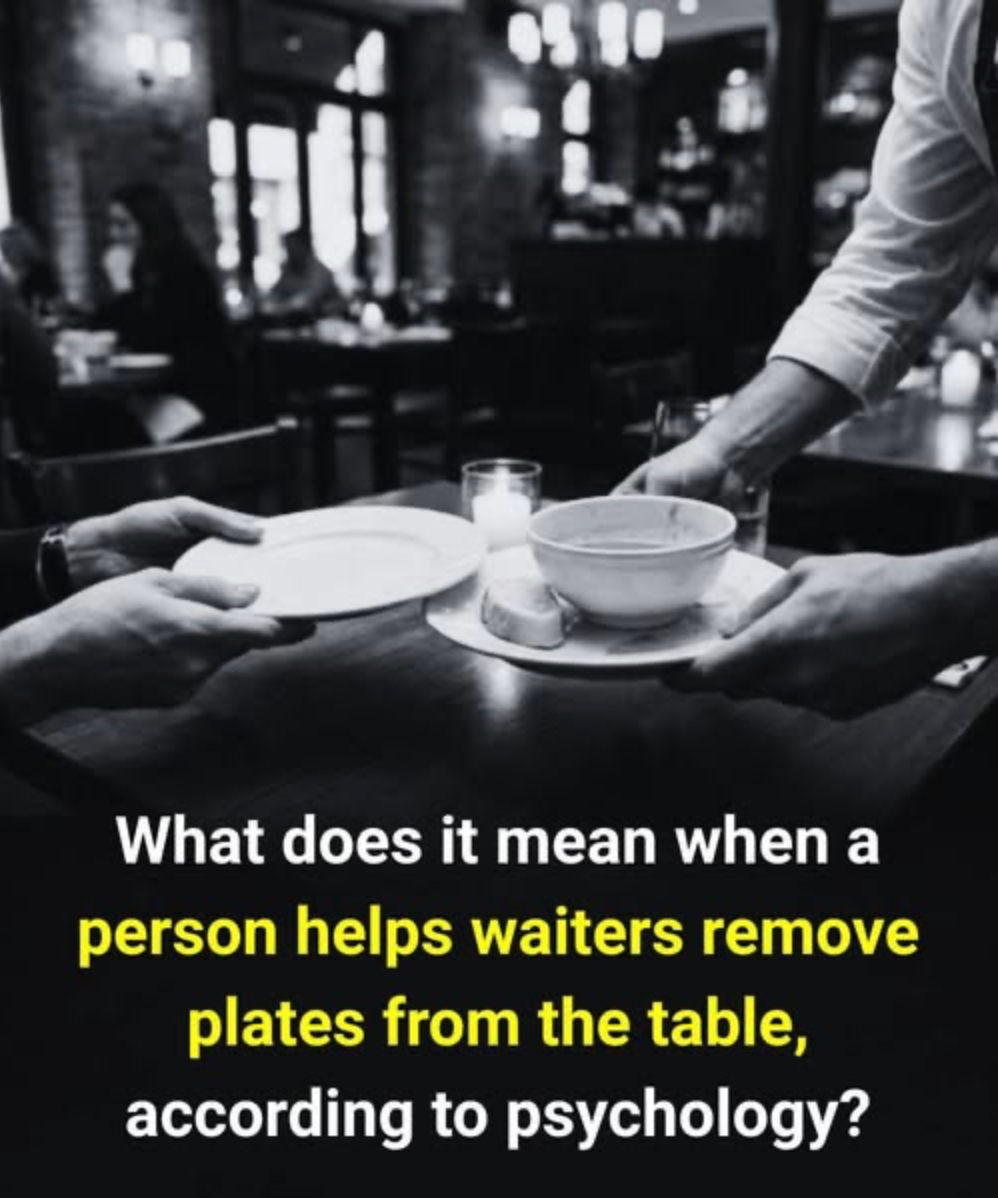
You’re finishing dinner at a restaurant. Plates are empty. Glasses are half-full. The server approaches—and before they even reach the table, someone in your group begins stacking plates neatly, gathering napkins, and organizing cutlery.
It seems like a small gesture. Almost automatic.
But psychology suggests that these subtle actions can reveal far more than simple tidiness. They can offer insight into personality traits, upbringing, empathy levels, social awareness, and even attachment styles.
Let’s explore what this quiet behavior may signal.
1. Empathy and Perspective-Taking
One of the strongest psychological indicators behind helping clear the table is empathy.
Empathy involves:
Recognizing another person’s workload.
Imagining how their job feels.
Wanting to reduce their burden.
When someone stacks plates, they may be unconsciously thinking:
“This person is working hard. I can make it slightly easier.”
This reflects perspective-taking, a key component of emotional intelligence. People who regularly engage in small supportive acts often score higher in measures of compassion and social sensitivity.
It’s not about grand gestures—it’s about noticing.
2. Prosocial Behavior and Cooperative Tendencies
Psychologists use the term prosocial behavior to describe voluntary actions intended to benefit others.
Helping a waiter clear the table is a low-cost prosocial act. It requires minimal effort but sends a cooperative signal.
Research shows that people who engage in small acts of cooperation are often:
More community-oriented
More likely to volunteer
Higher in agreeableness (one of the Big Five personality traits)
It demonstrates a willingness to contribute—even in spaces where no one is obligated to do so.
3. Upbringing and Social Conditioning
Sometimes, the behavior isn’t consciously empathetic—it’s learned.
Many people were raised with messages like:
“Always clean up after yourself.”
“Respect service workers.”
“Leave things better than you found them.”
Family culture shapes micro-behaviors. In homes where children were expected to help clear the dinner table, the behavior often generalizes to public spaces.
In this case, helping isn’t symbolic—it’s habitual.
4. Need for Order and Control
Interestingly, not all plate-stackers are motivated by empathy.
For some, the behavior may reflect:
A desire for order
Mild discomfort with mess
A need to create structure in shared spaces
Clutter can subtly increase stress levels. Organizing plates may reduce internal tension.
This doesn’t make the act less kind—but the motivation may differ.
5. Social Signaling
Human behavior often contains elements of signaling.
Helping the waiter may also communicate:
“I’m considerate.”
“I’m not entitled.”
“I understand effort.”
In group settings, especially on first dates or business dinners, such gestures can subtly influence how others perceive someone.
Studies on impression management show that visible acts of consideration increase perceived warmth and reliability.
However, when done naturally (not performatively), the gesture is typically viewed positively.
6. Low Entitlement and Service Awareness
Some individuals see restaurant service as transactional only:
“I paid. It’s their job.”
Others recognize service as relational:
“This person is working hard. I can show appreciation.”
Helping clear plates may reflect lower levels of entitlement and higher recognition of labor.
Psychologically, this aligns with:
Gratitude orientation
Humility
Respect for roles
It signals awareness that service work is physically demanding.
7. Attachment and Caregiving Patterns
On a deeper level, small caretaking behaviors sometimes mirror attachment styles.
People with secure attachment often:
Feel comfortable contributing.
Do not fear being judged for small gestures.
Engage naturally in cooperative behaviors.
Meanwhile, those with anxious tendencies might over-help to gain approval, while avoidant individuals may avoid involvement entirely.
Context matters—but patterns can be revealing.
8. Cultural Influences
Cultural norms play a strong role.
In some cultures:
Helping tidy is expected.
Community responsibility is emphasized.
Leaving a table messy may feel disrespectful.
In others:
The service model is strictly defined.
Intervening may be viewed as unnecessary.
Behavior must always be interpreted within cultural context.
9. The “Helper’s High”
Even tiny supportive acts can activate reward pathways in the brain.
Helping others may release:
Dopamine
Oxytocin
These neurochemicals create a mild sense of satisfaction. Some people instinctively help because it feels good—not because they seek recognition.
It reinforces a cycle of prosocial behavior.
10. It’s Not Always Deep
It’s important not to overanalyze every stacked plate.
Sometimes the reason is simple:
The table feels crowded.
The person wants space.
It’s easier to move glasses.
They’re bored and fidgeting.
Human behavior is multi-layered. A single act doesn’t define personality—but patterns across situations can be meaningful.
What It Does Not Mean
Helping clear the table does not automatically mean someone is:
Morally superior
More generous overall
Always empathetic in relationships
Likewise, not helping does not mean someone is selfish.
Behavior exists on a spectrum shaped by personality, mood, upbringing, and context.
The Subtle Social Impact
Regardless of motivation, small acts like stacking plates can:
Make service flow smoother
Reduce physical strain for staff
Signal respect
In social psychology, these micro-gestures contribute to what’s called micro-affirmations—small actions that validate others’ effort.
They may seem insignificant, but they build cooperative social environments.
The Bigger Psychological Insight
Helping clear a table reflects something foundational about human social life:
We are wired for cooperation.
Even in modern transactional environments, our brains still recognize effort, hierarchy, fairness, and reciprocity.
A simple act—gathering plates before the waiter arrives—can be a quiet expression of empathy, orderliness, cultural values, or relational awareness.
It’s a small window into how someone navigates shared spaces.
Not grand. Not dramatic. But revealing.