Most people use kitchen scissors almost every day without giving them a second thought. They reach for them to cut herbs, open food packaging, trim meat, snip parchment paper, or slice pizza. They are one of the most practical tools in the kitchen, yet many of their features remain a mystery to the average home cook.
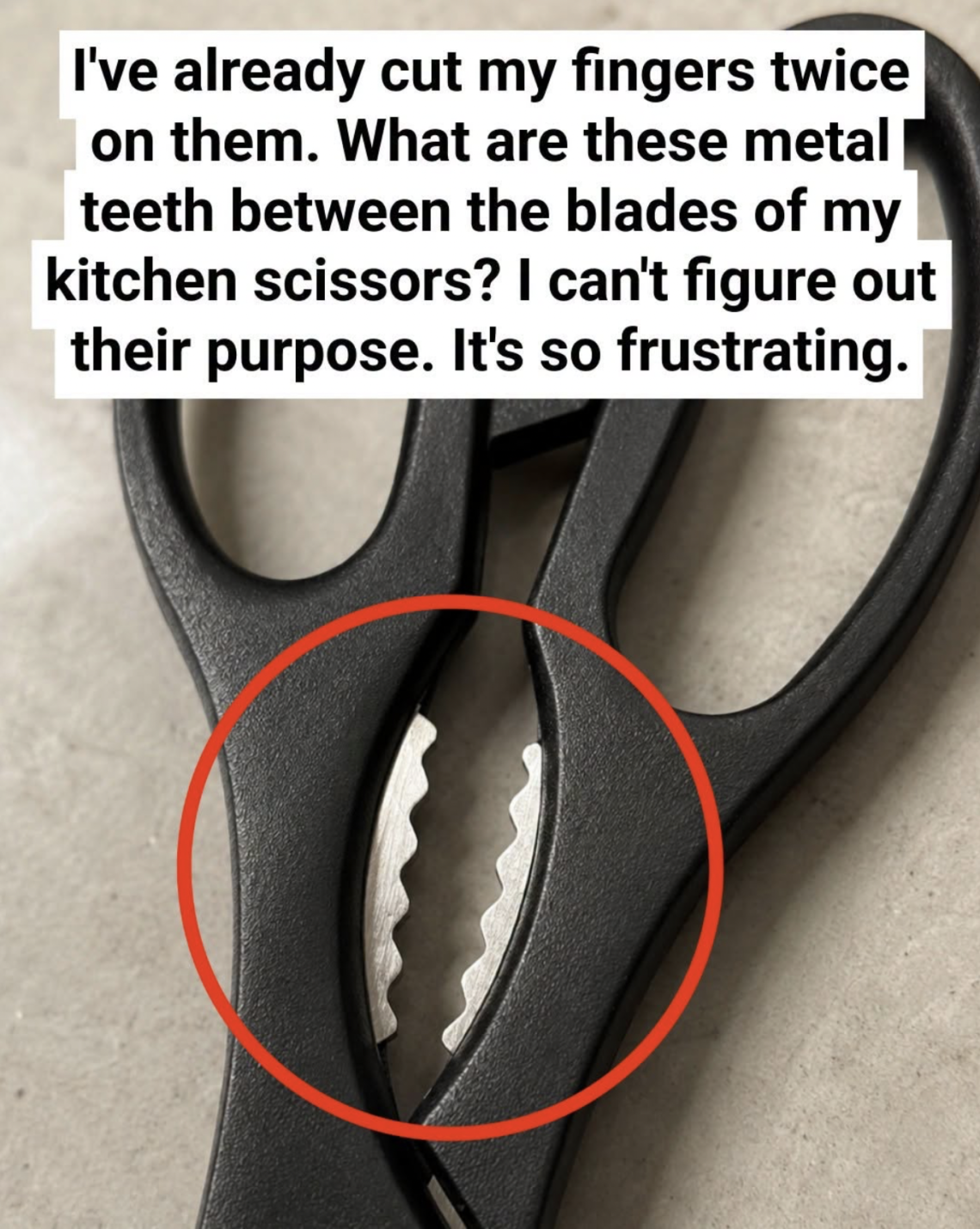
If you’ve ever looked closely at a pair of kitchen shears, you’ve probably noticed a strange, serrated or toothed section located between the handles, just below the blades. At first glance, it seems oddly placed and doesn’t appear to have anything to do with cutting. Some people assume it’s simply part of the handle’s design, while others believe it’s there to make the scissors stronger.
In reality, that unusual section is a carefully engineered multipurpose tool that can perform several useful kitchen tasks. Depending on the design of your scissors, it can help crack nuts, grip slippery objects, twist bottle caps, loosen stubborn jar lids, or even break apart shellfish.
Many people own a pair of kitchen scissors with this hidden feature and never use it, simply because they don’t know what it was designed to do. Once you understand its purpose, however, you’ll likely begin reaching for your kitchen shears far more often than before.
This guide explores the hidden purpose of the toothed section, how it works, why it was included in kitchen shears, and several clever ways to use it safely and effectively.
Kitchen Scissors: More Than Just Cutting Tools
Unlike ordinary office scissors, kitchen scissors are designed specifically for food preparation.
They are typically stronger, heavier, and more durable because they must handle tasks such as:
- Cutting poultry
- Trimming meat
- Snipping herbs
- Opening food packaging
- Cutting kitchen twine
- Preparing vegetables
- Trimming fish fins
- Cutting pizza
- Slicing tortillas
Many modern kitchen shears are intentionally built as multi-tools, combining several practical functions into one compact utensil.
The Mysterious Toothed Section
Between the two handles, you’ll often find a pair of curved, serrated jaws.
When the scissors are closed, these teeth fit together.
Unlike the sharp blades, these jaws are designed for gripping rather than cutting.
Their purpose is to create strong friction around round or slippery objects that would otherwise be difficult to hold securely.
This makes them surprisingly versatile.
What Is It Actually For?
The primary function of the toothed section is gripping.
Depending on the manufacturer, it may be intended for one or several of the following tasks.
1. Cracking Nuts
One of the most common uses is as a built-in nutcracker.
Simply:
- Place the nut between the serrated jaws.
- Close the handles gently.
- Increase pressure gradually until the shell cracks.
The curved teeth help prevent the nut from slipping away.
This works particularly well for:
- Walnuts
- Pecans
- Hazelnuts
- Almonds (depending on shell thickness)
2. Opening Stubborn Bottle Caps
Metal twist caps can sometimes be difficult to remove, especially if your hands are wet or the cap is tightly sealed.
The serrated jaws provide additional grip.
Instead of squeezing the sharp blades around the cap, the toothed section grips the lid securely while your hand applies gentle twisting force.
This can make opening some bottles easier.
3. Loosening Small Jar Lids
Small jars containing items such as:
- Mustard
- Jam
- Honey
- Spices
can sometimes become difficult to open.
The toothed section may provide enough extra traction to loosen the lid.
For larger jars, however, a dedicated jar opener often works better.
4. Holding Slippery Food
Certain foods become surprisingly difficult to grip.
Examples include:
- Fish
- Cooked chicken
- Sausages
- Corn cobs
- Hot vegetables
The serrated jaws allow you to hold these foods securely while cutting or transferring them.
Bonus Uses Depending on the Model
Not every pair of kitchen scissors includes all these functions, but some premium models use the toothed section for additional purposes.
These may include:
- Cracking lobster claws
- Breaking crab legs
- Holding bones while trimming meat
- Twisting wire or kitchen string
- Pulling small bones from fish
- Crushing garlic cloves before peeling
Always consult the manufacturer’s instructions if you’re unsure of the intended use.
Why the Teeth Are Serrated
The ridges are not decorative.
They increase friction.
Smooth metal surfaces tend to slide against rounded objects.
The teeth bite gently into the surface just enough to improve grip without cutting.
This allows the tool to hold objects securely while pressure is applied.
Different Kitchen Shears Have Different Designs
Not all kitchen scissors are identical.
Some include:
- Bottle openers
- Nutcrackers
- Bone cutters
- Herb strippers
- Wire cutters
- Screwdriver tips
- Built-in can openers
Manufacturers often combine several functions into one compact tool to reduce kitchen clutter.
Why Most People Never Use This Feature
The main reason is simple:
Nobody tells us what it does.
Kitchen scissors usually come with a small instruction leaflet.
Unfortunately, many people throw away the packaging immediately after purchase.
Years later, the mysterious toothed section remains unused simply because its purpose was forgotten.
How to Use It Safely
Although the gripping jaws are safer than the blades, they should still be used carefully.
Always:
- Keep fingers away from the closing jaws.
- Apply pressure gradually.
- Avoid forcing objects that are too large.
- Use the correct tool for extremely hard materials.
Kitchen shears are designed for food preparation—not heavy-duty construction work.
Caring for Kitchen Scissors
Good maintenance extends the life of your shears.
After each use:
- Wash thoroughly.
- Remove food residue from the serrated section.
- Dry completely.
- Store in a dry location.
If your scissors separate into two pieces for cleaning, take advantage of this feature to clean hidden areas where food particles may collect.
Sharpening the Blades
Over time, blades naturally become dull.
Many kitchen shears can be sharpened using:
- A sharpening stone
- A dedicated scissor sharpener
- Professional sharpening services
The serrated gripping section generally does not require sharpening because it functions through grip rather than cutting.
Common Myths
Myth: The toothed section is purely decorative.
False.
It serves one or more practical purposes depending on the model.
Myth: It is meant for cutting bones.
Usually not.
Bone-cutting kitchen shears use specially reinforced blades rather than the small gripping jaws.
Myth: Every pair of kitchen scissors works exactly the same way.
No.
Manufacturers include different features depending on the intended purpose of the scissors.
Choosing Quality Kitchen Shears
When purchasing kitchen scissors, look for features such as:
- Stainless steel blades
- Comfortable ergonomic handles
- Dishwasher-safe construction (if recommended by the manufacturer)
- Removable blades for easy cleaning
- Strong pivot screw
- Built-in multipurpose features
- Non-slip grip
High-quality shears can last for many years with proper care.
Other Hidden Features Found in Kitchen Tools
Kitchen scissors are not the only utensils with surprising built-in functions.
Many everyday tools include hidden features that people overlook, such as:
- Bottle openers on can openers
- Herb stripping holes in some scissors
- Measuring marks on mixing bowls
- Steam vents on cookware lids
- Built-in spoon rests on certain pot handles
- Serrated edges on peelers for soft fruits
These thoughtful design elements make cooking more convenient once you know they exist.
Frequently Asked Questions
Can every toothed section crack nuts?
No. Many kitchen shears are designed for this purpose, but not all. The exact function depends on the manufacturer and model.
Can I use it to open every jar?
It may help with some small lids, but very large or tightly sealed jars may require a dedicated jar opener.
Is it safe for shellfish?
Many heavy-duty kitchen shears are designed to crack lobster shells and crab legs, but check your manufacturer’s recommendations before doing so.
Does it damage bottle caps?
If excessive force is used, it may scratch painted caps. Apply only enough pressure to improve your grip.
Welcome to my kitchen!
I’m a passionate home cook and recipe creator who loves turning simple ingredients into delicious, comforting meals that everyone can enjoy. Through this website, I share carefully prepared recipes, practical cooking tips, and easy-to-understand food education to help you feel more confident in the kitchen.
My goal is to make cooking simple, enjoyable, and accessible. Whether you are looking for a quick family dinner, a delicious dessert, healthy meal ideas, or traditional recipes with a modern touch, you’ll find inspiration here.
More Than Just Recipes
I believe that cooking is also a way to learn. That’s why this website is not only about recipes. I also create educational articles about ingredients, cooking techniques, kitchen tips, food preparation, and the stories behind different dishes.
Each article is designed to give you useful knowledge that you can apply in your own kitchen. From understanding how ingredients work together to learning better cooking methods, my aim is to help you become a more confident and creative cook.
My Philosophy
Good food doesn’t always require complicated ingredients or professional equipment. With a little knowledge, patience, and creativity, simple ingredients can become something truly special.
I believe in sharing recipes that are practical, clearly explained, and enjoyable to make. I also love exploring new flavors while appreciating traditional cooking and the recipes passed down through generations.
Thank you for visiting my kitchen and being part of this food-loving community. I hope my recipes and articles inspire you to cook, learn, experiment, and most importantly, enjoy every bite!
Happy cooking!