You didn’t just find an old object. You uncovered a fragment of lived history.
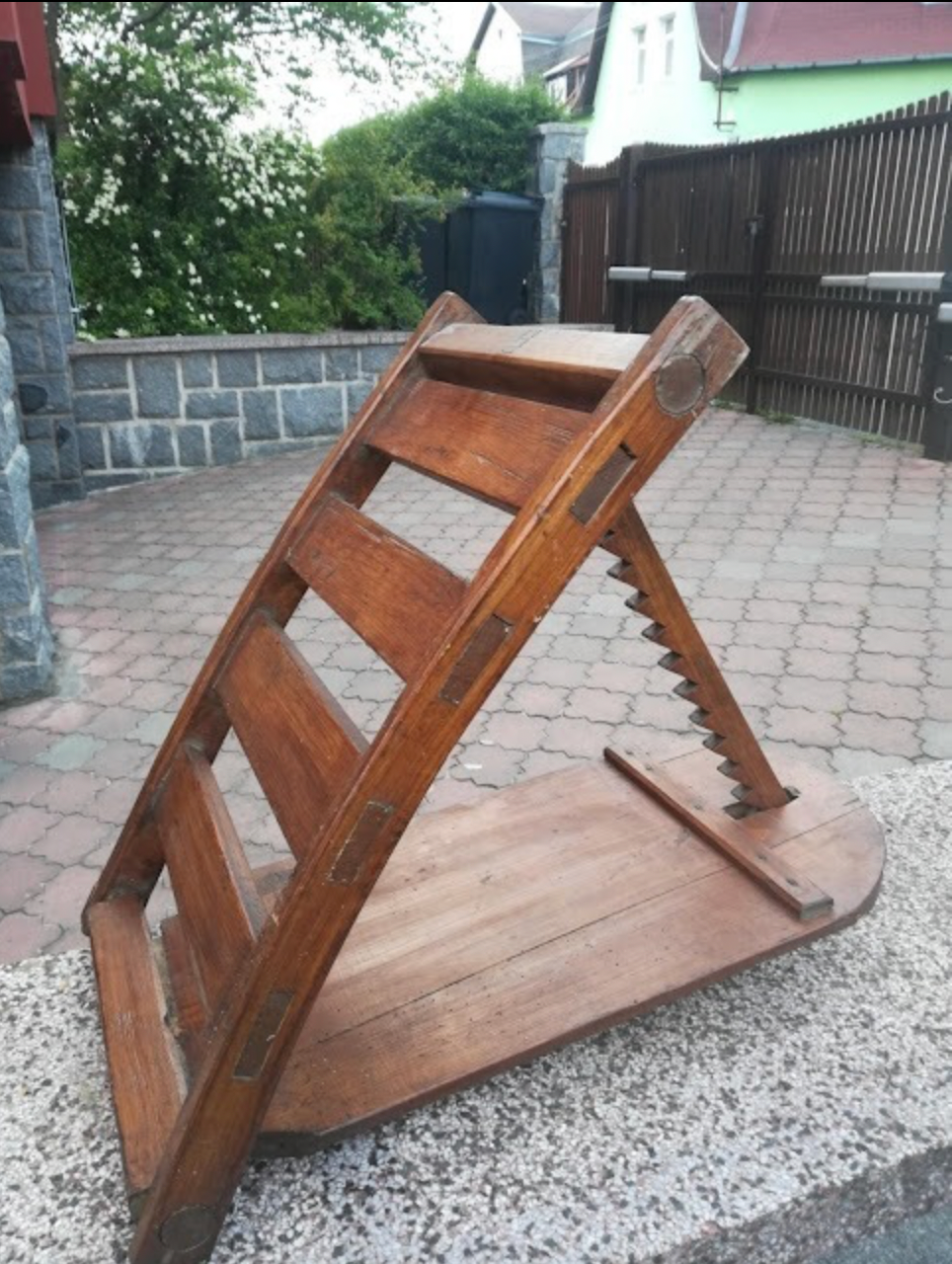
At first glance, it may look simple—solid wood, a broad base, a vertical frame, perhaps a thick wooden screw or lever worn smooth from years of handling. But this weathered wooden cheese press is more than a tool. It is a relic from a time when food was not factory-made, when meals began in fields and barns, and when patience was an everyday virtue.
This artifact carries the fingerprints of generations who understood something modern life often forgets: the finest things cannot be rushed.
What Is a Wooden Cheese Press?
A wooden cheese press is a traditional tool used in small-scale and farmhouse cheese-making. Its purpose was simple yet essential: to remove excess whey from curds and shape them into firm, cohesive wheels of cheese.
The press worked through steady, controlled pressure. Once milk had been curdled and cut, the curds were placed into a mold lined with cloth. The wooden press applied weight over hours—sometimes even days—gradually squeezing out liquid and transforming loose curds into solid cheese.
Without this step, many cheeses would remain soft, unstable, and prone to spoilage.
The press turned fragile curds into food that could last through winter.
A Study in Craftsmanship
Look closely at the wood:
- The smooth polish along the handle
- Slight depressions where hands once gripped
- Darkened areas where oils from skin and dairy soaked into the grain
- Subtle knife marks from adjustments or repairs
This was not a decorative object. It was used. Regularly. Reliably.
Most traditional presses were handcrafted from hardwoods like oak or maple—woods chosen for their strength and resistance to warping. Iron screws or pegs might have been added later, but the core structure was often entirely wooden.
Each press was slightly unique, shaped by the hands that built it and modified by the needs of the household.
It was functional art.
The Rhythm of Its Use
Imagine the setting:
Early morning. A farmhouse kitchen. Milk still warm from the cow. Steam rising. The scent of fresh dairy in the air.
Curds are cut and stirred gently. Ladled into cloth-lined molds. Then placed beneath the press.
The screw is tightened slowly. Not forced. Just enough pressure to begin the transformation.
Over hours, whey drips into a waiting pan below.
Drip. Pause. Drip.
This was not industrial production. It was deliberate. Measured. Patient.
The press demanded time—and rewarded it with nourishment that could sustain a family for months.
Why Wood?
Modern cheese presses are often metal or plastic. But wood had advantages:
- It was accessible and repairable.
- It absorbed slight moisture without cracking.
- It was durable under steady pressure.
- It reflected the agricultural environment in which it was used.
Wooden tools also held a certain warmth—both literal and symbolic. They belonged in the kitchen, not a factory.
The material connected the act of making cheese to the land itself.
A Symbol of Self-Sufficiency
In earlier centuries, owning a cheese press meant something significant.
It meant:
- You had livestock.
- You processed your own food.
- You preserved milk beyond its brief fresh life.
- You participated in a cycle of sustainability.
Cheese-making allowed families to store protein long-term without refrigeration. The press was central to that process.
It represented independence.
It represented knowledge passed down through generations—techniques learned from parents and grandparents, refined through experience rather than instruction manuals.
The Marks of Time
The wear on the wood tells its own quiet story.
Perhaps this press lived in:
- A European countryside cottage.
- An early American homestead.
- A mountain village dairy.
- A rural farmhouse kitchen where seasons dictated life.
The wood darkened slowly with age. Slight cracks formed as decades passed. Yet it endured.
Unlike disposable tools today, it was repaired rather than replaced. Pegs tightened. Screws adjusted. Joints reinforced.
It was built to last—and it did.
From Utility to Artifact
Today, such a press may sit on a shelf, admired for its rustic charm. It might serve as:
- A decorative kitchen centerpiece.
- A museum display.
- A collector’s treasure.
- A conversation piece in a farmhouse-style home.
But its true beauty lies not in aesthetics alone.
It lies in the life it once supported.
The Philosophy Embedded in Wood
This cheese press embodies a slower worldview.
It speaks of:
- Work that followed natural rhythms.
- Food made by hand.
- Patience as a daily practice.
- The belief that quality grows from care.
In an era of instant results, the press reminds us that transformation—whether milk into cheese or effort into sustenance—requires steady pressure and time.
It is a metaphor as much as a tool.