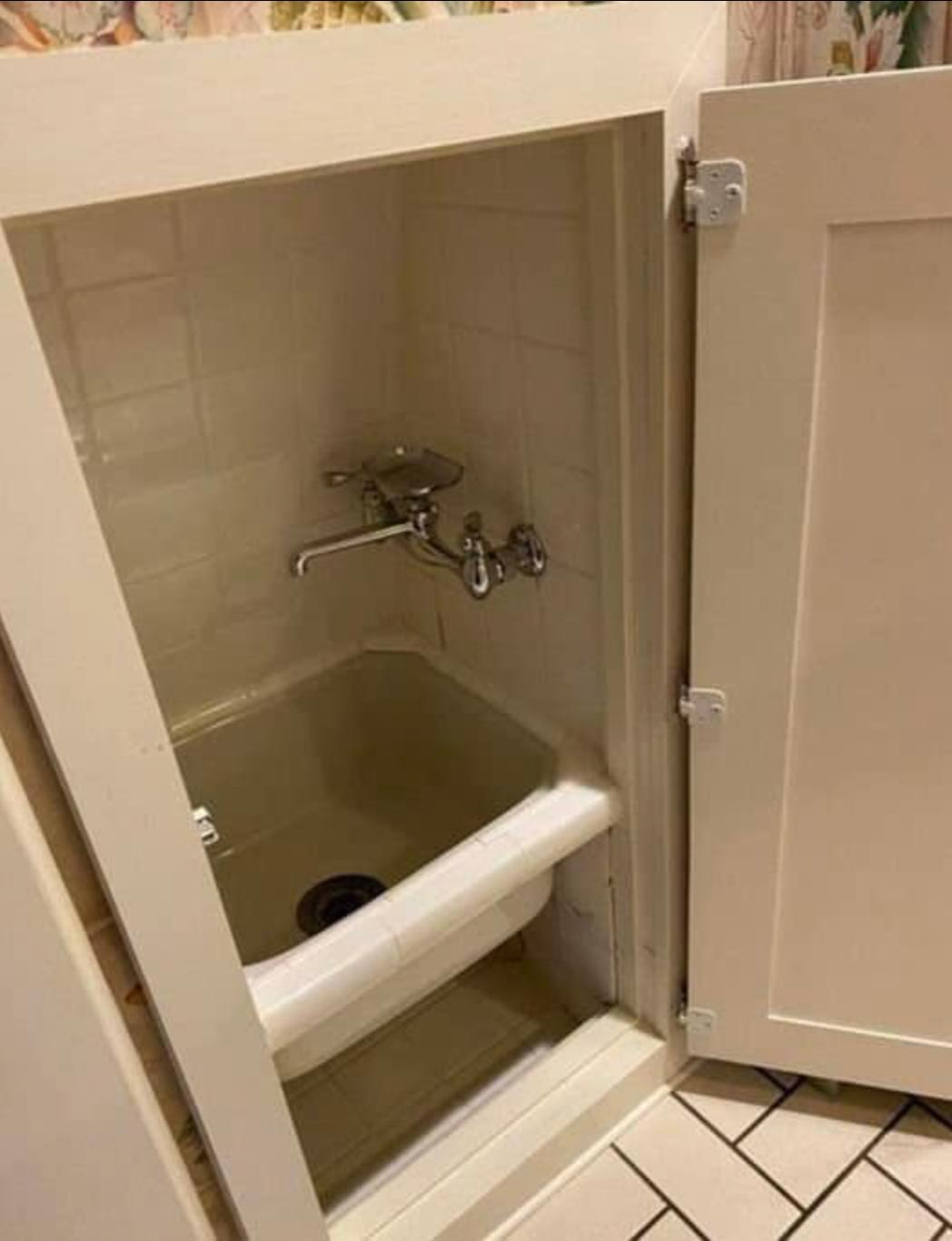
Step back in time, and you’ll discover that even the most ordinary corners of a home once held extraordinary purpose. Among these often-overlooked gems is the antique mopping sink—a fixture so humble that its genius is easy to miss, yet so essential that households across Europe and America relied on it for decades.
Tucked away in utility rooms, back halls, or basement corridors, these sinks were not meant to impress visitors or adorn glossy magazines. They were purely functional, designed for a singular, but critical task: making floor cleaning easier in an era before modern appliances and chemical cleaners.
Today, these sinks sit quietly, often hidden behind years of renovation or tucked into forgotten corners, their history nearly erased. But if you pause, lean closer, and consider the details—the shape, the materials, the ingenuity—you realize they are more than simple basins. They are testaments to domestic innovation, household labor, and the quiet elegance of utility.
1. The Design of Functionality
At first glance, an antique mopping sink may appear plain: a deep basin of porcelain or enameled metal, supported by stout legs or mounted to a wall, often with a drain cleverly positioned for efficiency. But every aspect of its design was carefully considered:
- Depth: Perfectly sized to hold water for soaking mop heads without splashing or spilling.
- Angle and slope: Engineered so water could drain quickly, often directly into the household plumbing—a marvel in early indoor plumbing design.
- Materials: Porcelain, cast iron, and enameled steel were chosen for durability, ease of cleaning, and resistance to corrosion.
Some models even featured integrated wringers, built-in shelves for cleaning supplies, or dual compartments for soapy water and rinse water—mechanical thinking before machines. Every curve, every edge, every detail was designed to reduce labor and increase efficiency in the domestic routine.
2. A Window into Domestic Life
To understand the antique mopping sink is to understand a vanished world of domestic labor. This was a time when cleaning floors was a labor-intensive, daily necessity. Polished wood, tile, or stone floors required scrubbing, soaking, and careful attention to hygiene.
The sink was a quiet ally to the homemaker or domestic worker:
- It allowed mop heads to be submerged fully, ensuring dirt and grime were lifted rather than merely moved around.
- Its robust construction meant repeated use would not crack, chip, or fail under constant stress.
- It served as a central station for all floor-cleaning operations, often positioned near storage areas for brooms, buckets, and brushes.
It is easy to forget that household labor in the 19th and early 20th centuries was both physically demanding and essential to daily comfort. The antique mopping sink, though overlooked today, represents ingenious problem-solving within the constraints of domestic life.
3. The Aesthetics of Utility
Although utility was paramount, many antique mopping sinks possess a quiet, understated beauty.
- The glossy porcelain catches morning light in a kitchen or utility room.
- Cast iron legs, sometimes fluted or adorned with subtle motifs, give the sink weight and presence.
- Enameled surfaces in soft creams or pale blues convey a sense of cleanliness and order that was important to homemakers of the era.
Even the utilitarian lines of the sink reflect an era when functional objects were also meant to endure the test of time, a design philosophy often lost in disposable modern alternatives.
4. Collecting and Preserving History
For collectors, restorers, or anyone fascinated by the story of domestic life, antique mopping sinks are small but significant treasures.
- Restoring one can reveal the skill of early manufacturers, the ingenuity of domestic solutions, and the subtle craftsmanship that elevated everyday objects.
- In some homes, restored sinks are repurposed as planters, washbasins, or decorative features, bridging history with modern utility.
- They serve as reminders of how much domestic life has evolved, offering perspective on the labor, skill, and care embedded in homes before the age of vacuum cleaners, steam mops, and chemical detergents.
5. Lessons from the Past
What makes antique mopping sinks fascinating is not just their physical presence, but what they teach us:
- Innovation thrives in simplicity: Solutions do not need to be complex to be brilliant.
- Attention to detail matters: Every curve, every angle was purposeful.
- Labor deserves respect: These sinks remind us of the often-invisible effort that kept homes clean, comfortable, and livable.
They also inspire mindfulness in our modern lives. Something as mundane as a sink becomes a symbol of care, patience, and ingenuity, asking us to appreciate the thought behind everyday objects.
Final Reflection
Next time you encounter an antique mopping sink, whether tucked away in an estate sale, a museum, or a forgotten corner of a historic home, take a moment to look closer.
Notice the grain of the porcelain, the weight of the metal, the subtle slope of the basin, and imagine the hands that used it, the floors it cleaned, the effort it quietly supported.
In its quiet, utilitarian existence, it holds history, ingenuity, and the dignity of work long passed. It reminds us that even the most ordinary corners of a home once contained extraordinary purpose.
And in that realization, the humble antique mopping sink becomes more than a relic—it becomes a storyteller, a keeper of domestic memory, and a bridge to the lives of those who came before us.