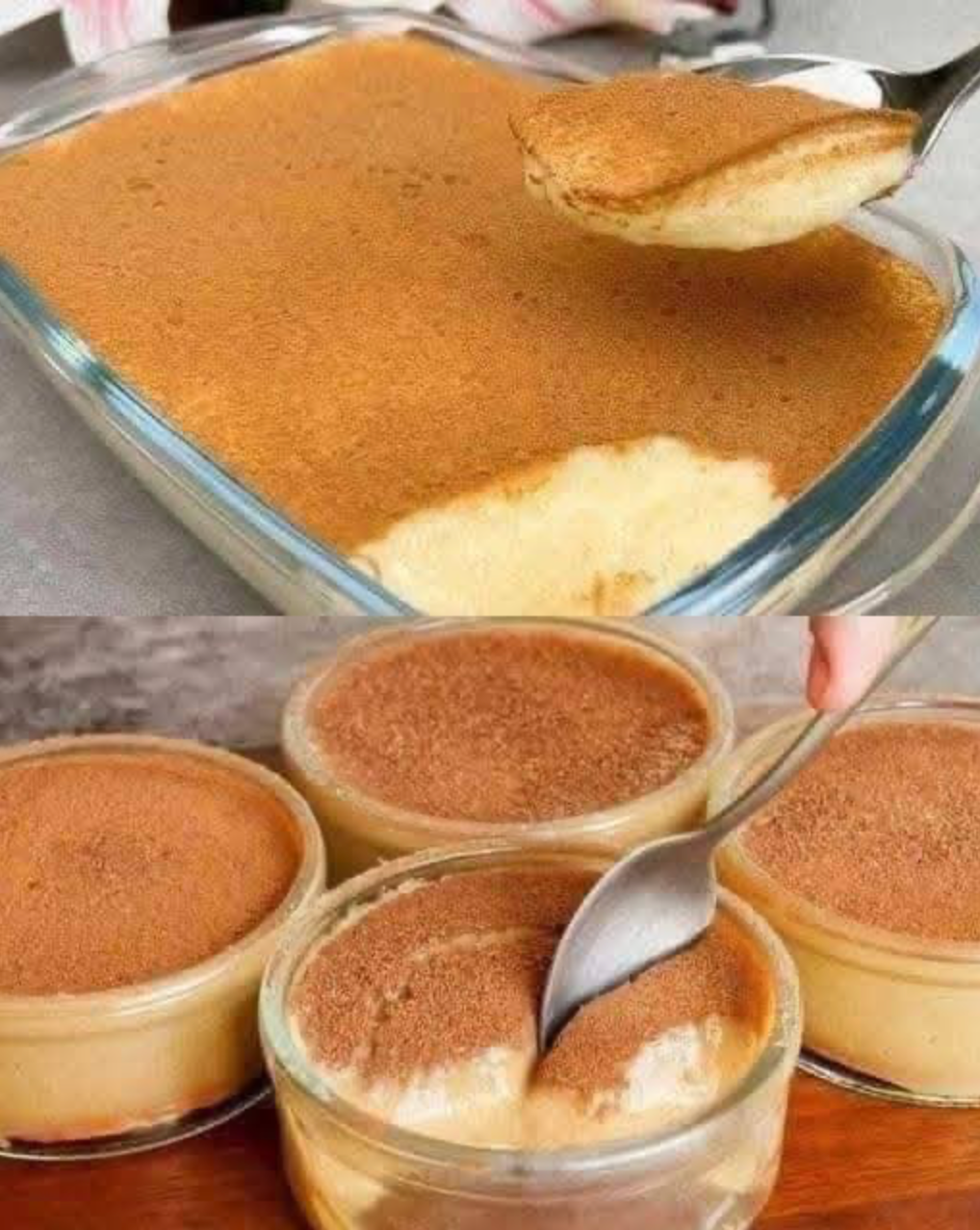
TIRAMISU PUDDING CUPS
Little Jars of Espresso Dream
A Slow, Detailed, Comprehensive Recipe
This dessert takes everything beloved about classic tiramisu—the tender ladyfingers, the deep bitterness of espresso, the cool richness of mascarpone—and transforms it into a pudding-layered cup that is cleaner to serve, safer for all ages, and stable enough for storage. There are no raw eggs here. Instead, a gentle stovetop custard simmers into a silky base that folds into mascarpone like clouds into coffee-scented night. Each spoonful begins soft and creamy, melts into espresso warmth, and finishes with a dust of cocoa that lingers like memory.
You can serve these in glass jars, cups, ramekins, wine goblets, or even champagne flutes. The transparency of glass is not just presentation—it allows you to witness, layer by layer, the story of the dessert. Cream against coffee, cocoa against cream, spoon-marks like brushstrokes.
INGREDIENTS
With deeper explanation, purpose, and optional variations
For the pudding cream
1 cup whole milk – brings body and dairy richness.
¾ cup heavy cream – adds silkiness and weight on the palate.
½ cup granulated sugar – sweet but balanced; reduces bitterness.
2 tablespoons cornstarch – thickens into pudding without eggs.
1 teaspoon pure vanilla extract – warmth, perfume, and complexity.
1 cup mascarpone cheese – the soul of tiramisu; luxurious and smooth.
For the espresso layer
¾ cup strong brewed espresso or dark coffee – must be bold.
1–2 tablespoons sugar – to soften the bitterness slightly.
1–2 tablespoons coffee liqueur or rum (optional) – deepens aroma.
Ladyfingers
12–18 ladyfinger biscuits (savoiardi) – absorb coffee quickly and soften into velvet.
Break or cut depending on cup size.
Finishing
Cocoa powder for dusting – fine, bitter, essential contrast.
Optional finishing elements for extra luxury:
A shaving of dark chocolate.
A drop of coffee syrup.
A crown of whipped cream.
Chocolate curls for elegance.
METHOD
Slow, descriptive, patient instructions
- Preparing the espresso soak
Brew the espresso fresh, not instant if possible. Fresh extraction carries oils that cling to the biscuits later, building flavor and aroma. While still hot, stir in sugar until dissolved. If using liqueur, add once the coffee cools slightly—the alcohol will evaporate less, keeping flavor intact. Set aside in a shallow bowl where ladyfingers will be dipped briefly, never submerged for long. - Making the mascarpone pudding base
In a medium heavy-bottomed saucepan, whisk together sugar and cornstarch until no clumps remain. This dry mix helps cornstarch disperse evenly when liquid is added. Pour in milk and heavy cream gradually, whisking constantly to avoid floury pockets.
Place over medium heat. Stir slowly—this pudding thickens gently, and rushing risks scorching. After several minutes, small bubbles will appear at the surface edges. Continue whisking until the mixture thickens to a smooth, satin consistency—thin custard but no longer runny.
Remove from heat and allow to cool for 5–7 minutes. Add vanilla. Then whisk in mascarpone gently. Do not beat aggressively; mascarpone is delicate and can turn grainy if overworked. Fold slowly until the cream becomes pale, glossy, and luxurious.
Taste here. Adjust sweetness or vanilla if desired. The cream should feel like silk, rich but never heavy.
- Preparing the ladyfingers
One at a time, dip each biscuit briefly—no more than 1–2 seconds—into the cooled espresso mixture. The goal is to moisten without dissolving, so they soften but maintain structure inside the cups. For smaller cups, break each ladyfinger into halves or thirds before dipping. - Layering the jars
Now the dessert becomes architecture.
Spoon a layer of mascarpone pudding into the bottom of each glass. Smooth lightly, not flat—let it settle naturally. Add a layer of espresso-soaked ladyfingers, gently pressing them down to create contact without forcing them to break fully. Spoon more cream over top, spreading until no biscuit shows. Repeat a second layer of ladyfingers, then finish with a final crown of cream, thick and unhurried.
The height of glasses determines how many layers fit. Two full cycles generally create a beautiful balance.
- Finishing and resting
Sift cocoa powder over the top, fine as dust on a winter window. This bitterness sharpens the sweetness beneath, giving contrast and maturity.
Cover each jar and refrigerate for at least 4 hours, though overnight is best. Resting time allows flavors to marry; the ladyfingers soften fully; the pudding thickens into velvet; the espresso spreads like ink through parchment.
TEXTURE, SERVING NOTES, AND STORAGE
When ready to serve, remove from the refrigerator and allow 5–10 minutes to soften slightly. The surface should tremble gently at the spoon, not stiff like cake, not loose like cream—somewhere in between, like a whisper.
Each bite should be layered. Cool mascarpone first, then deep espresso, then cocoa’s final edge. A slow dessert. A quiet one.
These cups store for up to three days refrigerated, improving in harmony as hours pass.