It was one of those idyllic summer afternoons that make parenting feel effortless — the kind of day where the air feels soft, the sunlight slants through the branches like golden ribbons, and every breath is a reminder of how beautiful life can be. We had driven out to a quiet grove just outside the main park, a place where the trails were calm, the air smelled of wildflowers and pine, and the only sounds were rustling leaves, distant birds, and the laughter of children.
Our picnic blanket was spread across a patch of soft grass, and the kids—barefoot, carefree, and glowing with that unmistakable midsummer joy—ran in circles, chasing each other between the trees. Every now and then, they’d plop down next to us for a snack, only to jump right back to their tiny adventures. It felt safe. Peaceful. Familiar.
Then our daughter wandered just a little farther than usual.
She wasn’t running — she was simply exploring, moving slowly, tracing her fingers along the grass, humming a tune. We watched her as parents always do, half-relaxed, half-tuned in. Eventually, she stopped beside a tall old tree with a broad trunk and deep roots that looked like they’d been gripping the earth for a hundred years. She turned to us, her voice bright and curious.
“Mom! Dad! Come see! This tree has stripes. It’s so pretty!”
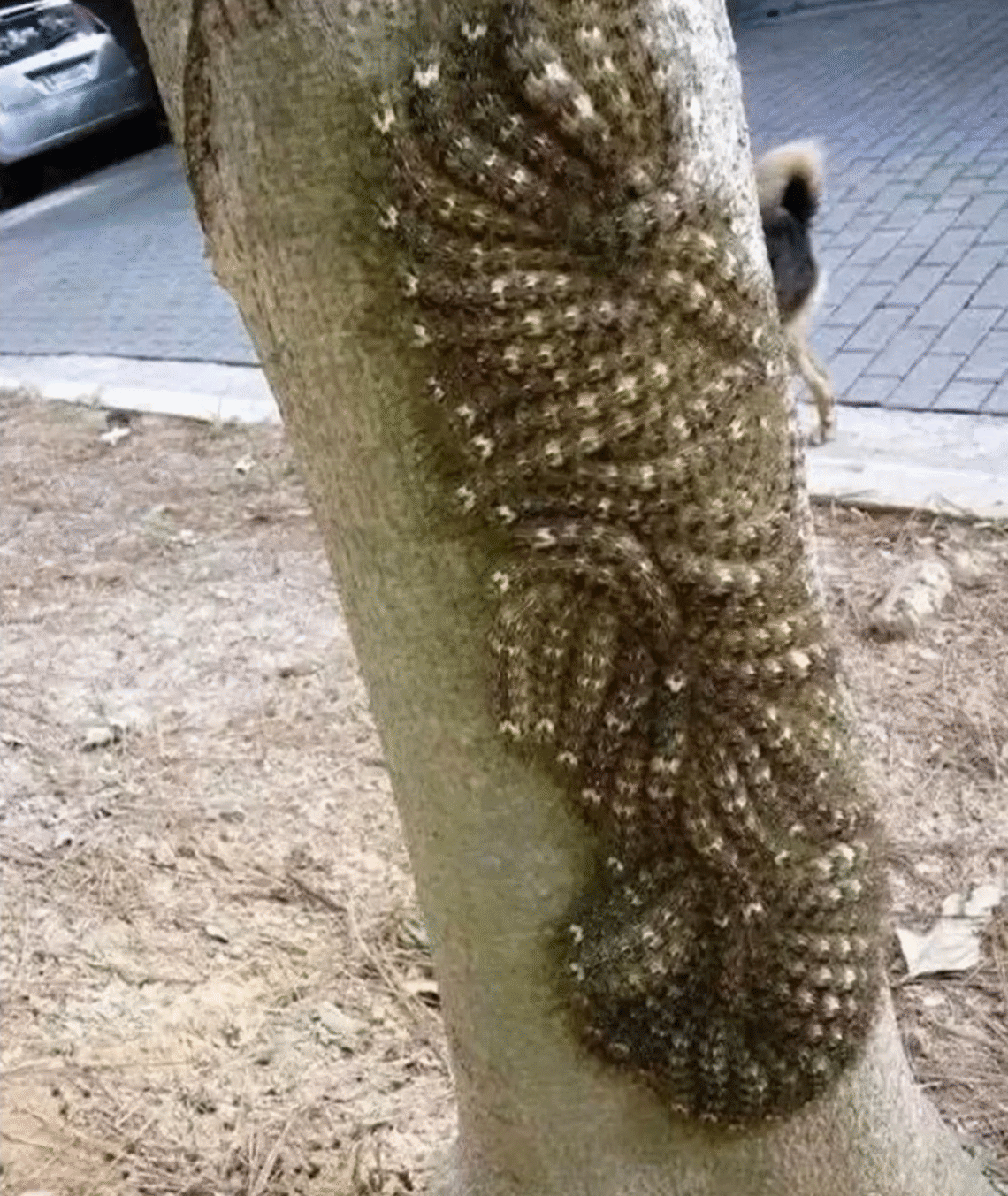
I smiled at first. Kids notice beauty in everything, even in rough bark and wild vines. But when I glanced over, something in my stomach tightened — a subtle instinct, an alarm bell with no sound. I saw the “stripes” she was pointing at. They wrapped around the tree like unusual ribbons, alternating shades of tan and brown in oddly perfect patterns.
Before my brain could fully process the details, my husband had already reacted. Maybe it was parental intuition, or maybe some part of him recognized what my mind hadn’t yet named. He was up in a flash — sprinting across the grass toward her, calling her name with a voice that sounded calm but strained underneath.
“Sweetheart, wait—don’t touch that! Don’t move!”
She froze, her little hand suspended inches from the bark.
He reached her just in time. He grabbed her wrist gently but firmly, pulling her back. And that’s when we finally saw what she had mistaken for stripes.
They were alive.
Wrapped around the trunk were dozens — maybe more — of caterpillars or larvae, banded in colors that mimicked tree bark so well it was nearly impossible to distinguish them from the wood. But these weren’t ordinary caterpillars. They were the kind that keep wildlife experts on alert. The kind that children should never touch. The kind you hear warnings about on late-night science programs but never think you’ll encounter in real life.
At first, our daughter didn’t understand. She blinked at us, confused.
“What’s wrong? They’re pretty…”
Pretty — yes. In the same way some mushrooms are pretty, some berries are pretty, some creatures in the wild are dazzling right before they harm you.
When the wind blew, the “stripes” rippled. The mass shifted. The tree seemed to move.
That image will stay with me forever.
My husband kept her behind him as he leaned in just close enough to confirm what we both feared. These were highly venomous caterpillars — creatures whose sting can cause burning pain, rashes, swelling, fever, and even hospitalization in children. Their hairs contain toxins. Just brushing against them could have been enough to send our perfect picnic spiraling into a medical emergency.
A single touch.
A single innocent moment of childhood curiosity.
That was all it would have taken to turn our summer day into something far darker.
We explained gently, trying not to frighten her but also making sure she understood the seriousness of what almost happened. She listened with wide eyes, nodding slowly, processing the idea that something so beautiful could also be dangerous.
We packed up shortly after — not in a panic, but with that quiet, shaken feeling parents know all too well. The feeling you get when you realize how thin the line is between safety and danger, between ordinary moments and moments that change everything.
As we walked back toward the car, our daughter slipped her hand into mine. She looked up and said:
“Thank you for saving me.”
I squeezed her hand, but truthfully, the gratitude flooded in the other direction. For instinct. For timing. For that uneasy feeling in my gut. For her father’s quick reaction. For the fact that we were walking out of the grove together, unharmed.
Nature is beautiful — breathtaking, magical, full of wonders. But it also demands respect. Even the quiet groves. Even the friendly trails. Even the trees with “stripes.”
That day, we learned a powerful lesson:
Sometimes danger hides in plain sight.
Sometimes it wraps itself around a tree.
Sometimes it mimics beauty so closely you don’t see the threat until it moves.
And sometimes, being a parent means trusting your instincts, your fear, and your speed — even when the sun is shining and everything feels perfect.