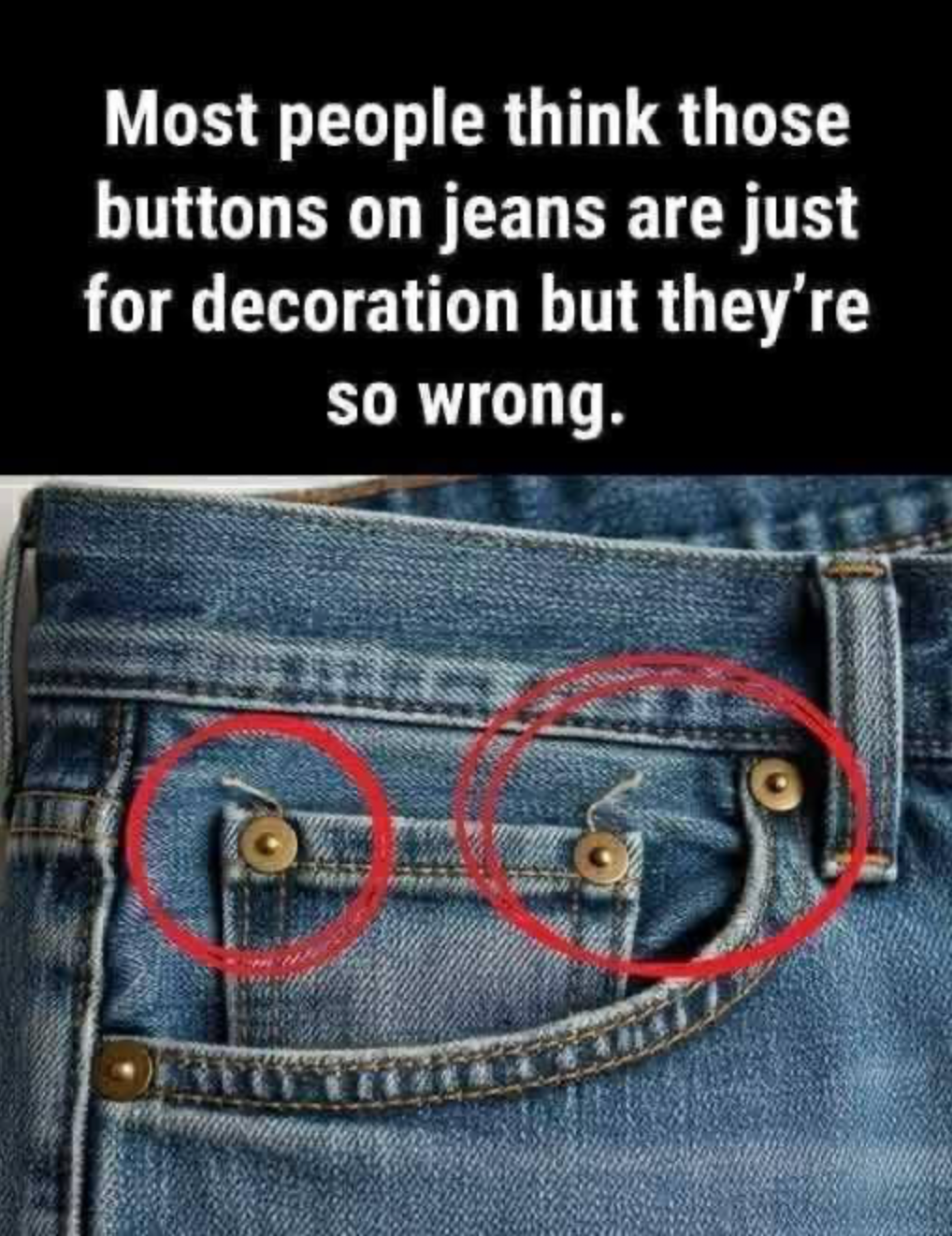
Most people wear jeans every day without ever stopping to notice the small metal details on them. We’re used to the zipper, the belt loops, the stitching—but there’s one tiny feature that often goes completely unnoticed or misunderstood:
the small metal buttons placed near the pockets and seams of jeans.
At first glance, they look decorative. Some assume they are just part of the style, added by designers for aesthetic appeal. But in reality, these tiny metal buttons have a very practical purpose—and their story goes back more than a century.
What Are These Tiny Buttons Called?
These small metal buttons are called:
rivets
A rivet is a strong metal fastener used to reinforce fabric at points where stress is highest.
You’ll usually find them on:
- the corners of front pockets
- the base of the fly (zipper area)
- sometimes on back pockets
- stress points where seams might tear
They are usually copper or brass-colored, but modern jeans can feature silver, black, or coated versions.
Why Were Rivets Added to Jeans in the First Place?
The story of rivets begins in the late 1800s during the rise of workwear clothing in the United States.
At that time, jeans were not fashion items—they were work clothes worn by:
- miners
- railroad workers
- farmers
- laborers
- construction workers
These jobs involved heavy physical movement, and clothing often wore out quickly—especially at stress points like pockets and seams.
The Problem That Needed Solving
Early denim pants had a major issue:
pockets kept tearing off
Workers carried heavy items such as:
- tools
- nails
- gold samples
- hammers
- knives
The fabric alone could not handle the constant strain.
So jeans would often rip at the corners of pockets or along seams after repeated use.
The Simple but Genius Solution: Metal Reinforcement
In 1873, a tailor named Jacob Davis, working with Levi Strauss, came up with a simple idea:
strengthen stress points using metal rivets
Instead of sewing alone, they added small copper rivets to areas that tended to tear.
This small change made jeans:
- far more durable
- longer-lasting
- ideal for hard labor
- resistant to tearing under pressure
It was such a successful innovation that it became the foundation of modern denim jeans.
How Rivets Work
Rivets function like tiny anchors.
They:
- bind layers of fabric together
- distribute stress across a wider area
- prevent tearing at weak points
- reinforce seams that experience pulling force
So instead of the fabric absorbing all the strain, the metal helps share the load.
Why You Don’t Feel Them When Wearing Jeans
Even though they are made of metal, rivets are:
- flat
- smooth
- pressed tightly against the fabric
This makes them comfortable and unobtrusive. They don’t interfere with movement, sitting, or walking.
Most people forget they are even there—until they notice them for the first time.
Why Are They Still Used Today?
Even though jeans are no longer just workwear, rivets are still used because they offer:
1. Durability
They continue to reinforce areas that naturally experience wear and tear.
2. Tradition
Jeans are deeply tied to their historical roots, and rivets are part of that identity.
3. Design Aesthetic
Over time, rivets became a recognizable style feature, giving jeans their classic rugged look.
4. Brand Identity
Many denim brands use unique rivet designs or logos as part of their signature style.
Where You Usually Find Rivets
If you look closely at your jeans, you’ll typically see rivets in these areas:
- front pocket corners (most common)
- coin pocket
- stress points near zipper base
- sometimes decorative placements on modern designs
Their placement is not random—it follows structural weak points in the fabric.
Are Rivets Always Necessary Today?
Not always.
Modern manufacturing techniques have improved denim strength using:
- reinforced stitching
- blended fabrics (cotton + elastane)
- stronger weaving methods
Because of this, some lightweight or fashion jeans no longer use rivets.
However, in traditional or premium denim, they are still very common.
Interesting Fun Fact
Early versions of jeans actually had rivets even on the back pockets, but workers complained because they scratched furniture, saddles, and surfaces.
So designers eventually removed or adjusted them in those areas.
Why People Often Misunderstand Them
Many people assume rivets are:
- purely decorative
- brand logos
- unnecessary metal accents
But their origin is entirely functional, not aesthetic.
They are one of the best examples of:
practical design that later became fashion

Welcome to my kitchen!
I’m a passionate home cook and recipe creator who loves turning simple ingredients into delicious, comforting meals that everyone can enjoy. Through this website, I share carefully prepared recipes, practical cooking tips, and easy-to-understand food education to help you feel more confident in the kitchen.
My goal is to make cooking simple, enjoyable, and accessible. Whether you are looking for a quick family dinner, a delicious dessert, healthy meal ideas, or traditional recipes with a modern touch, you’ll find inspiration here.
More Than Just Recipes
I believe that cooking is also a way to learn. That’s why this website is not only about recipes. I also create educational articles about ingredients, cooking techniques, kitchen tips, food preparation, and the stories behind different dishes.
Each article is designed to give you useful knowledge that you can apply in your own kitchen. From understanding how ingredients work together to learning better cooking methods, my aim is to help you become a more confident and creative cook.
My Philosophy
Good food doesn’t always require complicated ingredients or professional equipment. With a little knowledge, patience, and creativity, simple ingredients can become something truly special.
I believe in sharing recipes that are practical, clearly explained, and enjoyable to make. I also love exploring new flavors while appreciating traditional cooking and the recipes passed down through generations.
Thank you for visiting my kitchen and being part of this food-loving community. I hope my recipes and articles inspire you to cook, learn, experiment, and most importantly, enjoy every bite!
Happy cooking!