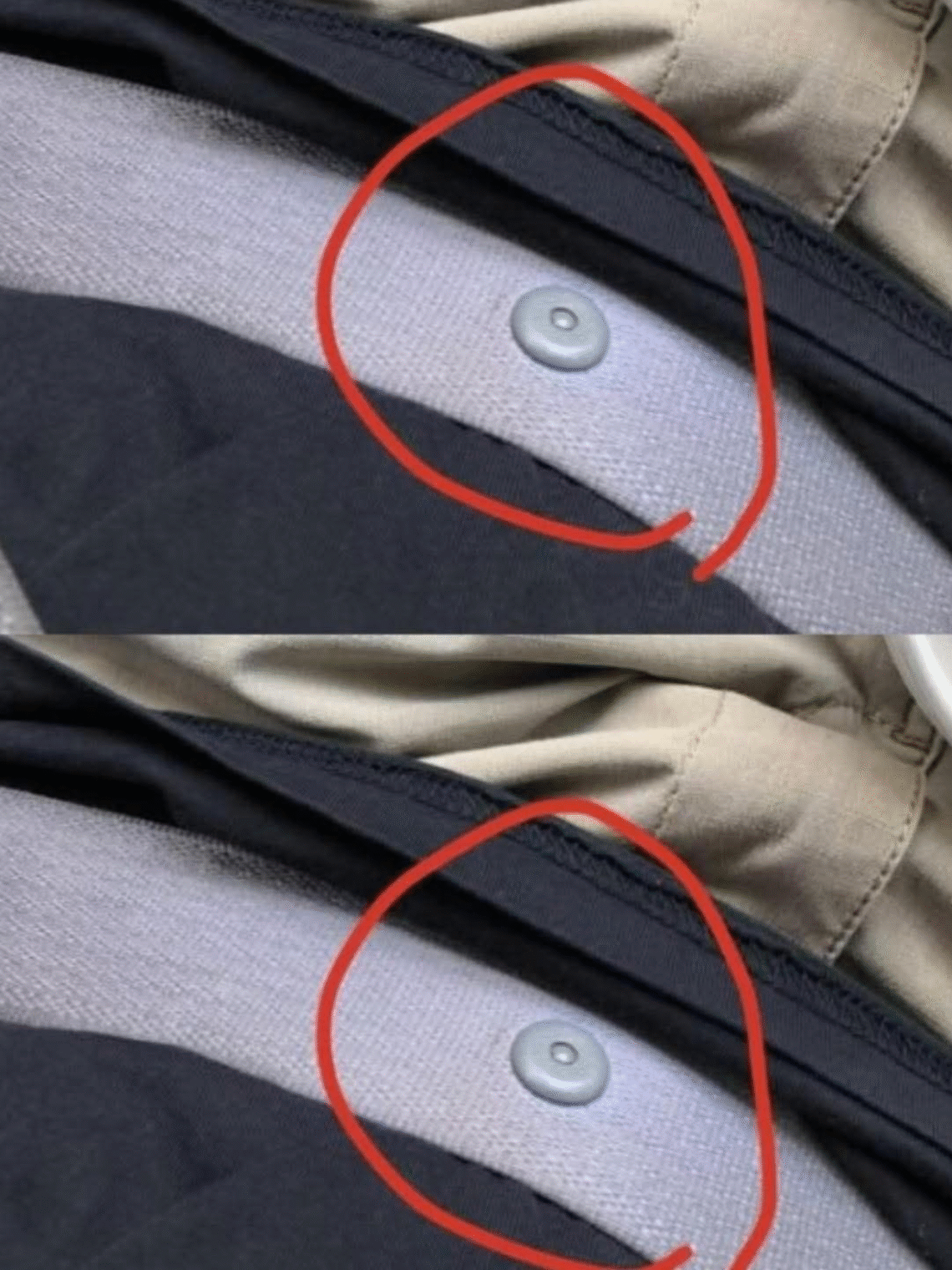
Most drivers and passengers buckle their seat belts out of habit: pull the strap across the shoulder, guide the buckle into the latch, give it a quick tug, and start driving. The motion feels automatic, almost invisible, because seat belts are designed to work quietly in the background — always ready, always reliable. But if you look closely at the shoulder strap, you may notice a small, round plastic button or stopper attached to the fabric near the metal buckle when the belt is fully retracted.
It is so ordinary and unassuming that many people overlook it entirely. Yet this tiny component plays a surprisingly important role in how your seat belt functions, how comfortable it feels, and how safely it rests on your body every time you drive.
This feature is commonly called a seat belt stop button or belt retention button — and while it may not look like much, it is an intentional piece of safety engineering.
What the Seat Belt Button Actually Does
When you release your seat belt, the retractor automatically pulls the belt back toward the car’s pillar. Without the small button, the metal tongue — the flat piece that clicks into the buckle — would slide all the way down the strap and disappear into the belt slot or drop to the bottom near the seat.
The button prevents that from happening.
It acts as a physical barrier, stopping the metal tongue at a specific point so that:
The tongue rests within easy reach when you reach for the belt.
The belt remains properly aligned and does not twist or bunch up.
The strap retracts smoothly instead of getting pulled too far down.
In short, the button ensures that the buckle tongue stays in the correct position, making the belt easy to grab and preventing wear, tangling, or misalignment.
A tiny detail — but one that drastically improves everyday usability.
Why This Button is More Important Than It Looks
At first glance, it may seem like a convenience feature rather than something tied to safety. But in automotive design, ease of use and safety are deeply connected. A seat belt only protects you if it fits correctly and encourages consistent use.
Here is why the stop button matters more than most people realize:
It keeps the belt in the correct starting position
If the tongue fell too low, many people would have to search for it or pull extra slack across the body, increasing the risk of twisting the belt or wearing it incorrectly.
It prevents twisting and fabric damage
When the tongue slides back and forth freely, it can flip or rotate, causing the belt to twist. A twisted belt distributes force unevenly in a crash and may cause discomfort or injury.
It improves comfort and consistency
The button ensures that every time you reach for the belt, the strap follows the same smooth path across your chest and shoulder.
It protects the retractor mechanism
Without the stop button, the tongue could strike or stress the retractor opening repeatedly, leading to premature wear.
This small feature was added for one core reason: to make correct seat belt use effortless, predictable, and repeatable.
How It Fits Into the Larger Seat Belt System
The stop button is just one tiny part of a much larger safety system working together behind the scenes. Modern seat belts are designed around three interconnected principles:
Comfort and usability — encouraging people to wear the belt properly every time.
Proper positioning — keeping the belt aligned across the strongest parts of the body.
Crash protection — working with pretensioners and load limiters to manage force safely.
During normal use, the button supports the first two principles by helping the belt rest correctly over the shoulder and chest. In a collision, the heavy engineering work is done by the internal mechanisms — but those systems depend on the belt already being in the right place.
The button plays its role early in the process, long before anything goes wrong.
Why It Is Placed Exactly Where It Is
The position of the button is not random. Engineers determine its location carefully so that:
The tongue rests near the mid-torso area when the belt retracts.
The strap stays flat along the shoulder line.
The driver or passenger can reach it naturally without stretching.
Its placement balances ergonomics, movement, and body geometry — all tested across many body shapes and seating positions.
What Happens If the Button Breaks or Falls Off
Over years of use, the button can occasionally loosen or snap, especially if it is pulled, twisted, or exposed to extreme heat. If it falls off:
The metal tongue may slide too far down the strap.
The belt may twist or feel awkward to position.
You may notice extra slack or misalignment when buckling.
While the seat belt will still function mechanically, the experience becomes less consistent and potentially less safe in terms of proper fit. In most vehicles, the button can be replaced using an inexpensive OEM-style stop button designed specifically for seat belts. It is not advisable to glue or tape improvised objects to the strap, since the belt fabric is safety-critical and must remain intact.
A Small Part with a Big Design Philosophy
The little round button on your seat belt is an example of a fundamental rule in automotive safety engineering: tiny design choices shape everyday behavior.
If buckling up feels easy, natural, and comfortable, people do it without hesitation. If the belt sits correctly every time, it performs exactly as intended in an emergency. The stop button helps make that predictability possible — silently doing its job, day after day.
It may be small, almost invisible, and rarely discussed, but it supports the larger mission of the seat belt itself: to work reliably, instantly, and without complication whenever you need it.