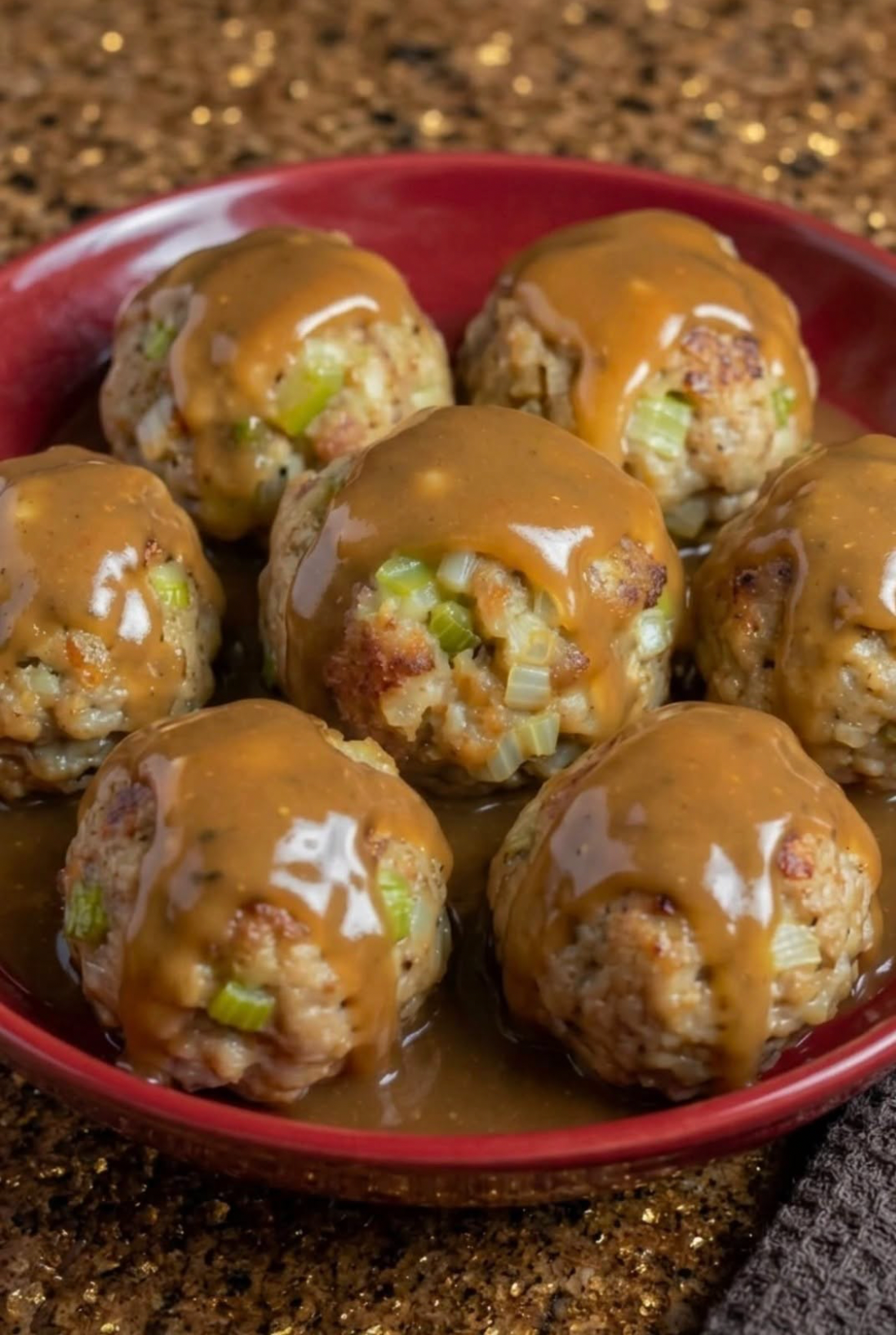
There are certain dishes that instantly bring back memories of Thanksgiving gatherings, bustling kitchens, and tables surrounded by family and friends. Thanksgiving Stuffing Balls are one of those nostalgic recipes. They capture everything people love about traditional stuffing—savory herbs, buttery bread, tender vegetables, and rich poultry seasoning—but package it into perfectly portioned, golden-brown bites that are easy to serve, fun to eat, and incredibly versatile.
These delightful stuffing balls feature a crispy, lightly toasted exterior that gives way to a soft, moist, and flavorful center. Every bite is filled with the comforting flavors of onions, celery, herbs, butter, and savory broth, making them a perfect addition to any holiday feast. Whether served alongside roast turkey and mashed potatoes or enjoyed as an appetizer with gravy for dipping, these stuffing balls are guaranteed to become one of the most requested dishes on your holiday table.
One of the biggest advantages of stuffing balls is their convenience. Unlike traditional stuffing baked in a large casserole dish, these individual portions bake evenly, develop a beautifully crisp outside, and are easy to serve without falling apart. They are also ideal for make-ahead preparation, making holiday cooking less stressful and allowing you to spend more time enjoying family and friends.
Whether you’re preparing your first Thanksgiving dinner or carrying on a treasured family tradition, these Thanksgiving Stuffing Balls are a delicious way to celebrate the comforting flavors of the season.
Why You’ll Love This Recipe
These stuffing balls are:
- Crispy on the outside and soft inside.
- Packed with classic Thanksgiving flavors.
- Easy to prepare ahead of time.
- Perfectly portioned for serving.
- Great for holiday buffets.
- Easy to freeze.
- Wonderful for leftover sandwiches and meals.
- Family-friendly.
- Easy to customize.
- Delicious with gravy or cranberry sauce.
Ingredients
Main Ingredients
- 10 cups day-old bread, cut into small cubes
- 1 medium onion, finely diced
- 3 celery stalks, finely diced
- ½ cup unsalted butter
- 3 cups chicken broth (or vegetable broth)
- 2 large eggs, lightly beaten
Seasonings
- 2 teaspoons poultry seasoning
- 1 teaspoon rubbed sage
- 1 teaspoon dried thyme
- 1 teaspoon dried parsley
- ½ teaspoon rosemary
- ½ teaspoon black pepper
- 1 teaspoon salt (adjust to taste)
Optional Add-Ins
Customize your stuffing balls with:
- Cooked breakfast sausage
- Chopped bacon
- Diced mushrooms
- Chopped pecans
- Dried cranberries
- Chopped apples
- Fresh parsley
- Parmesan cheese
- Fresh thyme leaves
- Garlic powder
- Onion powder
Kitchen Equipment
- Large mixing bowl
- Large skillet
- Baking sheet
- Parchment paper
- Cookie scoop or ice cream scoop
- Measuring cups
- Measuring spoons
- Wooden spoon
Step 1: Prepare the Bread
Use day-old bread for the best texture.
Cut the bread into small cubes and allow it to dry overnight, or lightly toast the cubes in a 300°F (150°C) oven for about 15 to 20 minutes until dry but not browned.
Dry bread absorbs broth much better than fresh bread and helps the stuffing balls hold their shape.
Step 2: Cook the Vegetables
Melt the butter in a large skillet over medium heat.
Add:
- Onion
- Celery
Cook for 8 to 10 minutes, stirring occasionally, until the vegetables become soft and translucent.
If adding mushrooms or garlic, cook them with the onions and celery until tender.
The vegetables should become fragrant without browning too much.
Step 3: Season the Mixture
Stir into the vegetables:
- Poultry seasoning
- Sage
- Thyme
- Rosemary
- Parsley
- Black pepper
- Salt
Cooking the herbs briefly in the butter helps release their essential oils and deepens their flavor.
Step 4: Combine the Bread and Vegetables
Place the dried bread cubes into a large mixing bowl.
Pour the warm vegetable and butter mixture over the bread.
Toss gently until the bread is evenly coated.
Step 5: Add the Broth
Gradually pour the chicken broth over the bread mixture while gently stirring.
Allow the bread a minute or two to absorb the liquid before deciding whether to add more broth.
The mixture should be moist enough to hold together when squeezed but should not be soggy.
Step 6: Add the Eggs
Beat the eggs lightly.
Pour them into the stuffing mixture.
Mix gently until everything is evenly combined.
The eggs help bind the stuffing balls together during baking while keeping the interior soft and tender.
Step 7: Shape the Stuffing Balls
Line a baking sheet with parchment paper.
Using your hands or a medium cookie scoop, form the stuffing mixture into balls approximately 2 to 2½ inches in diameter.
Arrange them on the baking sheet, leaving about an inch of space between each one.
Avoid packing the mixture too tightly, as lightly shaped balls bake up fluffier.
Step 8: Bake
Preheat the oven to 375°F (190°C).
Bake for 25 to 30 minutes, or until:
- The tops are golden brown.
- The edges are slightly crisp.
- The centers are fully heated.
- The outside develops a light crunch while the inside stays moist.
For extra browning, switch the oven to broil for the final 1 to 2 minutes, watching carefully to prevent burning.
Step 9: Rest Before Serving
Allow the stuffing balls to rest for about 5 minutes after removing them from the oven.
This brief resting time helps them firm up slightly, making them easier to serve.
Step 10: Garnish and Serve
Transfer the stuffing balls to a serving platter.
Garnish with:
- Fresh chopped parsley
- Fresh thyme leaves
- A sprinkle of black pepper
Serve warm with turkey gravy, cranberry sauce, or both.
Tips for the Best Stuffing Balls
Use Day-Old Bread
Dry bread absorbs broth evenly while maintaining structure.
Fresh bread may become overly soft and produce dense stuffing balls.
Don’t Oversoak
Add the broth gradually.
Too much liquid can cause the stuffing balls to lose their shape.
Mix Gently
Overmixing compresses the bread and can make the finished stuffing heavy.
Bake Until Golden
The crisp outer crust adds wonderful texture and helps the stuffing balls hold together.
Taste Before Adding Eggs
If desired, taste the seasoned mixture before adding the raw eggs and adjust the seasoning if needed.
Delicious Variations
Sausage Stuffing Balls
Add:
- 1 pound cooked breakfast sausage
- Extra sage
- Black pepper
A hearty variation that’s especially popular during Thanksgiving.
Cranberry Pecan Stuffing Balls
Fold in:
- ½ cup dried cranberries
- ½ cup chopped pecans
The sweet cranberries and crunchy pecans provide beautiful contrast.
Apple Herb Stuffing Balls
Mix in:
- 1 diced apple
- Fresh rosemary
- Fresh thyme
The apples become soft and slightly sweet during baking.
Bacon Cheddar Stuffing Balls
Add:
- Crispy crumbled bacon
- Sharp Cheddar cheese
A rich, savory twist that’s always a crowd-pleaser.
Vegetarian Stuffing Balls
Use vegetable broth instead of chicken broth and add sautéed mushrooms for extra savory depth.
What to Serve with Thanksgiving Stuffing Balls
These flavorful bites pair wonderfully with:
- Roast turkey
- Roast chicken
- Baked ham
- Turkey gravy
- Cranberry sauce
- Mashed potatoes
- Sweet potato casserole
- Green bean casserole
- Roasted Brussels sprouts
- Glazed carrots
- Corn casserole
- Macaroni and cheese
They’re also excellent as an appetizer served with warm gravy for dipping.
Storage
Allow the stuffing balls to cool completely.
Store them in an airtight container in the refrigerator for up to 4 days.
Reheating
Reheat in a 350°F (175°C) oven for about 10 to 15 minutes, or until heated through.
This helps restore the crispy exterior better than microwaving.
Freezing Instructions
Stuffing balls freeze beautifully.
To freeze:
- Bake and cool completely.
- Arrange on a baking sheet until frozen solid.
- Transfer to freezer bags or airtight containers.
- Freeze for up to 3 months.
Reheat directly from frozen in a 350°F (175°C) oven for 20 to 25 minutes.
Nutritional Information (Approximate Per Stuffing Ball)
Based on 18 stuffing balls.
Each serving contains approximately:
- Calories: 150
- Protein: 4g
- Carbohydrates: 18g
- Fat: 7g
- Saturated Fat: 4g
- Fiber: 1g
- Sugar: 2g
- Sodium: 310mg
Nutritional values vary depending on the type of bread and optional ingredients used.
Frequently Asked Questions
Can I make stuffing balls ahead of time?
Yes. You can shape the stuffing balls a day in advance, cover them, and refrigerate until ready to bake. This makes holiday meal preparation much easier.
What type of bread works best?
Sturdy breads such as French bread, Italian bread, sourdough, or country white bread are excellent choices because they absorb the broth well without becoming mushy.
Can I use boxed stuffing mix?
Yes. Boxed stuffing mix can be used as a convenient shortcut. Follow the package instructions for moisture as needed, then shape the mixture into balls and bake until golden.
Why are my stuffing balls falling apart?
The mixture may be too dry or not contain enough binder. If it doesn’t hold together when gently squeezed, add a little more broth or an extra beaten egg until the mixture can be formed into balls.
Can I cook these in an air fryer?
Yes. Arrange the stuffing balls in a single layer and cook at 375°F (190°C) for about 12 to 15 minutes, turning them halfway through for even browning. Cooking times may vary depending on the size of the stuffing balls and the air fryer model.
Can I make them gluten-free?
Absolutely. Use your favorite gluten-free bread and ensure the broth and seasonings are gluten-free. The preparation remains the same, and the results are just as delicious.
Welcome to my kitchen!
I’m a passionate home cook and recipe creator who loves turning simple ingredients into delicious, comforting meals that everyone can enjoy. Through this website, I share carefully prepared recipes, practical cooking tips, and easy-to-understand food education to help you feel more confident in the kitchen.
My goal is to make cooking simple, enjoyable, and accessible. Whether you are looking for a quick family dinner, a delicious dessert, healthy meal ideas, or traditional recipes with a modern touch, you’ll find inspiration here.
More Than Just Recipes
I believe that cooking is also a way to learn. That’s why this website is not only about recipes. I also create educational articles about ingredients, cooking techniques, kitchen tips, food preparation, and the stories behind different dishes.
Each article is designed to give you useful knowledge that you can apply in your own kitchen. From understanding how ingredients work together to learning better cooking methods, my aim is to help you become a more confident and creative cook.
My Philosophy
Good food doesn’t always require complicated ingredients or professional equipment. With a little knowledge, patience, and creativity, simple ingredients can become something truly special.
I believe in sharing recipes that are practical, clearly explained, and enjoyable to make. I also love exploring new flavors while appreciating traditional cooking and the recipes passed down through generations.
Thank you for visiting my kitchen and being part of this food-loving community. I hope my recipes and articles inspire you to cook, learn, experiment, and most importantly, enjoy every bite!
Happy cooking!