A Deep, Detailed Guide to a Comfort Classic Built on Simplicity, Patience, and Flavor
There is something quietly powerful about a recipe that asks for very little yet delivers so much. Slow Cooker Mushroom Beef Tips belong to that rare category of dishes where time does the heavy lifting, and humble ingredients evolve into something rich, cohesive, and deeply satisfying.
This is not a dish driven by technique or precision. It is driven by patience, balance, and the natural transformation of ingredients under low, steady heat. With just four core components, it creates a meal that feels complete, comforting, and full of depth—proof that complexity in flavor does not always require complexity in preparation.
The Identity of This Dish
At its heart, this recipe is a slow-braised beef dish built around:
- Tender beef pieces
- Earthy mushrooms
- A savory, onion-forward seasoning base
- A creamy, cohesive sauce
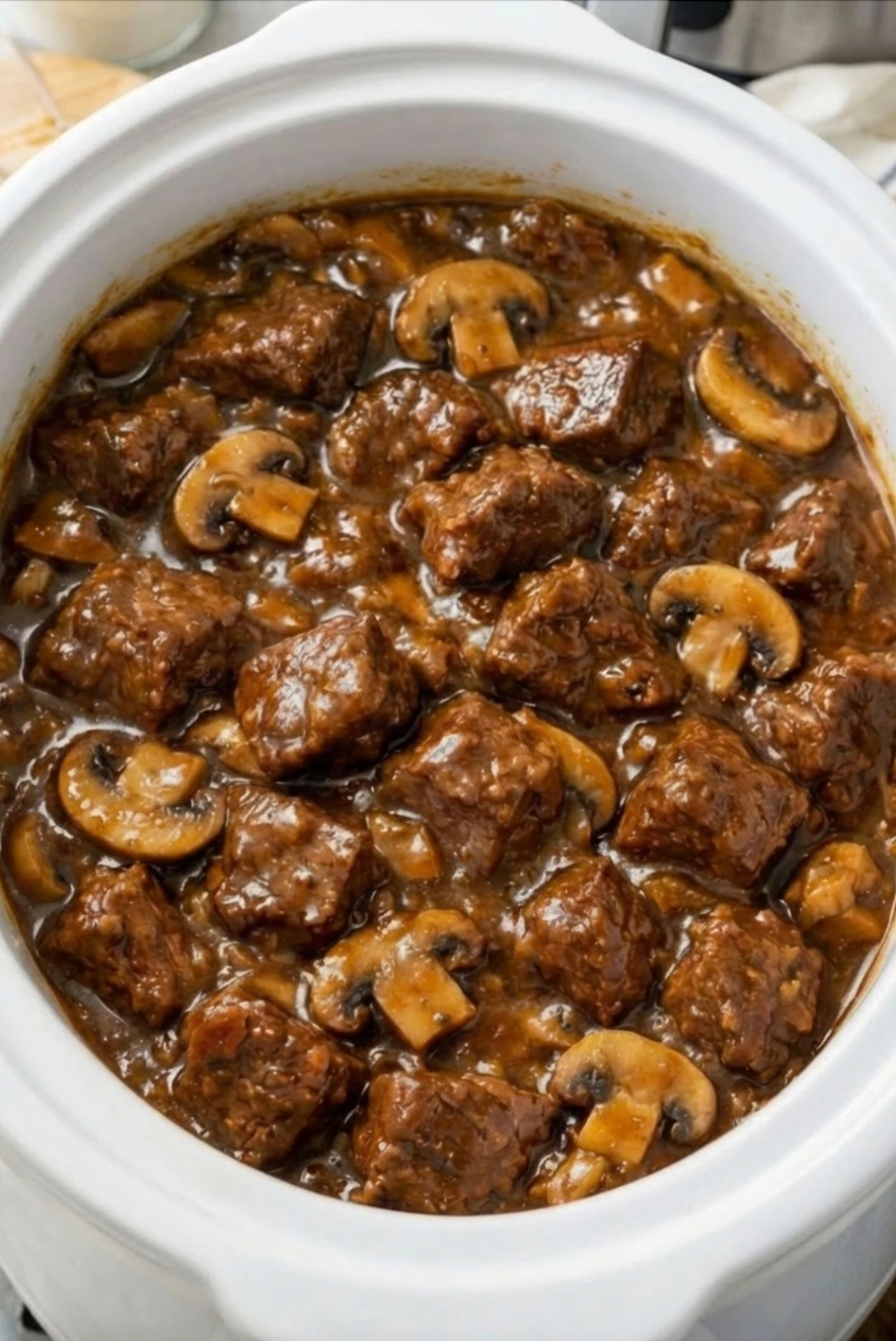
The defining feature is the gravy—a thick, glossy, umami-rich sauce that forms naturally as the ingredients cook together. It coats each piece of beef and mushroom, creating a unified texture and flavor in every bite.
The Four Ingredients and Their Roles
1. Beef Tips
Beef tips are typically cut from tougher, well-worked parts of the animal, such as:
- Chuck
- Round
- Stew meat
Why These Cuts Work
These cuts contain:
- Connective tissue
- Collagen
During slow cooking, collagen breaks down into gelatin, which:
- Tenderizes the meat
- Adds body to the sauce
- Creates a silky mouthfeel
Result
The beef becomes:
- Soft and fork-tender
- Rich in flavor
- Fully integrated with the sauce
2. Mushrooms
Mushrooms are essential to the dish’s identity.
What They Contribute
- Earthy, deep flavor (umami)
- Natural moisture
- Slight texture contrast
Transformation During Cooking
As mushrooms cook:
- They release water
- Their flavor intensifies
- They absorb surrounding flavors
This dual role—releasing and absorbing—helps build the overall richness of the dish.
3. Onion Soup Mix
This ingredient is a concentrated flavor base.
What It Contains
- Dried onions
- Salt
- Seasonings
- Flavor enhancers
Function
- Adds depth without needing multiple spices
- Infuses the dish with savory, slightly sweet onion notes
- Balances the richness of the beef and cream
It acts as the backbone of the seasoning profile.
4. Cream of Mushroom Soup
This is what transforms the dish into a cohesive, velvety experience.
Role in the Recipe
- Thickens the sauce
- Adds creaminess
- Enhances mushroom flavor
During Cooking
It melts and blends with:
- Beef juices
- Mushroom liquid
Creating a unified, smooth gravy.
The Cooking Process
1. Layering the Ingredients
The beauty of this recipe lies in its simplicity.
Basic Method
- Place beef tips in the slow cooker
- Add mushrooms on top
- Sprinkle onion soup mix evenly
- Pour cream of mushroom soup over everything
No pre-cooking, no searing, no extra steps.
2. Slow Cooking
The dish cooks on low heat for several hours.
What Happens Over Time
- Beef slowly tenderizes
- Mushrooms release liquid
- Soup base melts and blends
- Flavors deepen and merge
This gradual process allows every ingredient to contribute fully.
3. Final Texture
By the end of cooking:
- Beef is extremely tender
- Mushrooms are soft and flavorful
- Sauce is thick, smooth, and glossy
The Science Behind the Magic
Collagen Breakdown
Slow heat converts collagen into gelatin, which:
- Creates tenderness
- Adds richness to the sauce
Moisture Exchange
Mushrooms release water while beef absorbs flavor, creating a natural balance without added broth.
Flavor Concentration
Long cooking times allow:
- Seasonings to penetrate deeply
- Flavors to intensify without becoming harsh
Texture and Flavor Experience
Texture
- Beef: soft, pull-apart tender
- Mushrooms: silky, slightly firm
- Sauce: thick, smooth, coating
Flavor Profile
- Deeply savory
- Slightly earthy
- Mildly creamy
- Balanced saltiness
Each bite delivers a consistent, comforting experience.
Serving Suggestions
This dish pairs best with foods that absorb the sauce.
Ideal Pairings
- Mashed potatoes
- Rice
- Egg noodles
- Bread
These options allow the gravy to shine and prevent waste.
Presentation
Serve warm, with sauce generously spooned over the base. The visual appeal comes from:
- Glossy sauce
- Rich brown tones
- Tender, well-coated ingredients
Variations and Customizations
Adding Vegetables
You can include:
- Carrots
- Peas
- Green beans
These add color and nutritional variety.
Flavor Enhancements
- Garlic for depth
- Black pepper for mild heat
- Herbs like thyme for aroma
Texture Adjustments
- Add a small amount of broth for a thinner sauce
- Cook uncovered briefly at the end for thicker consistency
Storage and Reheating
Storage
- Refrigerate in an airtight container
- Keeps well for several days
Reheating
- Reheat gently to avoid drying out
- Add a small amount of liquid if needed
Freezing
- Freezes well due to its sauce base
- Thaw slowly for best texture
Why This Recipe Works So Well
Minimal Effort
- No complex steps
- No constant monitoring
Maximum Flavor
- Ingredients complement each other naturally
- Slow cooking enhances depth
Reliability
- Difficult to overcook
- Consistent results
Accessibility
- Uses common ingredients
- Requires basic equipment
The Emotional and Cultural Value
This dish represents a style of cooking rooted in:
- Practicality
- Resourcefulness
- Comfort
It reflects a time when meals were built around:
- What was available
- What could feed a family
- What could be prepared with minimal effort
The slow cooker continues that tradition, allowing modern life to coexist with time-honored cooking methods.
Common Mistakes to Avoid
Using Lean Cuts of Beef
Lean meat can become dry. Use cuts with some fat and connective tissue.
Overcrowding the Slow Cooker
Too much food can affect cooking consistency.
Adding Too Much Liquid
The recipe generates its own moisture. Extra liquid can dilute flavor.
Cooking on High Heat Only
Low and slow produces the best texture.